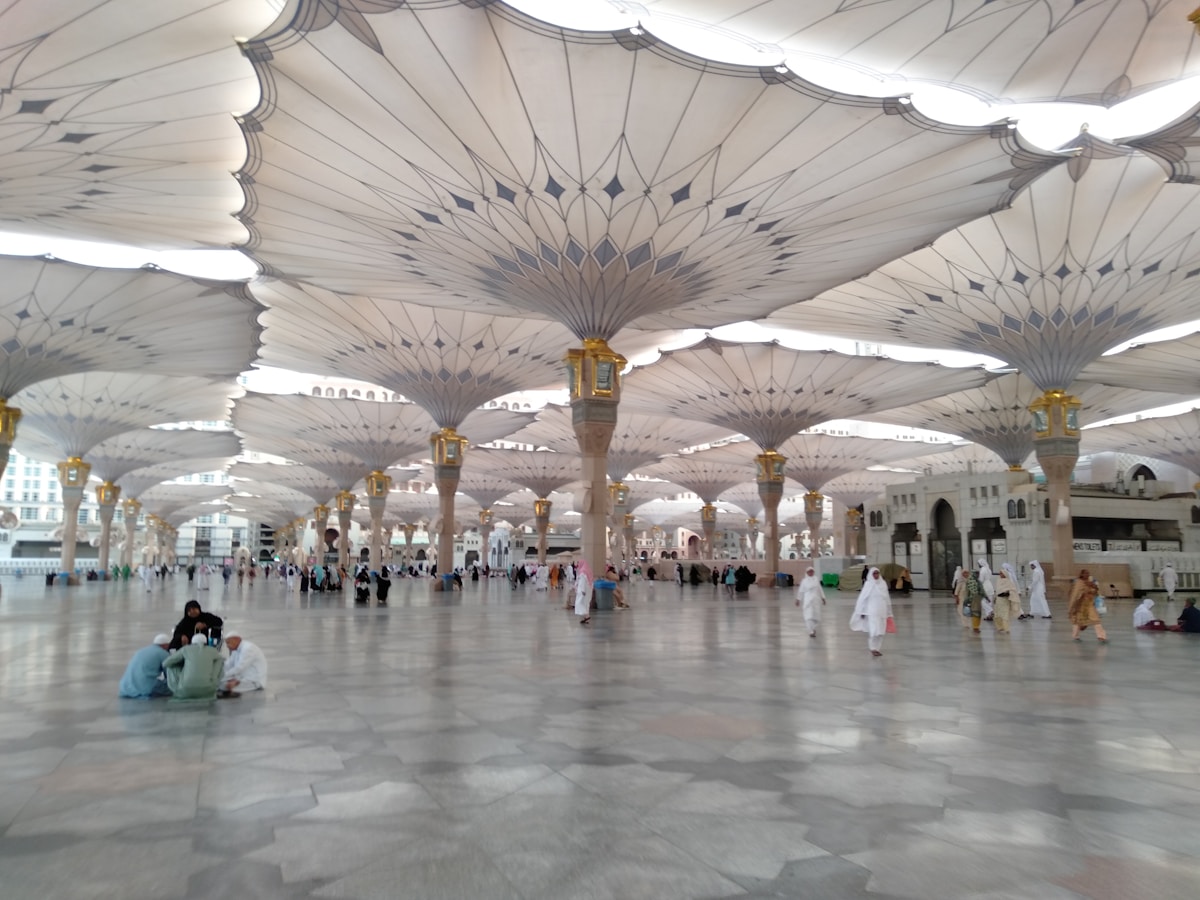
Medina’s food scene is shaped by two forces: the Hejazi culinary tradition of western Saudi Arabia, and the remarkable diversity of pilgrims who arrive from every corner of the Muslim world. Near the Prophet’s Mosque, you’ll find Saudi kabsa restaurants alongside Indian biryani spots, Egyptian street food, and Turkish grills. The dates markets are in a category of their own.
Saleeg and Kabsa: The Hejazi Staples
Saleeg - white rice slow-cooked in broth with whole milk and served with roasted chicken - is Medina’s most distinctive dish and a staple of Hejazi hospitality. It is simpler in appearance than kabsa but deeply satisfying: the rice absorbs the broth until it becomes creamy and rich. Look for it in traditional Hejazi restaurants rather than hotel buffets, which often skip it in favour of more visually striking dishes.
Kabsa (aromatic rice cooked with lamb or chicken, dried lime, saffron, and spices) is the broader Saudi national dish and central to the menus of most traditional restaurants in Medina. A lamb kabsa platter for two costs approximately SAR 80–140 as of 2026 in mid-range restaurants near the mosque.
Al Baik
The Saudi fast-food chain Al Baik needs little introduction to any regular pilgrim. The Medina branches - several are clustered in the areas south and west of the Prophet’s Mosque - serve the chain’s trademark crispy fried chicken, shrimp burgers, and garlic bread rolls. A full meal costs approximately SAR 25–45 per person as of 2026. Al Baik’s operational efficiency is genuinely impressive during peak pilgrimage times when turnover is enormous. Long queues are part of the experience; they move quickly.
Dates Markets: Quba Road and the Souk
The dates markets along Quba Road are the centrepiece of any food-focused Medina visit. Medina’s date farms produce Ajwa, Safawi, Barni, and Medjool varieties.
Ajwa dates are the most sought-after - dark, soft, slightly sweet, with a distinct flavour profile. Prices range from approximately SAR 80 for basic retail-packaged bags to SAR 350+ per kilogram for premium gift boxes as of 2026. Tasting before buying is standard practice. Most vendors sell multiple grades; ask specifically for the Medina-origin Ajwa rather than imported varieties sold under the same name.
Safawi dates are another Medina variety - slightly firmer, dark, with a pleasantly bitter edge that some prefer to the sweeter Ajwa. Priced from approximately SAR 40–80 per kilogram. The markets also carry Medjool (large, amber-brown, moist) at approximately SAR 50–120 per kilogram.
Buy dates mid-visit rather than in the area immediately adjacent to the mosque gates - vendors in the outer souk areas consistently offer better prices than those in the highest-footfall tourist positions.
International Restaurants Near the Prophet’s Mosque
The diversity of Medina’s pilgrim population is reflected in the restaurant mix. Within a 500-metre radius of the mosque:
Pakistani and Indian restaurants serving biryani, dhal, and chapati are clustered particularly in the areas frequented by South Asian pilgrim groups. A full biryani meal costs approximately SAR 25–50 per person. Look for busy restaurants at lunchtime - high turnover is a reliable quality indicator in this type of establishment.
Egyptian restaurants serving ful medames (broad bean stew), falafel, and kushari (lentils, rice, pasta, and tomato sauce - the Egyptian national dish) offer some of the best value near the mosque. A full Egyptian-style meal costs approximately SAR 15–35 per person.
Turkish grills - offerings of köfte, doner, and pide (Turkish flatbread with various toppings) - are also well represented. Prices run approximately SAR 40–80 per person for a full meal.
Hotel Buffet Dining
The larger hotels near the Prophet’s Mosque - Anwar Al Madinah Mövenpick, Hilton Madinah, and Marriott Madinah - all run extensive daily buffets covering Arabic, international, and light options. These are practical for pilgrims who want a reliable, clean, and filling meal without navigating the surrounding streets. Buffet pricing runs approximately SAR 100–200 per person for dinner as of 2026. Breakfast buffets typically run approximately SAR 70–120 per person.
The Oberoi Madina’s restaurant is the most refined in this category - more curated than a standard buffet spread, with à la carte options. Expect approximately SAR 100–180 for a main course.
Mutabbaq and Street Snacks
Mutabbaq is a Medina souk staple - a stuffed pancake from Yemeni culinary tradition that has spread throughout the Hejaz. The savoury version (minced meat, egg, and onion on a thin crispy shell) costs approximately SAR 10–18 and makes a practical snack between prayers. Small bakeries making mutabbaq are visible in souk streets, usually identified by the smell of frying and the griddle operator visible through the front window.
Karak chai - spiced tea made with evaporated milk, cardamom, and saffron - is ubiquitous in the streets around the mosque and markets. A cup costs approximately SAR 5–8. Arabic coffee (pale, cardamom-flavoured, served in small cups) is offered free at many hotel lobbies and some market stalls.
Practical Notes
During prayer times, restaurants near the mosque typically reduce or pause service. Planning meals in the windows between prayer times makes for a more comfortable experience. See the Medina city guide for practical planning and transport information.
Explore Medina’s Food Culture on a Guided Tour
The Ajwa date vendors of Al-Nakheel Market, the saleeg restaurants near Masjid al-Nabawi, and the samboosa and karak chai street economy that serves pilgrims between prayers represent a food culture built around centuries of Islamic pilgrimage. A guided food experience in Medina traces this history through the date market, a traditional saleeg specialist, and the street food ecosystems that surround the Prophet’s Mosque — connecting the Egyptian, Yemeni, and South Asian food traditions to the pilgrimage routes that brought them here.
To round out your visit, compare Tours in Medina for food and culture experiences, and pick up a Saudi eSIM so you can navigate local streets without burning mobile data. Browse hotels in Medina — hotels adjacent to Masjid al-Nabawi place you closest to the saleeg restaurants and Ajwa date markets of the Prophet’s Mosque neighbourhood.