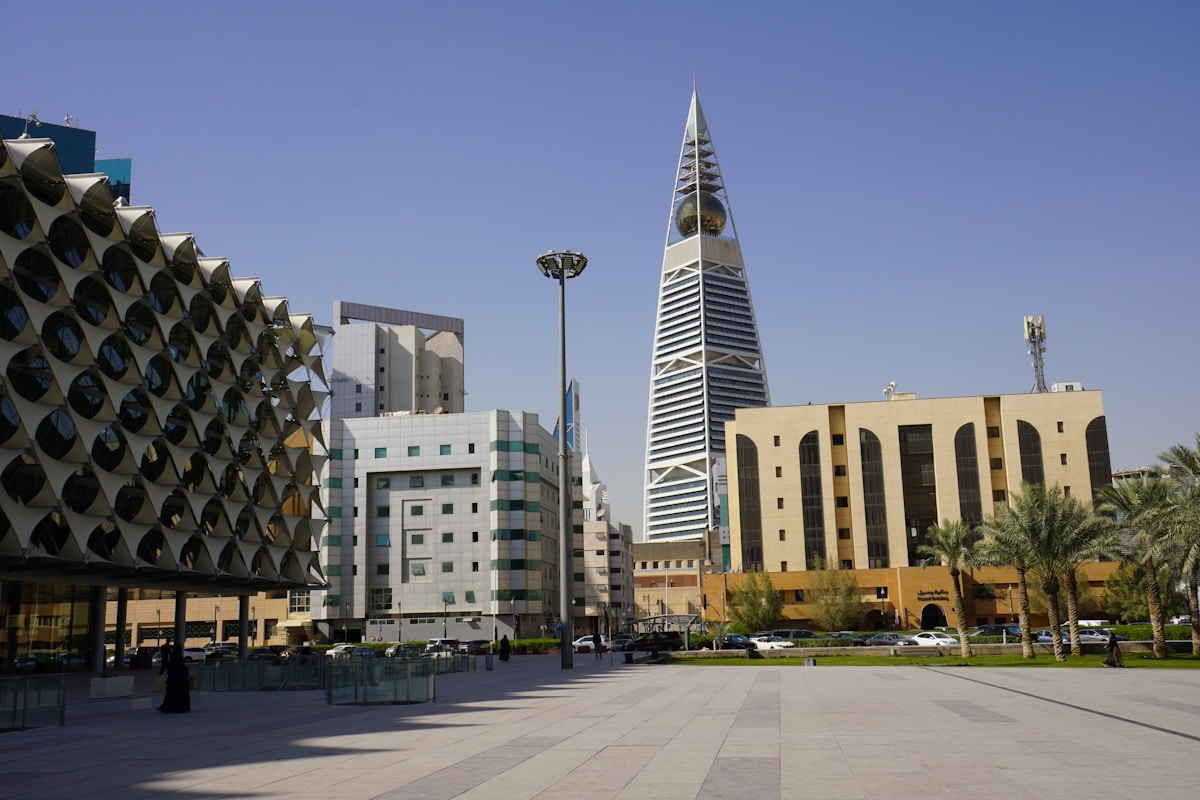
Saudi Arabia was not on most digital nomads’ radar three years ago. That has changed quickly. The country’s Vision 2030 overhaul has produced fast internet, modern coworking spaces, a functioning tourist visa, and multi-billion-riyal bets on future cities. It is not a classic nomad hub - no beach cafes, no co-living scenes - but for those willing to trade the usual tropics for an Arab megacity in mid-transformation, the infrastructure is better than you might expect.
The Visa Situation
Tourist E-Visa (Short Stay)
Saudi Arabia opened its e-visa to most Western nationals in 2019. As of 2026, citizens of the UK, US, EU countries, Australia, and dozens of other nationalities can apply online via visa.visitsaudi.com. The visa costs approximately SAR 300 (around USD 80) and allows a cumulative stay of 90 days within 12 months.
For a nomad planning to stay one to three months, this is the simplest entry route. Remote work for a foreign employer in your own country is not formally prohibited, though Saudi law does not explicitly define the status. Many nomads operate here without issue; if you are working for Saudi clients or earning income within the Kingdom, a proper work permit or business visa is needed.
Saudi Premium Residency
The Saudi Premium Residency (SPR) is the country’s closest equivalent to a long-term nomad or investor visa. Launched in 2019, it gives holders and their immediate family the right to live, work, and own property in Saudi Arabia indefinitely - closer in scope to a European permanent residency than a typical short-stay permit.
There are two routes:
Immediate Premium Residency - a one-time fee of SAR 800,000 (approximately USD 213,000 as of 2026). Grants permanent residency with no minimum stay requirement.
Annual Premium Residency - SAR 100,000 per year (approximately USD 26,700). Renewable annually with proof of continued eligibility.
These price points put the SPR firmly in the high-net-worth or senior executive bracket. For most digital nomads, the tourist e-visa is the realistic route. However, if you are a freelancer with substantial assets or run a remote company with global revenues, the SPR is worth examining - particularly given Saudi Arabia’s 0% personal income tax.
Applications are managed through the National Information Center’s SPR portal. Processing times have varied between two and eight weeks historically.
Business and Work Visas
If you are a remote worker employed by a company with a Saudi office, or if you are contracting for Saudi businesses, you will need a formal work visa sponsored by a Saudi employer. This process involves your employer applying to the Ministry of Human Resources - not something a solo nomad can self-initiate.
Internet and Digital Infrastructure
This is where Saudi Arabia genuinely over-delivers. The country has invested heavily in telecoms since Vision 2030 launched, and the results are visible.
Fixed broadband in Riyadh and Jeddah typically delivers 100–500 Mbps through providers including STC (Saudi Telecom), Mobily, and Zain. Fibre-to-the-building is standard in most modern residential towers and serviced offices.
5G mobile coverage is extensive across central Riyadh, the KAFD financial district, Al Khobar, and Jeddah’s city centre. Expect 100–300 Mbps on 5G with consistent latency well under 30ms.
SIM cards are available at airport arrival halls and any telecoms shop. STC’s tourist SIM offers 50 GB for approximately SAR 100 - bring your passport. eSIM options from international providers like Airalo also work on arrival, useful for maintaining connectivity while sorting a local SIM.
Power stability is excellent. Rolling blackouts or voltage fluctuations are not a concern in urban Saudi Arabia.
Coworking Spaces in Riyadh
Riyadh has developed a genuine coworking scene over the past four years, driven partly by the influx of multinational companies relocating regional headquarters there under government incentives.
Regus and IWG maintain multiple centres across central Riyadh and the King Abdullah Financial District (KAFD). Day passes run approximately SAR 150–200; monthly dedicated desks from SAR 1,800.
WeWork Riyadh opened in KAFD and has become a focal point for the international business community. Hot desking runs around SAR 200/day or SAR 1,500–2,000 per month for a flex membership.
Nimmah is a Saudi-founded space with locations in Riyadh and Jeddah. It caters to startups and creative professionals with a slightly more local atmosphere than the international chains. Monthly plans from approximately SAR 1,200.
Flat6Labs and MCIT hubs - the Ministry of Communications and Information Technology funds several innovation centres with free and subsidised desk access for registered startups and freelancers. Worth investigating if you plan to stay three months or longer.
Most coworking spaces require a local phone number and passport scan for registration. Day passes are easy to arrange without advance booking on weekdays.
Coworking in Jeddah
Jeddah’s coworking scene is smaller but growing alongside the city’s reinvention as a Red Sea tourism and business hub.
Al Balad District (Jeddah’s UNESCO-listed historic quarter) now has several boutique creative spaces in restored coral-stone buildings - atmospheric but with more variable internet than purpose-built offices.
Cowork Jeddah and Hub Jeddah operate in the north of the city near the commercial districts along King Abdullah Road. Expect similar pricing to Riyadh: SAR 150–200/day, SAR 1,200–1,800/month.
The King Abdulaziz International Airport area has business lounges with day-use rates if you need reliable connectivity between projects.
Cost of Living for Remote Workers
Saudi Arabia is not the cheapest Gulf destination, but it is meaningfully less expensive than Dubai or Abu Dhabi for day-to-day living.
Accommodation - A furnished studio in central Riyadh (Olaya, Al Malaz, or KAFD area) runs approximately SAR 3,500–5,000/month. Short-term furnished apartments through platforms like Gathering and local operators are available from SAR 120–200/night, often with weekly discounts. Serviced apartments aimed at business travellers provide the most reliable option for stays of one to three months.
Search hotels in Saudi Arabia on Booking.com
Food - Saudi Arabia has no restrictions on cafes or restaurants (alcohol is not available). A meal at a mid-range restaurant costs SAR 40–80. The country has embraced international food culture enthusiastically: you will find every major global cuisine in Riyadh, particularly along Tahlia Street and in the Diplomatic Quarter. Home cooking is very affordable - supermarkets like Panda and Carrefour are well-stocked with imported and local produce.
Transport - Ride-hailing through Uber and Careem is extensive, reliable, and inexpensive. Cross-city trips in Riyadh cost SAR 15–35. The Riyadh Metro (launched 2024) now connects key districts including King Fahd Road, KAFD, and the university area. No car is needed for city living in Riyadh or Jeddah.
Monthly budget estimates (as of 2026):
| Expense | Budget | Comfortable |
|---|---|---|
| Accommodation | SAR 3,000 | SAR 5,500 |
| Food | SAR 1,200 | SAR 2,000 |
| Transport | SAR 400 | SAR 700 |
| Coworking | SAR 1,200 | SAR 2,000 |
| SIM/internet | SAR 150 | SAR 200 |
| Total | ~SAR 5,950 | ~SAR 10,400 |
At the current SAR/USD rate (approximately 3.75), that equates to roughly USD 1,590–2,770/month - competitive with Lisbon or Chiang Mai and significantly below Dubai.
NEOM and the Future Infrastructure Question
No digital nomad article about Saudi Arabia can ignore NEOM. The USD 500 billion giga-project in the northwest Tabuk region encompasses The Line (a 170 km linear city), Sindalah (a luxury island), Aqaba (a mountain resort), and Oxagon (an industrial port).
As of mid-2026, NEOM is a construction site, not a destination. The Line’s first residential segments are not expected to open to the public before the late 2020s, and current access is restricted to project employees and contractors. Qiddiya, the entertainment megacity being built southwest of Riyadh, is further along - partial attractions are scheduled to open from 2027.
What NEOM represents for nomads is a longer-horizon signal: Saudi Arabia is betting enormous sums on building cities from scratch with digital infrastructure baked in. Whether those bets pay off is an open question. For now, Riyadh and Jeddah are the practical bases.
Practical Considerations
Banking - Opening a Saudi bank account without a residency permit (Iqama) is difficult. For shorter stays, Wise, Revolut, and international credit cards with no foreign transaction fees work well everywhere. Cash (SAR) is accepted widely but card payments are standard in cities.
Language - English is widely spoken in business districts, hotels, and expat-facing services. Arabic signage dominates outside tourist areas. Google Translate with Arabic offline pack is worth having.
Culture and dress - Saudi Arabia has relaxed dress requirements significantly since 2017. Women are no longer required to wear abaya in public. Modest dress (covered shoulders and knees) is appreciated in conservative areas and religious sites. Entertainment restrictions have been lifted - cinemas, live music venues, and mixed social events are now common in Riyadh and Jeddah.
Healthcare - Private hospitals in Riyadh (Dr Sulaiman Al Habib, Saudi German Hospital) provide high-standard care. Comprehensive travel insurance covering medical evacuation is strongly recommended. Costs without insurance are high by regional standards.
Heat - Riyadh temperatures reach 45°C in summer (June–August). Working life in Saudi Arabia during summer is almost entirely indoors. If you are sensitive to heat, plan your stay for October to April.
Is Saudi Arabia Right for You?
Saudi Arabia suits a specific kind of digital nomad: one who values fast infrastructure, low tax, personal safety, and a culture unlike anywhere else on earth - and who does not need the social scene that defines Bali, Medellin, or Tbilisi. The country is genuinely open in ways it was not five years ago, and it rewards the nomad willing to engage with it on its own terms.
The absence of a dedicated digital nomad visa remains a gap. The 90-day tourist window works for a medium stay, and the Premium Residency is transformative if you can afford the entry cost. For everyone in between, Saudi Arabia is worth adding to the rotation - particularly as a base for exploring the Arabian Peninsula.