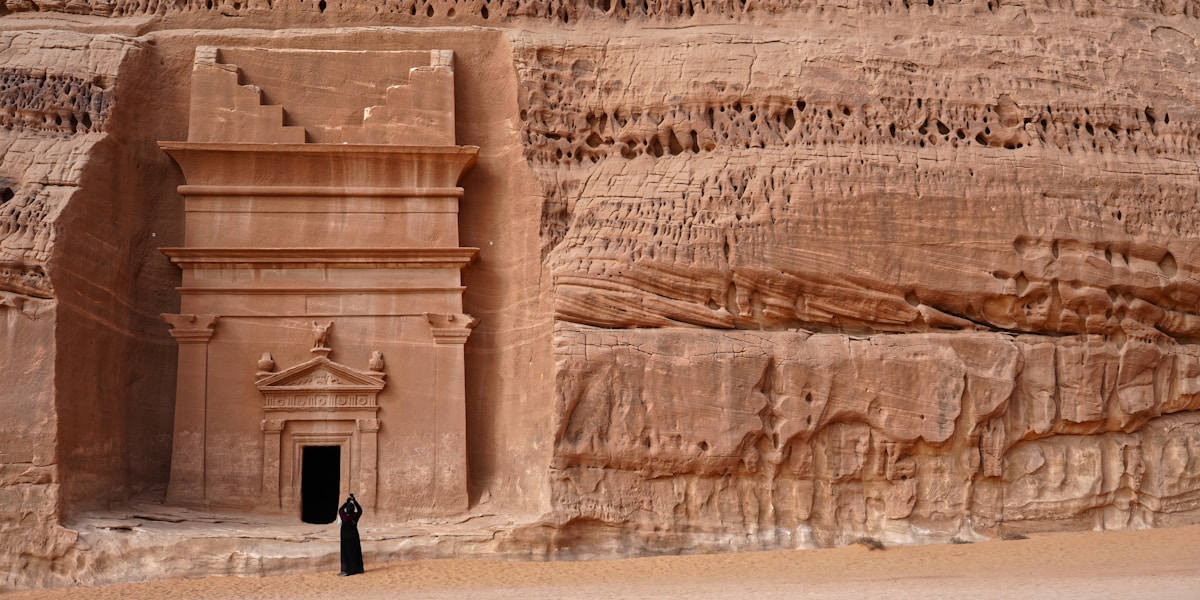
Saudi Arabia has two flagship tourism bets pulling in opposite directions. AlUla reaches 2,000 years back into Nabataean, Lihyanite, and Dadanite history. NEOM looks forward - a 26,500 km² mega-project in the Tabuk region promising futuristic cities, ski resorts, and a 170-kilometre linear city. In 2026, these two destinations are in radically different states of readiness for visitors.
Quick Comparison
| Category | AlUla | NEOM |
|---|---|---|
| Location | Al-Madinah Province, northwest | Tabuk Province, northwest Red Sea coast |
| Core appeal | Nabataean tombs, rock art, oasis valley | Futuristic mega-project, Red Sea coast |
| Visitor access | Fully open (ticketed sites) | SINDALAH partial opening; rest under construction |
| UNESCO heritage | Hegra (first Saudi UNESCO site, 2008) | None (under development) |
| Best for | History, archaeology, landscape photography | Yachting, curiosity about Saudi ambition |
| Hotel range | SAR 800–4,000/night | Limited (SINDALAH marina hotel) |
| Distance from Riyadh | ~1,100 km (fly) | ~1,500 km (fly or drive from Tabuk) |
AlUla: Ancient Arabia on a Scale You Won’t Expect
AlUla sits in a valley of sandstone formations - layered cliffs, rock spires, and boulder fields carved by millennia of wind and water. The valley itself is about 20 km long, wide enough to contain an ancient walled city, a 19th-century Ottoman town, date palm groves, and the ruins of multiple pre-Islamic civilisations stacked in chronological layers.
The centrepiece is Hegra (Madain Saleh) - 111 monumental Nabataean tombs cut directly into rose-gold sandstone cliffs. The Nabataeans carved them between the 1st century BCE and 1st century CE; they are contemporaries of Petra in Jordan and in some ways more intimate, since Hegra sees far fewer visitors. Entry costs approximately SAR 185 per person as of 2026. Daily visitor numbers are capped and tickets sell out - book directly through the Experience AlUla app or the RCU website well in advance.
AlUla’s heritage landscape also includes:
- Dadan: Capital of the ancient Lihyanite kingdom, with royal rock-cut tombs visible from below and accessible by stairs. Entry approximately SAR 95 as of 2026.
- Jabal Ikmah: An open-air library of Nabataean, Lihyanite, Dadanite, and early Arabic inscriptions on canyon walls. Entry included with the Dadan ticket.
- Old Town AlUla: A 900-year-old mud-brick town abandoned in 1983, now being sensitively restored as a heritage walk. Free entry as of 2026.
- Elephant Rock (Jabal al-Fil): A natural rock formation resembling an elephant, accessible by car and free to visit. Atmospheric at sunset.
Beyond archaeology, AlUla’s winter festival (Hegra Winter at Tantora, typically December–March) brings live music, hot air balloons, and land art installations to the valley. Summer is extremely hot (40°C+) and fewer sites operate.
Where to Stay in AlUla
Luxury: Habitas AlUla is the standout - 96 eco-designed tent-style rooms set among the sandstone cliffs, from approximately SAR 2,800/night (USD 745) as of 2026. Banyan Tree AlUla offers a clifftop retreat from approximately SAR 3,500/night (USD 935) as of 2026.
Mid-range: Shaden Resort AlUla runs approximately SAR 900–1,400/night (USD 240–375) and has good access to the main valley sites as of 2026.
Budget: The AlUla Vacation Homes programme offers private houses in the old town area from approximately SAR 600/night (USD 160) - the most atmospheric option at this price point as of 2026.
Where to Eat in AlUla
Suhail Restaurant (Shaden Resort) serves Hejazi-influenced Saudi cooking - lamb, dates, and mountain herbs - at approximately SAR 150–220 per person as of 2026. The Corniche at Habitas AlUla has an open-air terrace with a short seasonal menu at similar prices. For budget dining, the Old Town street food vendors serve kabsa and grilled meats at approximately SAR 40–70 per person.
NEOM: Vision Under Construction
NEOM is a 26,500 km² development zone straddling the Tabuk coastline and the mountains running toward the Jordanian border. It is simultaneously the world’s most ambitious urban project and, for visitors in 2026, one of the most frustrating to actually visit.
THE LINE - the 170-km linear city with mirrored facades visible from space - is under construction and not accessible. OXAGON (a floating industrial city on the Red Sea) and Trojena (a mountain ski resort planned to open for the 2029 Asian Winter Games) are similarly off-limits to tourists.
SINDALAH is the one component with active tourism infrastructure as of 2026. The island, in the Gulf of Aqaba just offshore from the NEOM coast, has a 420-berth yacht marina, a yacht club, beach clubs, and a small number of waterfront properties. Access is primarily by yacht from Aqaba (Jordan) or by transfer from Tabuk. If you don’t arrive by sea, options are limited. Rates at SINDALAH’s marina hotel are from approximately SAR 1,800/night (USD 480) as of 2026, though availability is restricted to booking through NEOM’s own channels.
Beyond SINDALAH, the closest practical NEOM experience for most visitors is the approach through Tabuk Province - a landscape of granite mountains, winding wadis, and small villages that the project is being built around and above. Tabuk city itself has:
- Tabuk Castle: 16th-century Ottoman fort, free entry as of 2026
- Hisma Desert: dramatic basalt and sandstone desert near Al-Bad, accessible by 4WD
- The Gulf of Aqaba coastline north of the NEOM zone, with clear water and reef diving near the town of Sharma
Getting to NEOM
Tabuk Airport serves the region with direct flights from Riyadh (approximately SAR 250–500 one-way as of 2026) and Jeddah (approximately SAR 200–400 one-way). The drive from Tabuk to the NEOM boundary is approximately 200 km on a new highway. SINDALAH access from the mainland requires pre-arranged transfer.
Which Should You Visit in 2026?
AlUla is the clear winner for right now. The sites are open, the infrastructure is in place, and the experience - standing in front of 2,000-year-old tombs in a sandstone canyon - is genuinely world-class. AlUla is Saudi Arabia’s strongest card in global heritage tourism and it is ready.
NEOM is worth following but premature to visit unless you have a yacht and want SINDALAH’s marina scene, or you are specifically researching the mega-project for professional reasons. The Tabuk Province landscape surrounding NEOM is impressive in its own right and can be visited independently via Tabuk.
For our full AlUla guide, see the AlUla heritage guide and the Hegra site guide. If you’re planning itinerary time in the northwest, our AlUla 3-day itinerary covers how to structure the days.
See also our broader NEOM and Vision 2030 overview for context on where the project stands.
Before you travel, compare flights to Saudi Arabia, arrange travel insurance that covers the region, and pick up a Saudi eSIM so you have data from the moment you land.
See Also
- AlUla City Guide - full logistics for visiting AlUla
- AlUla Heritage Guide - the ancient kingdoms of the valley
- Hegra (Madain Saleh) - the Nabataean tombs that make AlUla essential
- Tabuk City Guide - the nearest established city to NEOM
- NEOM and Vision 2030 - detailed breakdown of what’s open now
- 10 Days in Saudi Arabia - itinerary covering AlUla and the Tabuk/NEOM coast
More Saudi Comparisons
- Saudi Arabia vs UAE — planning the wider Gulf region if AlUla is part of a bigger trip
- Riyadh vs Jeddah — the two gateway cities for reaching AlUla and the northwest
- Red Sea vs Arabian Gulf — NEOM sits on the Red Sea; here’s how it compares to the Gulf coast
- Abha vs Taif — Saudi Arabia’s other dramatically scenic highland destinations
Plan Your Trip
✈️ Book your flights to Saudi Arabia 🛡️ Get travel insurance 📱 Stay connected with an eSIM 🚗 Rent a car