AlUla Travel Guide: Hegra, Dadan & the Ancient City
Hegra's 111 Nabataean rock tombs, Dadan's ancient ruins, and Harrat Uwayrid lava fields: plan two nights to do Saudi Arabia's heritage jewel justice.
Guides for AlUla
AlUla is Saudi Arabia’s most remarkable heritage destination - a valley in the northwestern Hijaz Mountains that has been continuously inhabited for at least 7,000 years. It was home to the Dadan and Lihyan kingdoms, then became a major Nabataean city called Hegra, and later a stop on the Hijaz Railway. It only opened to international tourists in 2019.
Understanding AlUla
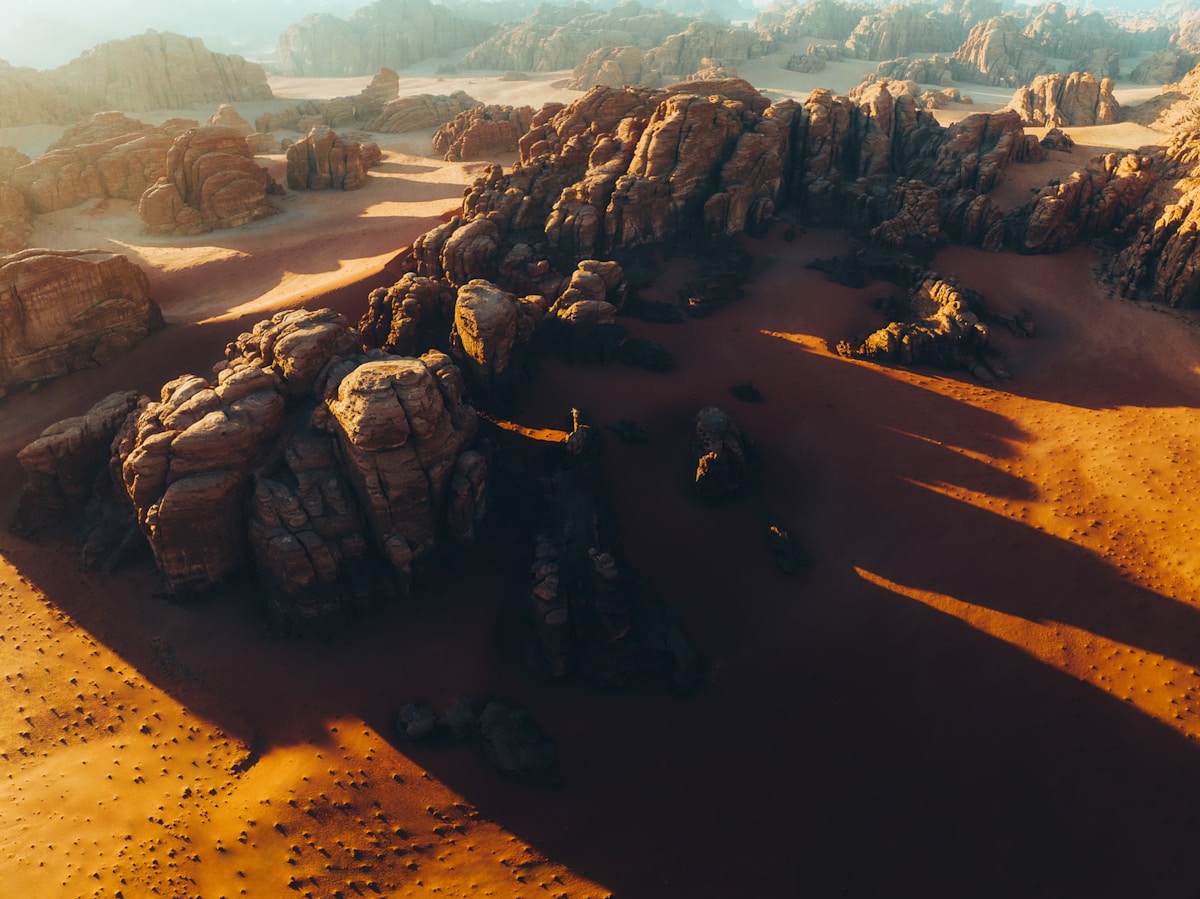
The AlUla region covers more than 22,000 square kilometres of northwest Saudi Arabia, but the main tourist zone is concentrated in the AlUla Valley and the surrounding rock formations. The ancient oasis town of AlUla sits in a palm-lined valley, surrounded by sandstone cliffs and escarpments.
The key distinction to make: Hegra (historically called Madain Saleh) is the name of the Nabataean city with the famous rock-cut tombs. It is about 22 kilometres from the town of AlUla. Dadan - an older site associated with the Dadan and Lihyan kingdoms - is closer to the town centre.
Hegra: Booking and Visiting
Hegra is AlUla’s defining attraction. The site contains 111 well-preserved Nabataean tombs, carved into sandstone outcrops between the 1st century BC and 4th century AD. The largest tombs - at Qasr al-Farid and Jabal al-Ahmar - are structurally similar to Petra in Jordan but see dramatically fewer visitors.
All visits to Hegra require advance booking through the AlUla Welcome Centre at experiencealula.com. The standard guided tour runs 2 hours and departs from the Welcome Centre, 15 kilometres from the tombs - a shuttle is included in the ticket price. Tours available daily 7am–3pm; no evening access. Adult SAR 195, as of 2026 child SAR 95. Photography is permitted throughout the site.
Tours depart on golf buggies across the site, covering the main tomb clusters. Early morning (first departure) and late afternoon give the best light on the sandstone facades. The site gets hot from mid-morning - bring water and sun protection even in cooler months.
See the full Hegra guide for detailed information on the tombs and what to expect.
Dadan Archaeological Site
Dadan was the capital of the ancient Dadan and Lihyan kingdoms, predating the Nabataean occupation by several centuries. The site was opened to visitors in 2024 and includes carved lion tombs cut into the cliff face - a form of monumental architecture distinct from the Nabataean tombs at Hegra. Entry SAR 75, including the shuttle from the AlUla Welcome Centre. The site is 5 kilometres from AlUla town.
The old town of AlUla itself has a compact historic district of mud-brick structures, partially abandoned and partially restored - worth an hour on foot.
Elephant Rock (Jabal Alfil)
Elephant Rock is 12 kilometres from AlUla town - a massive sandstone formation naturally eroded into the shape of an elephant, the trunk extending toward the ground. Free access. Accessible by car on a paved track. Best photographed at sunset, when the sandstone turns deep amber. Several restaurants and cafes operate at the base of the rock during peak season (November–March), making it a practical evening stop after a day at Hegra.
The Wider Landscape
The Harrat Uwayrid lava fields to the north of AlUla offer a stark, otherworldly landscape - dark basalt against the sandstone palette of the valley. The AlUla desert provides the setting for the Winter at Tantora festival’s outdoor concerts (December–March), which take place against the backdrop of the Nabataean cliffs.
Where to Stay
Banyan Tree AlUla: Ten suites in a luxury desert resort - the most exclusive option in the region. From SAR 3,500 per night.
Habitas AlUla: 96 tented suites set in the landscape, blending comfort with outdoor character. The most popular mid-luxury option with international travellers. From SAR 1,800 per night.
Shaden Resort: A traditional mudbrick-style property with strong visual ties to the surrounding architecture. From SAR 900 per night - the best-value option among the premium properties.
Book well in advance for the Winter at Tantora season (December–March) - all three properties sell out months ahead during festival periods. For a full breakdown of accommodation options and neighbourhoods, see the where to stay in AlUla guide.
Search hotels in AlUla on Booking.com
Getting to AlUla
By air: AlUla Regional Airport (ULH) has direct flights from Riyadh (1 hour 20 minutes, SAR 200–500 on Saudia) and Jeddah (1 hour, from SAR 180). Book early in peak season - flights sell out. The airport code is ULH.
By road from Riyadh: Approximately 5 hours - viable for a long weekend if you prefer to drive and want the flexibility.
Organised tours are the most practical way to access Hegra and the surrounding sites - book through our AlUla tours page. For a detailed breakdown of what to do in the region, see the AlUla things to do guide and our AlUla tours guide. Planning a longer stay? Our AlUla 3-day itinerary gives a structured day-by-day plan. Visiting in winter? See the Winter at Tantora festival guide for concert and event details. Comparing AlUla with NEOM? See the AlUla vs NEOM comparison. Self-drive is possible for most sites - car hire gives you flexibility for Elephant Rock and the Dadan trail - but Hegra specifically requires a booked guided tour regardless of how you arrive.
See Also
- AlUla things to do - Dadan, Jabal Ikmah, and Elephant Rock in detail
- Where to stay in AlUla - Banyan Tree, Habitas, and Shaden Resort
- AlUla heritage history - the Dadan, Lihyan, and Nabataean kingdoms
- Hegra guide - the Nabataean city and its 111 rock-cut tombs
- AlUla tours guide - operators, prices, and what to expect
- Winter at Tantora festival - concerts and experiences December through March
- AlUla 3-day itinerary - day-by-day plan for the region
- AlUla vs NEOM comparison - comparing heritage tourism with Saudi’s futuristic megaproject
Upcoming Events in AlUla
Winter at Tantora AlUla 2026 to 2027
alula
Winter at Tantora AlUla 2026 to 27, December to March. Concerts at Maraya mirror hall, art installations, craft markets, and Nabataean heritage tours.
Book an experience
Top experiences in AlUla
Explore the best tours and activities in AlUla , with instant confirmation and free cancellation on most bookings.
Book experiences in Saudi Arabia