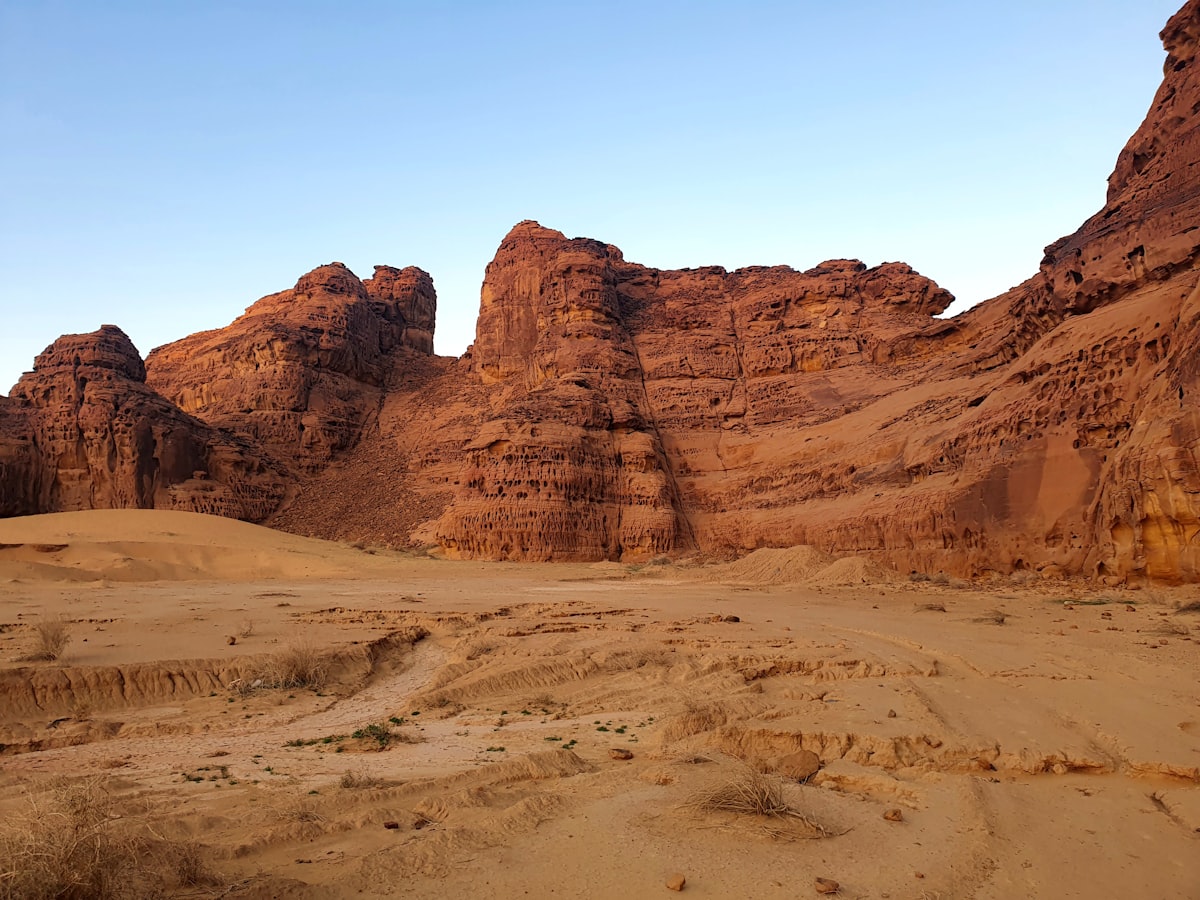
AlUla is the kind of destination that recalibrates your sense of scale. An ancient oasis valley in northwest Saudi Arabia, it holds the country’s first UNESCO World Heritage Site (Hegra), a canyon of open-air rock inscriptions older than the New Testament, and a concert hall built in a mirror that reflects the desert. Three days is enough to see the headline sites without rushing - though the landscape has a way of making you wish you’d planned for five.
The region receives the bulk of its visitors between October and March, when temperatures are 15–25°C during the day. Summer visits (June–September) are possible but peak daytime heat reaches 38–42°C; most activities are moved to early morning or evening.
Planning and Booking Notes
Nearly all the major archaeological sites at AlUla require advance booking through the Experience AlUla platform (experiencealula.com). Timed-entry slots for Hegra sell out days or weeks ahead during peak season (December–February). Book before you arrive - ideally when you book your flights.
Guided tours are compulsory for Hegra; you cannot explore it independently. For Dadan and Jabal Ikmah, guided access is the standard method though the rules may update - check the platform for current requirements.
Day 1: Hegra and Elephant Rock at Sunset
Morning - Hegra (Madain Saleh)
Hegra is the centrepiece of any AlUla visit. Dating from the first century BCE to the first century CE, it is the largest preserved Nabataean city outside Petra in Jordan - and for most visitors, just as breathtaking. The Nabataeans carved monumental tombs into the sandstone outcrops that rise from the desert floor. Around 111 decorated tombs survive, many with elaborate facades featuring carved eagles, deities, and dedicatory inscriptions in Nabataean script.
Entry is by guided tour only, booked through Experience AlUla. Tour prices are approximately SAR 195–250 per person as of 2026 depending on tour type (standard vs. premium). Tours typically run in the morning (7am–11am) and afternoon (3pm–sunset). The morning session offers better light for photography.
What to expect on the tour: an air-conditioned shuttle bus moves between tomb clusters. The Qasr Al-Farid tomb - a single massive facade carved into a lone boulder - is the most photographed structure in AlUla. Allow two to three hours for the full site.
Wear sun protection and closed shoes; the site involves walking on sand and uneven ground.
Lunch
Return to AlUla Old Town for lunch. Harat Al Shomali restaurant near the old town serves traditional Hejazi dishes - lamb mandi, jareesh (cracked wheat with meat), and date-based desserts. Approximately SAR 60–90 per person.
Afternoon/Evening - Elephant Rock
Elephant Rock (Jabal Al-Fil) is a natural sandstone formation that genuinely resembles a giant elephant, complete with a weathered arch beneath that reads as the animal’s leg. It’s located about 11 km north of the town centre - a SAR 15–25 taxi ride.
The area around Elephant Rock has been developed with a café bar and outdoor seating for the golden hour crowd. Café Elephant Rock operates on-site; coffee, tea, and light snacks approximately SAR 20–50. Arrive 90 minutes before sunset to walk around the rock, photograph it from multiple angles, and choose your spot before the crowd peaks. The orange sandstone glows intensely in the last hour of daylight.
Day 2: Old Town, Dadan, Jabal Ikmah, and Maraya
Morning - AlUla Old Town and Dadan
AlUla Old Town (Dareah) is a 13th-century mud-brick settlement that was continuously inhabited until the 1980s. The town has around 900 abandoned buildings, narrow alleys, and a fort on a ridge above. It has been partially restored and is free to explore at your own pace; allow 60–90 minutes.
Dadan is an ancient city adjacent to the old town, predating even the Nabataeans - it was the capital of the Dadanite and Lihyanite kingdoms from roughly the ninth century BCE. The site has rock-cut tombs on a cliff face above the valley floor, reached by a short but steep trail. Entry and guided access are booked through Experience AlUla; approximately SAR 80–120 per person as of 2026.
Mid-Morning - Jabal Ikmah
Jabal Ikmah is an open-air library. The cliff faces of this low rocky hill are covered in thousands of inscriptions in Dadanite, Lihyanite, Minaic, Aramaic, and Nabataean scripts - some of the most extensive rock-art records in the Arabian Peninsula. An inscribed path guides visitors along the base of the cliffs.
Access is through a guided tour from Experience AlUla; typically bundled with Dadan or sold as a separate entry (approximately SAR 60–100 as of 2026). The site is most comfortable in the morning before temperatures peak.
Lunch
Hijazi Bites in the new town serves contemporary takes on north Arabian cuisine - mixed grill plates, fattoush, and saleeg (white rice slow-cooked in broth). Approximately SAR 70–100 per person.
Afternoon/Evening - Maraya
Maraya is a concert hall and events venue covered entirely in mirrors. The word means “mirrors” in Arabic; the building reflects the surrounding desert and mountains so precisely that it appears to dissolve into the landscape. It holds the Guinness World Record as the world’s largest mirrored building.
The exterior can be visited freely during daylight. Interior events - concerts, art exhibitions, cultural performances - run on a seasonal programme; check experiencealula.com for current listings. Ticket prices for events vary from approximately SAR 100 for a general cultural evening to SAR 500+ for headlining concerts during the Winter at Tantora festival (January–February).
Even if no events are scheduled, the building at golden hour - when the mirrors turn the colour of the surrounding rock - is one of the most unusual sights in Saudi Arabia.
Day 3: Adventure Activities and Stargazing
Morning - Zip-line or Dune Activities
AlUla has added a growing range of adventure activities, most operated through licensed Experience AlUla partners.
Zip-line: A 1 km zip-line runs from a ridge above the valley floor down toward the old town, offering aerial views of the sandstone landscape. Approximately SAR 250–350 per person as of 2026; book through the Experience AlUla platform. Weight limits apply (typically 50–120 kg).
Hot air balloon: Seasonal balloon flights run in the early morning, departing roughly 45–60 minutes before sunrise. The flight covers the AlUla valley, Hegra plain, and surrounding rock formations - arguably the best possible way to understand the scale of the landscape. Approximately SAR 800–1,200 per person as of 2026. Available October to March; book several weeks ahead in peak season.
Dune driving and quad biking: Several operators near Hegra offer guided dune sessions in 4x4s or quad bikes. Approximately SAR 200–350 per person for a 90-minute session.
Lunch
Khazam Café near the AlUla town centre has a good lunch menu and shaded outdoor seating. Approximately SAR 50–80 per person.
Evening - Stargazing
AlUla’s location - far from major urban light pollution - and its clear, dry air make it one of the better stargazing locations in Saudi Arabia. Several operators run guided sessions after dark, typically combining a fire circle, Arabic coffee, and a telescope session with a guide who explains what’s visible. Approximately SAR 180–280 per person as of 2026.
Alternatively, any point well away from AlUla’s own lights is workable. The desert plateau near Elephant Rock, after the café closes, offers dark skies and usually a few other visitors doing the same thing.
Where to Stay in AlUla
Luxury (approximately SAR 2,500–5,000+ per night as of 2026)
Habitas AlUla is the headline address - a cluster of sustainably designed tented suites built into a canyon, with a restaurant, pool, and evening programming. Widely regarded as among the best hotel experiences in Saudi Arabia. Sold out months ahead during winter season; book early.
Shaden Resort offers a more traditional Saudi hospitality experience in the middle of the valley, with views directly onto the old town and mountains. Contemporary rooms, a good restaurant, and attentive service. Approximately SAR 1,200–2,500 per night as of 2026.
Mid-Range (approximately SAR 500–1,200 per night as of 2026)
Sahary AlUla Resort has comfortable rooms in a resort-style compound near the old town, with a pool and on-site dining. Nawafeth AlUla Hotel is more centrally located and well-reviewed for service quality.
Budget (approximately SAR 200–450 per night as of 2026)
Guesthouses and smaller hotels in the AlUla town centre are limited but growing; check Booking.com or the Experience AlUla accommodation listings for current options. Demand consistently outpaces supply in winter peak; mid-range and up is advisable if budget allows.
Search hotels in AlUla on Booking.com
Getting to AlUla
By air: Prince Abdul Majeed bin Abdulaziz Airport (ULH) serves AlUla with direct flights from Riyadh and Jeddah. Flight time from Riyadh is approximately 1.5 hours; Jeddah approximately 1 hour. Saudia and flyadeal operate routes; check current schedules as frequency increases seasonally.
By car from Riyadh: Approximately 1,100 km via the northern highway - a long day’s drive or an overnight stop. Not recommended unless you specifically want a road trip.
By car from Madinah: Approximately 350 km, around 3.5 hours. This is a more practical driving option if you’re combining AlUla with a Madinah visit.
A rental car is useful in AlUla (from approximately SAR 120–200 per day as of 2026), though most key sites are accessible via the Experience AlUla shuttle system if you prefer not to drive.
Practical Notes
- Visa: Tourist e-visa required for most nationalities. Verify at
visitsaudi.com. - Cash vs. card: Cards are accepted at all hotels and major venues. Keep some SAR cash for smaller cafés and local shops.
- Mobile signal: Coverage in AlUla town and at the main sites is good (STC and Zain). Remote desert areas have patchy signal.
- Dress: Modest clothing is expected. Comfortable, breathable layers work best - mornings can be cold in winter, middays warm.
- Time on-site: Rushing AlUla is possible but genuinely regrettable. If you can extend to four or five days, the Sharaan Nature Reserve and Wadi Disah are both worth the extra time.
Before finalising your trip, lock in flights to Saudi Arabia early for the best fares, consider a travel insurance policy that covers the full itinerary, and browse tours in Saudi Arabia to fill any free days with a guided experience.
See Also
- AlUla Things to Do - Dadan, Elephant Rock, and Jabal Ikmah in detail
- AlUla Hotels - Habitas, Banyan Tree, and mid-range options
- AlUla Heritage Guide - Dadan Kingdom, Lihyan Kingdom, and Nabataean period
- Hegra (Madain Saleh) - the Nabataean tombs at the heart of this itinerary
- Winter at Tantora Festival - cultural events at Maraya, December–March
- AlUla Tours Guide - operators and prices for guided experiences
- 1 Week Saudi Arabia Itinerary - AlUla as part of a national circuit
Book Your Trip
- Flights - Find the best fares to Saudi Arabia
- Travel Insurance - Get covered before you go
- eSIM - Stay connected from landing
- Airport Transfers - Pre-book your transfer from Riyadh or Jeddah
- Car Rental - Compare prices across providers
- Tours & Activities - Browse Saudi Arabia tours on GetYourGuide