Jeddah is Saudi Arabia’s most open and cosmopolitan city - a Red Sea port with 1,300 years of merchant history layered beneath a modern skyline. Three days is enough to cover the essentials: the UNESCO-listed old town, the Red Sea’s coral reefs, and the spectacle of the world’s tallest fountain. This itinerary is paced for first-time visitors but leaves room for lingering over a seafood lunch or an extra hour in an antique shop.
Day 1: Al-Balad Historic District and the Corniche
Morning - Al-Balad
Al-Balad, Jeddah’s old city, was inscribed on the UNESCO World Heritage List in 2014. The area covers roughly two square kilometres of coral-stone buildings, many with the intricate wooden rawasheen (carved latticed balconies) that define Jeddah’s architectural identity. Arrive by 8am before tour groups arrive and the heat builds.
Start at Naseef House (Beit Naseef), the 19th-century merchant mansion that was once the most important private residence in Jeddah - King Abdulaziz stayed here when he entered the city in 1925. Entry is approximately SAR 20 as of 2026; opening hours are generally 9am–10pm Sunday to Thursday, 4pm–10pm Friday, though verify current hours on arrival as they adjust seasonally. The building houses a permanent exhibition on Jeddah’s trading history and its ground-floor well - said to have never run dry - still draws visitors.
From Naseef House, walk east along Al-Alawi Street. The surrounding alleys are full of spice merchants, textile sellers, and gold jewellers. Beit Baeshen and Beit Al-Shafi’i are two other restored mansions worth a look from the outside; restoration work is ongoing throughout the district.
Allow two to two and a half hours for Al-Balad. Wear comfortable walking shoes and bring water.
Lunch
Al-Baik has an Al-Balad branch and remains the city’s most iconic fast-food chain - the broasted chicken and garlic sauce are genuinely good. Budget approximately SAR 25–40 per person. For a sit-down meal, Beit Al Romansiah in the historic district serves traditional Saudi dishes (machboos, mandi lamb) in a restored coral-house setting; expect approximately SAR 80–120 per person.
Afternoon - Jeddah Corniche
The Corniche stretches 30 km along the Red Sea shore. Take a taxi or ride-share from Al-Balad to the central Corniche section (approximately SAR 15–25). The waterfront promenade has parks, cafés, and unobstructed sea views. The Corniche Sculpture Museum is an open-air collection of large-scale sculptures spread along several kilometres of the waterfront - free to walk through.
In the late afternoon, head to the King Fahd Fountain viewing area. The fountain is the tallest in the world, reaching approximately 300 metres. It operates every day from 9am–midnight (with breaks), illuminated after dark in white light. You can see it clearly from the Corniche walkway; boat trips offer closer views for approximately SAR 50–80 per person. The best light for photography is golden hour, roughly 45 minutes before sunset.
Dinner
Nawaf Al Bahr restaurant on the Corniche is an institution for fresh Red Sea fish - grilled hammour (grouper) or safi (rabbitfish) priced by weight, typically SAR 120–200 for two. Book ahead on weekends. For something lighter, Urth Caffe on the Corniche is a popular all-day café with good coffee and mezze-style sharing plates.
Day 2: Red Sea Marine Life, Fakieh Aquarium, and the Floating Mosque
Morning - Red Sea Snorkelling or Diving
Jeddah sits on one of the healthiest coral reef systems in the Red Sea. Several dive centres operate day trips to sites north and south of the city. Dive Arabia and Red Sea Diving Safari (Jeddah branch) both offer guided snorkelling trips departing around 8am; expect approximately SAR 200–350 per person including equipment. For certified divers, two-tank dive trips run from approximately SAR 400–600. Sites such as the Abu Alama wreck and Shi’b Nazar reef are reachable within an hour’s boat ride.
If you prefer to stay closer to the city, the Obhor Creek area north of Jeddah has calmer water and coral accessible from the shore; a taxi to Obhor takes approximately 30 minutes from the city centre.
Lunch
Return to the city by early afternoon. Al-Shurfa Restaurant near the Corniche serves good traditional grills and fresh juices; approximately SAR 60–90 per person.
Afternoon - Fakieh Aquarium and the Floating Mosque
Fakieh Aquarium is Jeddah’s main public aquarium and one of the largest in the Middle East. It features shark tanks, a dolphin show, sea lions, and a small fairground section. Located on the northern Corniche. Entry is approximately SAR 80–110 for adults as of 2026; shows run at set times so check the schedule at the entrance. Expect to spend two hours here.
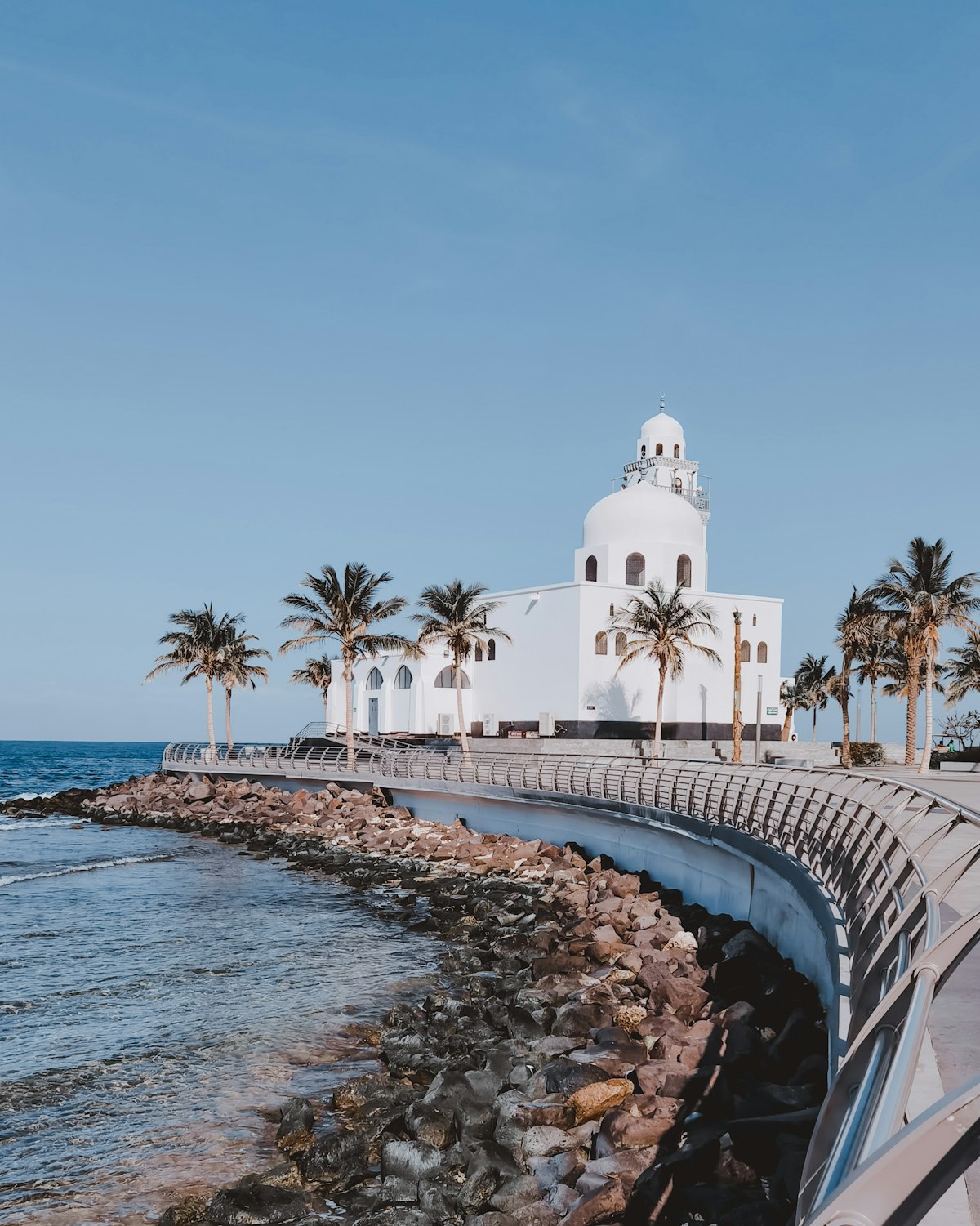
From the aquarium, take a short taxi ride to the Al-Rahma Mosque (commonly called the Floating Mosque). Built on stilts over the Red Sea, it appears to float on the water at high tide. The mosque is open for non-Muslim visitors outside prayer times - check posted prayer times at the entrance. No entry fee. Early morning or late afternoon produces the best light. The white dome and minarets against the sea make it one of Jeddah’s most photographed structures.
Evening
The Corniche cafés come alive in the evening. Layali Al Helm serves shisha and Arabic coffee with Red Sea views. Alternatively, explore the Prince Mohammed bin Abdulaziz Road (commonly called Tahlia Street) area for restaurant and café options - this is Jeddah’s main dining and shopping strip.
Day 3: Al Tayebat Museum, Red Sea Mall, and Farewell at the Fountain
Morning - Al Tayebat International City of Science and Knowledge
Al Tayebat is Jeddah’s most substantial museum complex - a recreated traditional Saudi village built across four floors of an enormous coral-stone structure. It covers the history, culture, and natural environment of the Hejaz region, with exhibits on Bedouin life, Islamic coins, traditional dress, and the history of Mecca and Madinah. The building itself, modelled on a merchant palace, is worth as much attention as the collections inside.
Located in the Al-Muhammadiyyah district; entry approximately SAR 50 for adults as of 2026. Opening hours are typically 9am–9pm Saturday to Thursday, closed Friday mornings. Allow two to three hours.
Lunch
Altamees Restaurant near Al Tayebat serves Saudi home cooking in a family-friendly setting - try the kabsa (spiced rice with chicken or lamb); approximately SAR 50–80 per person.
Afternoon - Red Sea Mall
Red Sea Mall on Tahlia Street is Jeddah’s most visited shopping centre. Saudi fashion brands sit alongside international retailers; the food hall has everything from Japanese ramen to Gulf sweets. If you want a single Saudi-produced item to take home, look for local oud (agarwood perfume) - Jeddah has several dedicated oud shops within the mall. Allow 90 minutes to two hours.
Evening - King Fahd Fountain After Dark
Return to the Corniche for one final look at the King Fahd Fountain after dark, when the illuminated jets are at their most dramatic. The waterfront fills with families in the evening - ice cream vendors, strolling crowds, and the sound of the sea. This is a good moment to pick up a coffee from one of the Corniche kiosks and reflect on the city before departure.
Where to Stay in Jeddah
Budget (approximately SAR 200–350 per night as of 2026)
ibis Jeddah City Center and City Seasons Al Hamra are reliable mid-range options in the central Corniche area, with clean rooms and easy taxi access to all the sites above.
Mid-Range (approximately SAR 500–900 per night as of 2026)
Radisson Blu Hotel Jeddah Al Salam on the Corniche has sea-facing rooms and a pool. Hyatt Regency Jeddah is well-located for Al-Balad and the Corniche.
Luxury (approximately SAR 1,200–2,500+ per night as of 2026)
Waldorf Astoria Jeddah – Qasr Al Sharq is a palace-style hotel on the Corniche, widely considered the best address in the city. The rooftop pool overlooks the Red Sea. Four Seasons Hotel Jeddah at the Corniche is the other flagship option, with a private beach and consistent service.
Search hotels in Jeddah on Booking.com
Getting Around Jeddah
Taxis and Uber/Careem (the dominant ride-share apps in Saudi Arabia) are the primary options. A cross-city journey typically costs SAR 20–50. The Corniche is walkable along its central stretch. Renting a car from one of the airport desks (from approximately SAR 120–200 per day as of 2026) gives more flexibility if you plan to visit Obhor or sites outside the city centre.
Practical Notes
- Best time to visit: October to March, when temperatures are 20–30°C. June to August is extremely hot (35–42°C); the city remains functional but outdoor activities are uncomfortable midday.
- Dress code: Jeddah is the most relaxed city in Saudi Arabia for dress norms, but modest clothing is expected in public areas, mosques, and Al-Balad.
- Currency: Saudi Riyal (SAR). ATMs are widely available. Most restaurants and shops accept cards.
- Visas: Tourist e-visas are available online for most nationalities; check the official Saudi tourism portal (visitsaudi.com) for current eligibility and fees.
Before finalising your trip, lock in flights to Saudi Arabia early for the best fares, consider a travel insurance policy that covers the full itinerary, and browse tours in Saudi Arabia to fill any free days with a guided experience.
See Also
- Jeddah Things to Do - full list of Jeddah attractions beyond this 3-day plan
- Jeddah Hotels - accommodation options for this itinerary
- Jeddah Food Guide - restaurant recommendations and local dishes
- Jeddah Food Guide (detailed) - extended coverage of Jeddah’s dining scene
- Red Sea Diving in Saudi Arabia - for extending Day 3 with a dive trip
- Farasan Islands - Red Sea islands for a longer Jeddah extension
- Riyadh vs Jeddah - comparing Jeddah to the capital for trip planning
- 1 Week Saudi Arabia Itinerary - this Jeddah leg as part of a national circuit
Book Your Trip
- Flights - Find the best fares to Saudi Arabia
- Travel Insurance - Get covered before you go
- eSIM - Stay connected from landing
- Airport Transfers - Pre-book your transfer from Riyadh or Jeddah
- Car Rental - Compare prices across providers
- Tours & Activities - Browse Saudi Arabia tours on GetYourGuide