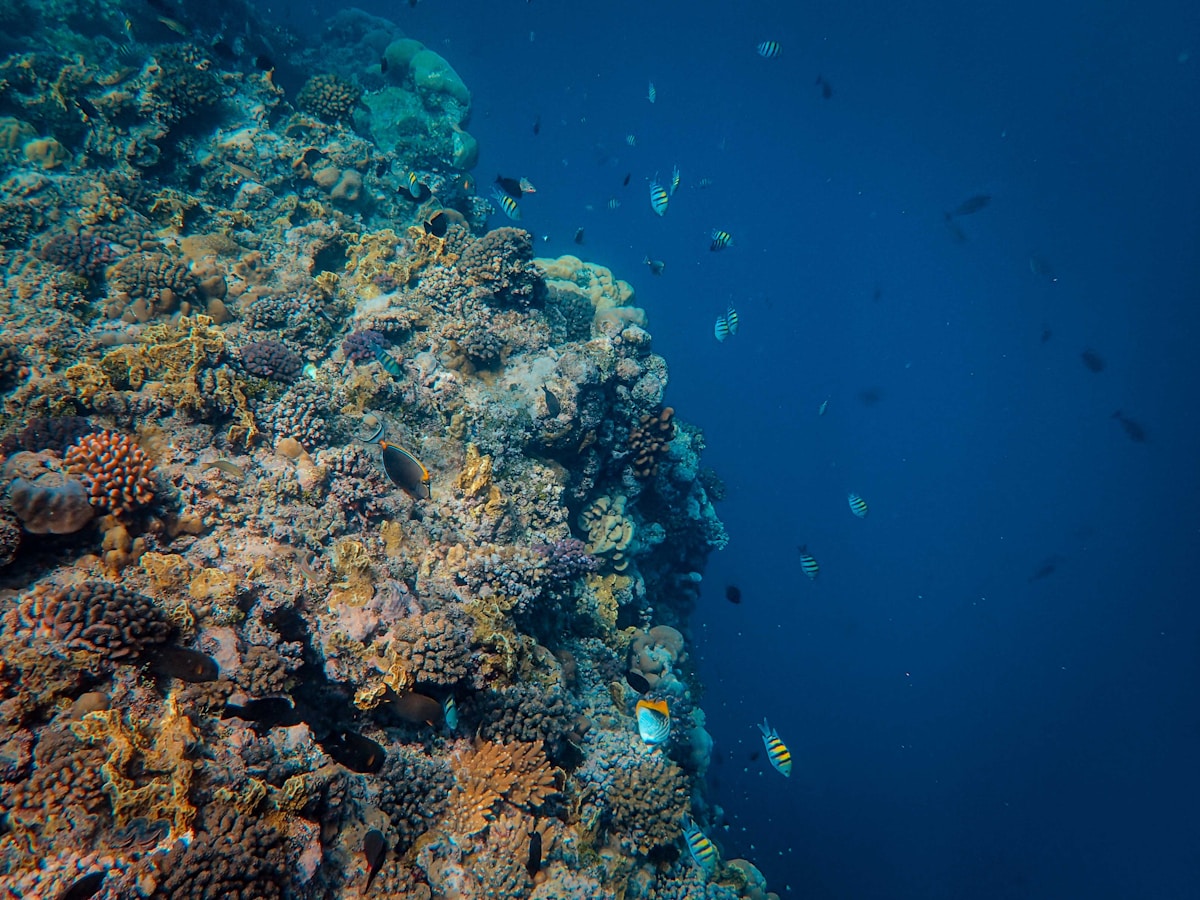
The Farasan Islands sit in the southern Red Sea, roughly 50 kilometres west of Jazan - a sprawling archipelago of more than 80 islands and islets, most of them uninhabited. The Saudi Wildlife Authority designated the islands as a protected nature reserve, which has preserved reefs, wildlife, and historical ruins that might otherwise have been lost.
This is one of the least-visited places in Saudi Arabia - not because it lacks interest, but because it sits far from the main tourist circuit. Visitors who make the journey find something unusual: a Red Sea coral ecosystem in exceptional condition, a population of Arabian gazelles that has flourished in the absence of predators, and the physical remains of an Ottoman military garrison and a German merchant outpost, all within a few kilometres of each other.
Getting to the Farasan Islands
The main access point is Jazan Port, also written as Jizan, approximately 100 kilometres south of Abha and 700 kilometres south of Jeddah. From Riyadh, the drive is around 14 hours; most visitors fly into Jazan Regional Airport (GIZ), which has regular connections from Riyadh and Jeddah.
The ferry: The Saudi Border Guard operates a free passenger ferry between Jazan Port and Farasan Al-Kabir, the main island. The crossing takes approximately two hours depending on sea conditions. The ferry runs several times weekly - not daily - and schedules are subject to change. Confirm current timings directly at Jazan Port on arrival in the city, as online schedules can be unreliable. Bring your national ID card (Saudi nationals) or passport (foreign visitors). The ferry is free of charge.
Visitor permit: A nature reserve permit is required before boarding. It is issued at the port - present your ID and the permit is stamped on the spot. The process takes around 15 minutes. No advance booking is required and the permit has no fee as of 2026.
Private charter: Speedboat charters from Jazan Marina reach the main island in around 45 minutes. Prices vary considerably; expect to negotiate. Charters are worth considering for groups wanting to reach the outer islands, which the public ferry doesn’t serve.
Al-Qassar Village and the Ottoman Quarter
The main settlement on Farasan Al-Kabir is Al-Qassar village, a few kilometres from the ferry dock. The village contains what is arguably the most atmospheric Ottoman-era heritage site in Saudi Arabia outside of Medina’s historical districts.
The Ottomans garrisoned the Farasan Islands in the late nineteenth and early twentieth centuries as a strategic position in the southern Red Sea. What they left behind is a cluster of coral-stone buildings - mosques, administrative structures, and residential houses - built with a distinctive layered technique using local coral and limestone. The craftsmanship is finer than you might expect at this remove from Istanbul: carved lintels, shaded courtyards, and vaulted ceilings in the larger structures.
Al-Qassar Heritage Area is now partially restored and can be walked freely. There’s no entrance fee. Several buildings retain their original carved window screens and doorframes. The streets between them are narrow enough that the coral walls provide shade even in the middle of the day. Allow two hours to walk the main streets and look inside the open structures.
The German House
A short drive from Al-Qassar stands one of the more unlikely buildings in the Arabian Peninsula: the German House (Beit Al-Almani), a two-storey structure built by the German company Woermann & Cie, which operated a coal-bunkering station on the islands during the late Ottoman period. German merchant ships refuelling in the Red Sea needed a shore facility, and the Farasans provided one.
The building is in partial ruin but the main walls are standing. The scale - it was clearly built to impress - is a reminder of how important the Red Sea coal route was to European shipping before the Suez Canal rerouted much of it. The structure stands alone in open ground with views toward the sea. There is no formal management or entrance fee; visitors access it freely.
Farasan Fort
Farasan Fort (Qal’at Farasan) was built during the Ottoman period as the administrative and military headquarters of the garrison. The fort occupies elevated ground on the main island and was designed to command views over the approaches from the sea.
The fort is partially preserved. The perimeter walls and several towers remain intact; the interior is partially collapsed but exploreable. It is the most substantial standing structure from the Ottoman occupation and sits alongside the heritage district as the primary historical draw. Bring water - there is no shade inside the fort.
Opening times are unofficial; the site is accessible during daylight hours. No entrance fee.
Wildlife: Gazelles, Turtles, and Migratory Birds
The Farasan Islands host one of the more unusual wildlife populations in the region: the Farasan gazelle (Gazella arabica farasani), a subspecies found nowhere else in the world. The gazelle population has expanded substantially since the islands became a protected reserve - populations estimated at several thousand animals graze the interior scrubland across multiple islands. Sightings are common on Farasan Al-Kabir, particularly in the early morning and late afternoon.
Marine turtles: Hawksbill turtles (Eretmochelys imbricata) nest on the island beaches between June and August. Green turtles (Chelonia mydas) are present year-round and are frequently encountered while snorkelling the reef shallows. The Saudi Wildlife Authority monitors nesting activity - stay clear of marked nesting areas if you visit in summer.
Dolphins: Spinner dolphins and Indo-Pacific bottlenose dolphins are regularly seen in the channels between islands, particularly in the early morning. The ferry crossing itself is a reasonable opportunity for sightings.
Migratory birds: The Farasan Islands sit on the East Africa-West Asia flyway, and the island group is significant for migrating raptors, waders, and seabirds. Spring migration (March–May) and autumn migration (September–November) bring the largest numbers. Osprey, sooty falcon, and Socotra cormorant are among the more distinctive species present.
Dugongs: The sea grass beds around the outer islands support a small dugong population. Sightings are not guaranteed but occur regularly enough that they’re worth mentioning. Charter a boat to the outer islands for the best chance.
Snorkelling and Diving
The reef systems around the Farasan Islands are among the best-preserved in the Red Sea. Decades of limited access meant that the corals developed with almost no recreational pressure - the result is hard coral coverage and fish biomass that exceed conditions at more established Red Sea sites.
Shore snorkelling is possible directly from several beaches on Farasan Al-Kabir. The reef begins close to shore in places, and visibility is typically 10–20 metres. Equipment can be rented from a small dive shop near the ferry dock (approximately SAR 50 per day for mask, fins, and snorkel as of 2026).
Boat diving opens up the outer reef walls and the sites around the uninhabited outer islands. The dive sites around the southern islands - including channels between Farasan Al-Saghir and the outer islets - have wall diving to 30+ metres with strong coral coverage, grey reef sharks, sea turtles, and schools of barracuda. These sites are accessible by charter from the main island.
For those coming specifically to dive, the Farasan Islands are also covered in our Red Sea diving guide, which details liveaboard options from Jeddah and Yanbu that include the archipelago in their route.
Diving operators based in Jazan can arrange day dive trips to the near-shore reef systems. For the outer islands and multi-day coverage, liveaboard vessels from Jeddah (approximately SAR 4,000–6,000 for a 4–7 day trip as of 2026) remain the most practical option.
The Mangrove Forests
The eastern coast of Farasan Al-Kabir and several of the smaller islands have mangrove systems that extend into the tidal shallows. Mangroves in this latitude are not the dense impenetrable thickets of tropical coastlines - the Farasan mangroves are open enough to paddle through by kayak or small boat, and the root systems are nursery habitat for juvenile reef fish.
Kayak access is informal; bring your own or rent from guesthouses in Al-Qassar. The mangroves are best explored at high tide, when the water is deep enough to paddle between the root systems.
Where to Stay
Accommodation on the Farasan Islands is limited and basic. This is not a resort destination.
Farasan Hotel on the main island is the primary option for non-Saudi visitors. Standard double rooms are approximately SAR 350 per night as of 2026. The hotel is functional rather than comfortable - air-conditioned rooms, ensuite bathrooms, and a basic breakfast. Book ahead during public holidays and school breaks when the islands see the most domestic visitors.
Al-Qassar guesthouses: Several families in Al-Qassar village rent rooms informally. Rates are similar to the hotel or slightly lower. This is the better option if you want to be closer to the heritage district and have a more direct local experience.
Wild camping is technically possible with a permit from the Saudi Wildlife Authority, though facilities are non-existent. The permit process is handled through the Authority’s offices in Jazan before the ferry. Bring everything you need, including water - the islands have no reliable freshwater supply for visitors.
Most visitors travelling from Jeddah or Riyadh base themselves in Jazan for one night before and after the islands, using the city’s standard business hotels (from approximately SAR 250 per night).
Practical Information
Getting there: Fly to Jazan (GIZ) from Riyadh or Jeddah, then take a taxi to Jazan Port (approximately SAR 40–60). The ferry to Farasan Al-Kabir is free and takes two hours. Confirm the departure schedule at the port on arrival.
Permit: Free nature reserve permit issued at Jazan Port. Bring ID or passport.
Money: There are no ATMs on the islands. Bring cash in riyals before boarding the ferry.
Food: Al-Qassar village has basic restaurants serving grilled fish and rice. Options are limited - bring snacks for full days out on the islands.
Water: No reliable freshwater for visitors. Bring bottled water from Jazan.
Mobile coverage: Patchy. Don’t rely on navigation apps once you leave Al-Qassar.
Medical: No hospital on the islands. The nearest hospital is in Jazan. Travel insurance with evacuation cover is advisable for diving visits.
Best time to visit: October through April for comfortable temperatures and best visibility. Avoid June through August unless you’re specifically visiting for turtle nesting observation.
Ready to explore? Browse Tours in Saudi Arabia to find guided options, sort your travel insurance before you go, and grab a Saudi eSIM to stay connected in the field.
See Also
- Red Sea Diving in Saudi Arabia - full guide including Yanbu and Jeddah reef sites
- Yanbu City Guide - the main Red Sea dive hub further north
- Jeddah City Guide - the gateway city for liveaboards to the Farasan Islands
- Abha City Guide - the closest major city in the Asir highlands
- Best Time to Visit Saudi Arabia - October to April for Red Sea diving conditions
- 2 Weeks in Saudi Arabia Itinerary - southern Saudi circuit including Farasan access