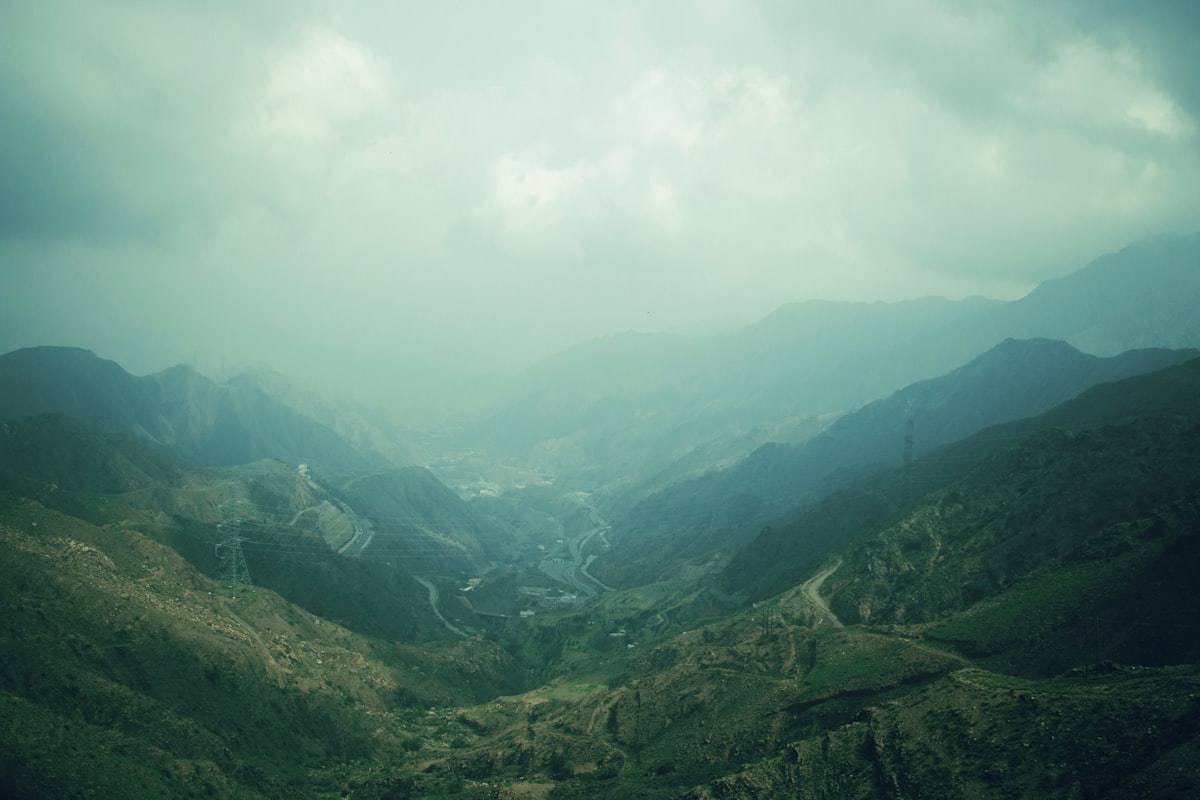
Most international visitors associate Saudi Arabia with flat desert and 45-degree heat. Abha and the Asir region run counter to both assumptions. The Asir Mountains rise to over 3,000 metres along the southwestern edge of the Arabian Peninsula, and Abha - the regional capital - sits at approximately 2,200 metres above sea level. In summer, when Riyadh and Jeddah are fully oppressive, Abha regularly sits at 18–25°C during the day and drops to 10–15°C at night. Clouds form at eye level. Mist rolls through the valleys in the afternoon.
Asir is also one of the culturally richest regions in Saudi Arabia. The architecture - whitewashed stone buildings decorated with coloured geometric patterns - is unlike anything elsewhere in the Kingdom. The region’s traditional arts, including the distinctive Assiri embroidery and wall painting, are actively maintained. For visitors willing to go beyond Riyadh and Jeddah, Abha offers one of the most rewarding itineraries in the country.
Al Soudah and the Cable Car
Jabal Soudah is the highest point in Saudi Arabia at approximately 3,015 metres. Located about 25 km west of Abha, the area includes a park with viewpoints over deep valleys, and the Al Soudah Cable Car - one of the longest gondola systems in the Middle East.
The cable car descends from the Al Soudah summit into the Rijal Almaa valley below, covering approximately 2.5 km with drops of several hundred metres. Views across the Asir escarpment and into the Tihama coastal plain are exceptional on clear days; the valley below is green and terraced. Cable car tickets are approximately SAR 80–120 per person as of 2026; operating hours are generally 8am–10pm but confirm locally as they adjust seasonally.
The Al Soudah area also has several viewpoint platforms and walking trails along the escarpment edge. On summer mornings, the cloud layer sits at roughly gondola height - the effect of descending into cloud cover while mountains float above is distinctive.
Driving from Abha to Al Soudah takes approximately 40–50 minutes on a mountain road with switchbacks. The road is paved and well-maintained; a standard car handles it without difficulty.
Habala Hanging Village
Habala (Al Habalah) is one of the most unusual settlements in Saudi Arabia. Built on a cliff ledge approximately 300 metres below the plateau rim, the village was historically accessible only by rope - the name means “rope” in Arabic. The original inhabitants descended to and from the village using ropes and footholds cut into the rock face.
Today, a cable car (shorter than Al Soudah, approximately 300 metres vertical) descends to the cliff platform where the old village ruins sit alongside a small museum. The ruins are partially preserved stone houses built into the rock itself; the combination of the cliff, the narrow shelf, and the valley falling away below is genuinely striking. Ticket approximately SAR 40–60 per person as of 2026; open daily, hours vary seasonally.
Habala is approximately 55 km south of Abha - about an hour’s drive. Combine it with Rijal Almaa for a full day out of the city.
Rijal Almaa Heritage Village
Rijal Almaa is a fortified village approximately 45 km west of Abha, and the most intact example of traditional Asiri architecture in the region. The village dates from at least the 17th century; its distinctive multi-storey stone towers are decorated with white quartz inlays, red ochre, and coloured patterns. A heritage museum inside one of the main towers displays weapons, household items, and traditional dress from the region.
The village is a UNESCO candidate site and under ongoing preservation. Entry to the museum is approximately SAR 15–20 as of 2026; the village lanes are walkable without a ticket. A traditional coffee house near the main square serves qahwa (Arabic coffee) and dates.
Best time to visit is morning - the light is better and temperatures are lower. A full visit takes 90 minutes to two hours.
Asir National Park
Asir National Park covers approximately 4,500 square kilometres across the Asir Mountains and down the escarpment to the Tihama coastal plain. Established in 1981, it is the largest national park in Saudi Arabia and the most ecologically diverse.
The park’s highland section - accessible from Abha and Al Soudah - has juniper and wild olive forests, and is home to the Arabian leopard (critically endangered, rarely seen), Arabian wolf, hamadryas baboon, and over 300 bird species. The park’s birdwatching draw is particularly strong: Rüppell’s weaver and the Yemen linnet are found here, along with raptors and migrating European species during autumn.
A network of marked hiking trails exists within the park, though signage and maintenance quality vary. The trails around Wadi Al Neel and near Al Soudah are the most consistently accessible. No permit is required for day hiking in the accessible sections; overnight camping requires coordination with the park authority. Entry fees to the park’s managed areas are approximately SAR 20–40 per vehicle as of 2026.
Abha City Itself
The city of Abha has its own attractions beyond the mountain hinterland:
Abha Palace/Shada Palace - an 18th-century Ottoman-influenced palace in the city centre, now restored as a museum covering Asir regional history. Entry approximately SAR 10–20 as of 2026.
Asir Regional Museum - a formal state museum covering the natural history, archaeology, and cultural heritage of the region. Well-curated permanent collection. Entry approximately SAR 15 as of 2026; generally open 8am–2pm Sunday–Thursday.
Green Mountain (Jabal Akhdar) - a 2,250-metre peak within the city limits, accessible by a short cable car from the city centre. The hilltop has a distinctive coloured light display at night that illuminates the mountain in rotating colours - unusual, and popular with local families. Cable car approximately SAR 15–20 as of 2026.
Abha Lake (Al-Wahda Lake) - a reservoir on the edge of the city, bordered by a park with walking paths and cafés. Good for an early morning walk.
The Al-Qatt area of old Abha has examples of the distinctive Asiri house painting - geometric patterns in red, white, and black applied to interior and exterior walls. A few workshops run by local women still practise this art; the Al-Qatt Al-Asiri painting tradition was inscribed on UNESCO’s Intangible Cultural Heritage list in 2017.
Where to Stay in Abha
Luxury (approximately SAR 700–1,400 per night as of 2026)
InterContinental Abha is the best international-brand hotel in the city, with mountain views, a pool, and a strong restaurant. Well-located for the city centre and day trips.
Abha Corniche Hotel (Marriott) is a newer option with contemporary rooms and good service; occupies a prominent site near the lake.
Mid-Range (approximately SAR 300–700 per night as of 2026)
Al-Faisliah Hotel Abha and Abha Palace Hotel are reliable locally-branded options with comfortable rooms at lower prices than the international chains. Both are centrally located.
Abha Towers Hotel offers rooms with mountain panoramas from the upper floors; good value for the views.
Budget (approximately SAR 130–280 per night as of 2026)
Several smaller hotels and furnished apartment complexes cluster around the city centre and near Abha Dam. Quality varies; check recent reviews on Booking.com before committing.
Getting to Abha from Riyadh
By air: Abha International Airport (AHB) is served by direct flights from Riyadh (approximately 1.5–2 hours), Jeddah (approximately 1 hour), and several other Saudi cities. Saudia operates the main routes; flyadeal and flynas also fly the route. Flight frequency increases during summer when Saudis from hotter cities travel to Abha for the cooler temperatures.
By road from Riyadh: Approximately 900 km, around 9–10 hours via the Riyadh–Abha highway. The route passes through the Bisha area and climbs into the mountains in the final section. Practical as a multi-day road trip with stops; not recommended as a day trip.
By road from Jeddah: Approximately 500 km, around 5–6 hours. The route east from Jeddah into the Asir Mountains is scenic and significantly shorter than from Riyadh.
We recommend renting a car in Abha (approximately SAR 100–180 per day as of 2026) given that Al Soudah, Rijal Almaa, and Habala all require driving outside the city. Taxis and ride-share cover in-city movement.
Best Time to Visit Abha
The main appeal of Abha is its climate:
- Summer (June–September): The peak season for domestic Saudi tourism. Temperatures of 18–26°C draw visitors from Riyadh and Jeddah. Expect accommodation prices to be at their highest and advance booking to be necessary.
- Spring (March–May): Warm days (22–30°C), clear skies, and occasional afternoon rain. Good overall.
- Autumn (October–November): Similar to spring - comfortable and less crowded than summer.
- Winter (December–February): Cold by Saudi standards, with nighttime temperatures dropping to 2–8°C and occasional frost at higher elevations. The mountain scenery can be dramatic, but some facilities reduce hours.
For international visitors combining Abha with the broader Saudi itinerary, March to May or October to November offer the most consistently pleasant conditions without the peak summer crowds.
Practical Notes
- Mobile signal: Good in Abha city. Patchy on mountain roads and in deeper valleys.
- Driving: Mountain roads require attentiveness - switchbacks, mist, and occasional livestock on the road. Drive cautiously and do not rush.
- Altitude: Some visitors coming directly from sea-level cities notice mild fatigue on the first day at 2,200 metres. This passes within 24 hours for most people.
- Local guides: For trekking or reaching less-visited sites in the national park, a local guide adds significant value. The Abha Tourism Authority (
tourism.asir.gov.sa) maintains an updated list of licensed operators.
Book Abha and Asir Tours
Guided tours add significant value in the Asir region — the mountain roads and heritage sites reward local knowledge, and the Al Soudah area in particular is easier with a guide who knows the best viewpoints and valley access. All tours below have free cancellation up to 24 hours in advance; prices approximate as of 2026.
| Tour | Duration | From | Rating |
|---|---|---|---|
| Abha: Rijal Almaa Guided Tour | 10 hrs | ~$60/person | ★ 4.8 |
| Abha: Full-Day City History and Rijal Al Almaa Village Tour | 6 hrs | ~$55/person | ★ 4.7 |
| Abha City Tour & Rijal Almaa | 8 hrs | ~$50/person | ★ 4.7 |
Book at least 48 hours ahead for weekend departures in summer (June–September), when domestic tourism peaks. Browse all Abha tours for private guide options and day-trip packages to Al Soudah and Habala.
Before you go: sort your travel insurance and grab a Saudi eSIM to stay connected on mountain roads.
See Also
- Abha City Guide - accommodation, transport, and practical planning
- Things to Do in Abha - full attractions breakdown
- Abha Food Guide - where to eat in the Asir highlands
- Where to Stay in Abha - InterContinental, Crowne Plaza, and budget options
- Farasan Islands - Red Sea archipelago accessible via Jizan, 100km southwest of Abha
- Najran City Guide - the ancient mud-brick city in the deep south
- Abha vs Taif comparison - choosing between Saudi Arabia’s highland escapes
- Visiting Saudi Arabia in June - Abha is peak season for domestic summer escape
- 2 Weeks in Saudi Arabia Itinerary - itinerary including the Asir highlands circuit
- Best Time to Visit Saudi Arabia - Abha is viable year-round; best for international visitors spring and autumn