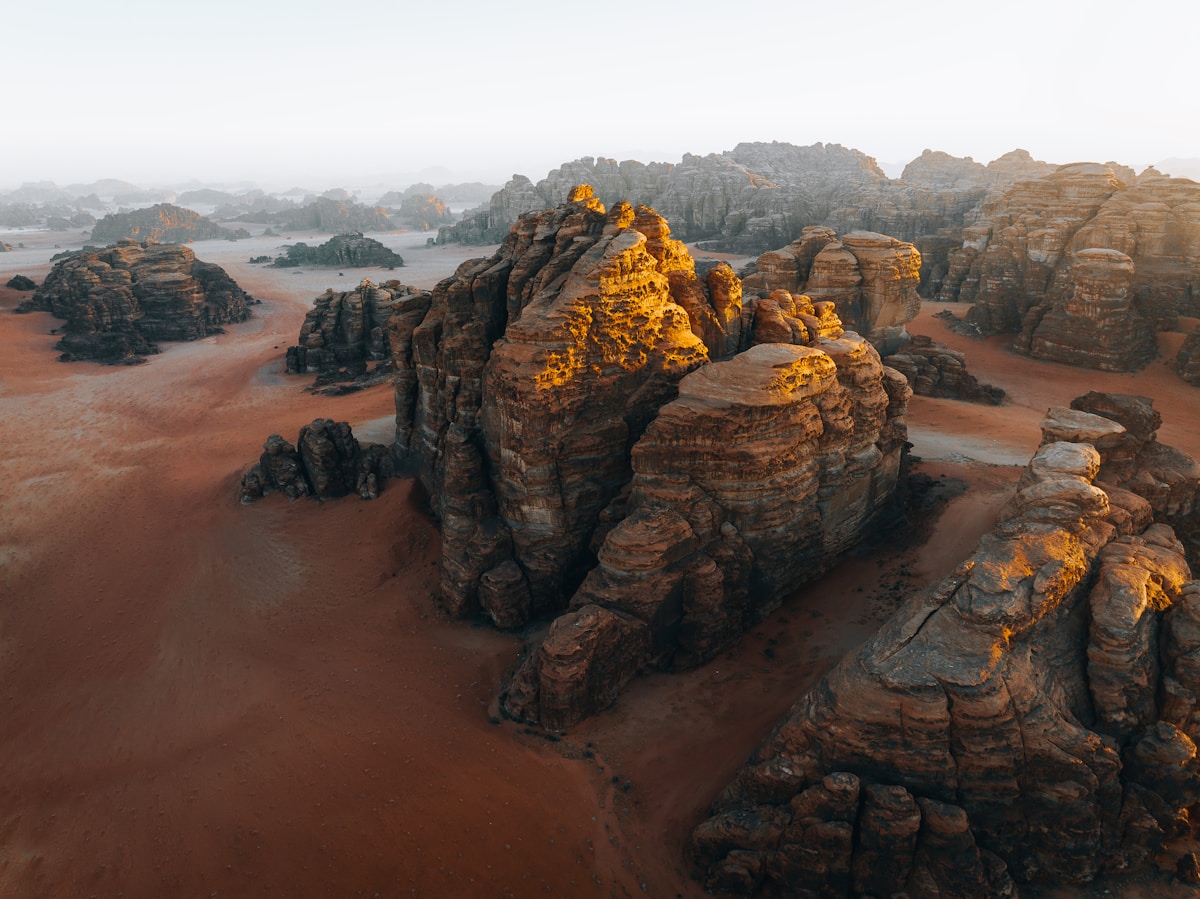
Two weeks unlocks the full range of Saudi Arabia - from the Najdi heartland around Riyadh to the Nabataean tombs of AlUla, the Red Sea coast, the Hejazi trading cities, and the green highlands of Asir in the south. This is the comprehensive first visit, covering seven distinct regions with a mix of domestic flights and overland driving.
Trip Overview
| Days | Location | Highlights |
|---|---|---|
| 1–3 | Riyadh | Diriyah, National Museum, Edge of the World, Boulevard |
| 4 | Hail | Jubbah rock art nearby, A’arif Fort |
| 5–7 | AlUla | Hegra, Old Town, Elephant Rock, Dadan |
| 8–9 | Tabuk/NEOM | Red Sea coast, Wadi Disah |
| 10–11 | Jeddah | Al Balad, Corniche, Red Sea dining |
| 12 | Taif | Rose farms, Al Shafa highlands, Souq |
| 13–14 | Abha/Asir | Asir National Park, Rijal Almaa, Habala |
Before You Go
Visa: Saudi e-visa at visa.visitsaudi.com - approximately SAR 535 (USD 142) as of 2026. Available for 49 nationalities.
Domestic flights needed: Riyadh–Hail, Tabuk–Jeddah, Jeddah–Abha (or Abha–departure city). Book 2–3 weeks ahead through Saudia, flynas, or flyadeal. Budget SAR 250–500 (USD 67–133) per sector as of 2026.
Car hire segments: Hail to AlUla (approximately 400km, 4–5 hours); AlUla to Tabuk (approximately 300km, 3.5 hours); Jeddah to Taif (approximately 170km, 2 hours); Taif to Abha (approximately 550km, 6 hours via the Sarawat mountain highway).
Days 1–3: Riyadh
Where to Stay
Budget: Novotel Riyadh Al Anoud - from SAR 250/night (USD 67). Three nights: approximately SAR 750–900 as of 2026.
Mid-range: Crowne Plaza Riyadh RDC - from SAR 450/night (USD 120). Three nights: approximately SAR 1,350–1,600 as of 2026.
Splurge: Four Seasons Hotel Riyadh at Kingdom Centre - from SAR 1,200/night (USD 320). Three nights: from SAR 3,600 as of 2026.
Day 1: Diriyah and the SkyBridge
Morning: At-Turaif UNESCO World Heritage Site at Diriyah - the mud-brick ruins of the first Saudi state. Book at experiencediriyah.com. Approximately SAR 80 (USD 21) adult entry as of 2026. Careem from Al-Olaya: SAR 20–25, 30 minutes. Allow 2–2.5 hours.
Lunch: Takya at Bujairi Terrace - Saudi heritage cuisine overlooking At-Turaif. SAR 80–150 (USD 21–40) per person.
Afternoon: National Museum of Saudi Arabia - eight galleries, free entry. 2.5 hours. Adjacent Al-Murabba Palace included.
Evening: Kingdom Centre SkyBridge - SAR 69 (USD 18) entry. Dinner at Najdi Village Restaurant - kabsa, jareesh. SAR 60–100 (USD 16–27) per person.
Day 2: Fortress, Souks, and Modern Riyadh
Morning: Masmak Fortress - free entry, 1–1.5 hours. Souq Al Zal - antiques and traditional daggers. 1 hour.
Afternoon: Al-Faisaliah Tower observation deck (SAR 50/USD 13) - Riyadh’s second great viewpoint. Coffee at Brew92 in Al-Olaya.
Evening: Boulevard Riyadh City - entertainment district in Hittin. Dinner at Nusr-Et Steakhouse (SAR 200–400/USD 53–107 per person) or food court options (SAR 30–60/USD 8–16).
Day 3: Edge of the World
Full day: Edge of the World (Jebel Fihrayn) - guided 4WD tour from SAR 250 (USD 67) per person. The Tuwaiq Escarpment, 300-metre cliff drop, 2km cliff-edge walk. Depart 7am, return by 1pm.
Afternoon: Pack and rest. Evening flight to Hail.
Flight: Riyadh (RUH) to Hail (HAS). Saudia operates direct flights, approximately 1.5 hours. From SAR 250 (USD 67) one way as of 2026.
Search hotels in Saudi Arabia on Booking.com
Day 4: Hail
Where to Stay
Mid-range: Millennium Hotel Hail - from SAR 300/night (USD 80). One night: approximately SAR 300–400 as of 2026. The best option in a city with limited tourist accommodation.
Day 4: A’arif Fort and Jubbah Rock Art
Morning: Pick up rental car at Hail airport. Drive to Jubbah - 100km northwest, approximately 1.5 hours. The Jubbah rock art is a UNESCO World Heritage Site - petroglyphs dating back 7,000–9,000 years depicting humans, animals, and hunting scenes from when the Arabian interior was green savannah. Free entry. The main panels are at Jebel Umm Sinman. Allow 1.5–2 hours.
Afternoon: Return to Hail. Visit A’arif Fort - a hilltop mud-brick fortress overlooking the city, dating to the Rashidi emirate period. Free entry. The views across Hail and the surrounding Aja Mountains are excellent. Allow 1 hour.
Walk through Hail’s old souq in the city centre - less touristy than Riyadh’s markets, with local pottery, woven goods, and dates.
Evening: Dinner at a local Hail restaurant - try Al Romansiah for traditional Saudi dishes including mathlouta (slow-cooked lamb and vegetables) and fresh bread baked in traditional ovens. SAR 40–70 (USD 11–19) per person.
Days 5–7: AlUla
Getting There
Drive from Hail to AlUla - approximately 400km, 4–5 hours on good highway through desert landscape. The drive itself is part of the experience: flat, open, with occasional rock formations and camel herds along the road.
Where to Stay
Budget: Shaden Resort - from SAR 300/night (USD 80). Three nights: approximately SAR 900–1,200 as of 2026.
Mid-range: Habitas AlUla - from SAR 700/night (USD 187). Three nights: approximately SAR 2,100–2,700 as of 2026.
Splurge: Banyan Tree AlUla - from SAR 3,000/night (USD 800). Three nights: from SAR 9,000 as of 2026.
Day 5: Hegra
Morning: Hegra (Mada’in Salih) - 22km north of AlUla. Nabataean tombs, 1st century CE. Book at experiencealula.com. Approximately SAR 95 (USD 25) adult entry as of 2026. Guided tour: Qasr al-Bint, Qasr al-Farid, the Diwan. Allow 3 hours.
Lunch: Suhail Restaurant in AlUla Old Town. SAR 60–100 (USD 16–27) per person.
Afternoon: AlUla Old Town - abandoned mud-brick settlement, free entry. Heritage Oasis - date palm groves. 1.5–2 hours total.
Evening: Sunset at Elephant Rock. Free access. Café at the base.
Day 6: Dadan and Ikmah
Morning: Dadan - ancient Dadanite and Lihyanite ruins, 10km from AlUla. Free entry. 1.5 hours. Continue to Jabal Ikmah - open-air rock inscription library. Entry via experiencealula.com, approximately SAR 50 (USD 13).
Afternoon: Hike the Harrat Viewpoint Trail - volcanic landscape overlooking the oasis valley. 2–3 hours, moderate difficulty.
Evening: Dinner at Habitas AlUla restaurant - contemporary Saudi-inspired menu. SAR 120–180 (USD 32–48) per person.
Day 7: Morning in AlUla, Drive to Tabuk
Morning: Sunrise at Hegra or final Old Town exploration.
Drive: AlUla to Tabuk - approximately 300km, 3.5 hours. The road crosses the Hejaz region through dramatic sandstone terrain.
Days 8–9: Tabuk and NEOM Coast
Where to Stay
Mid-range: Hilton Garden Inn Tabuk - from SAR 400/night (USD 107). Two nights: approximately SAR 800–1,000 as of 2026.
Day 8: Wadi Disah
Morning: Drive south from Tabuk to Wadi Disah - approximately 200km, 2.5 hours. This sandstone canyon (often called the Grand Canyon of Saudi Arabia) features towering red cliffs, date palm groves, and a seasonal stream. Free access. Walk the canyon floor - allow 2–3 hours. The scale is extraordinary.
Afternoon: Drive to the Sharma coast - approximately 180km from Wadi Disah, 2.5 hours. The Red Sea coastline here is undeveloped: clear water, healthy coral reefs, minimal tourism infrastructure.
Evening: Fresh seafood at a local Sharma restaurant. SAR 40–80 (USD 11–21) per person.
Day 9: Red Sea Coast and Flight to Jeddah
Morning: Beach time or snorkelling at Sharma Bay. The reefs are close to shore with visibility regularly exceeding 20 metres. Bring snorkelling gear - equipment hire is limited.
Afternoon: Drive to Tabuk airport (approximately 180km, 2 hours). Return rental car.
Flight: Tabuk (TBJ) to Jeddah (JED). Saudia and flynas, approximately 1.5 hours. From SAR 250 (USD 67) one way as of 2026.
Days 10–11: Jeddah
Where to Stay
Budget: Radisson Blu Hotel Jeddah Corniche - from SAR 200/night (USD 53). Two nights: approximately SAR 400–500 as of 2026.
Mid-range: Jeddah Hilton - from SAR 600/night (USD 160). Two nights: approximately SAR 1,200–1,500 as of 2026.
Day 10: Al Balad
Morning: Al Balad - Jeddah’s UNESCO-listed historic district. Coral-stone tower houses, carved mashrabiya balconies. Nassif House Museum - free entry. 2–3 hours walking.
Lunch: Al Nakheel Restaurant - Hejazi grilled fish and rice. SAR 50–80 (USD 13–21) per person.
Afternoon: Jeddah Corniche - 30km waterfront promenade, open-air sculpture museum, King Fahd Fountain. Free access.
Evening: Dinner at Twina - Red Sea seafood, terrace with sea views. SAR 100–180 (USD 27–48) per person.
Day 11: Red Sea and Departure to Taif
Morning: Floating Mosque at sunrise. Half-day snorkelling trip from Obhur Creek - from SAR 200 (USD 53) per person.
Afternoon: Pick up rental car. Drive to Taif - approximately 170km, 2 hours via the scenic Taif–Hada highway that climbs from sea level to 1,800 metres through hairpin switchbacks.
Day 12: Taif
Where to Stay
Mid-range: InterContinental Taif - from SAR 400/night (USD 107). One night: approximately SAR 400–500 as of 2026.
Day 12: Rose City and Highlands
Morning: Taif Rose Farms - the region produces the famous Taif rose, used in Arabian perfumery. Visit during March–April for harvest season, but the farms and distilleries are open year-round. Free entry to most farms. Allow 1–1.5 hours.
Drive to Al Shafa - a highland village at 2,200 metres with fruit orchards, cool temperatures, and views across the escarpment. 40km from Taif, 45 minutes. The fruit markets sell locally grown pomegranates, figs, and grapes.
Afternoon: Souq Al-Khask in central Taif - one of the oldest markets in the Hejaz region. Rose oil, honey, silver jewellery, and traditional perfumes. Allow 1–1.5 hours.
Evening: Dinner at Al Shafa Village Restaurant - grilled meats, fresh bread, and highland honey. SAR 50–80 (USD 13–21) per person. Early night before the long drive south.
Days 13–14: Abha and the Asir Highlands
Getting There
Drive from Taif to Abha - approximately 550km, 6 hours via the Sarawat mountain highway. This is the most scenic drive in Saudi Arabia: the road follows the escarpment ridge through terraced villages, juniper forests, and cloud-level viewpoints. Start early.
Where to Stay
Budget: Best Western Plus Abha - from SAR 250/night (USD 67). Two nights: approximately SAR 500–600 as of 2026.
Mid-range: InterContinental Abha - from SAR 500/night (USD 133). Two nights: approximately SAR 1,000–1,200 as of 2026. The hotel sits at 2,200 metres with views across the Asir Highlands.
Day 13: Asir National Park and Habala
Morning: Asir National Park - juniper forests, baboons, and walking trails at 2,500+ metres elevation. The park is directly accessible from Abha - the main entrance is 15km from the city centre. Free entry. Allow 2–3 hours for the main trails.
Afternoon: Drive to Habala Village - a cliff-side village accessible by cable car. The village was inhabited by the Flower Men (Qahtani tribe) until the 1990s. Cable car ride approximately SAR 25 (USD 7) return as of 2026. The setting - stone houses on a sheer cliff face - is unlike anything else in Saudi Arabia. Allow 1.5–2 hours.
Evening: Dinner at Al Miftaha Village arts district in Abha - restaurants and cafés alongside galleries and craft workshops. Traditional Asiri cuisine: aseedah (wheat porridge with honey and ghee), masoob (banana bread pudding). SAR 40–70 (USD 11–19) per person.
Day 14: Rijal Almaa and Departure
Morning: Drive to Rijal Almaa - a UNESCO-listed heritage village 45km from Abha, approximately 1 hour down the escarpment toward the Tihama coastal plain. The multi-storey stone and slate tower houses, painted in white, red, and green geometric patterns, form one of the most photographed settlements in Saudi Arabia. The village museum costs approximately SAR 10 (USD 3) entry. Allow 1.5–2 hours.
Afternoon: Return to Abha. Transfer to Abha Regional Airport for departure.
Flight: Abha (AHB) to Riyadh (RUH) or Jeddah (JED). Saudia and flynas operate direct flights, approximately 1.5–2 hours. From SAR 250 (USD 67) one way as of 2026.
Budget Summary
| Category | Budget | Mid-Range | Splurge |
|---|---|---|---|
| Hotels (13 nights) | SAR 3,500–4,500 | SAR 7,500–10,000 | SAR 25,000+ |
| Domestic flights (4) | SAR 1,000–2,000 | SAR 1,000–2,000 | SAR 1,000–2,000 |
| Car hire (8 days) | SAR 1,600–2,400 | SAR 1,600–2,400 | SAR 1,600–2,400 |
| Fuel (est. 2,500km) | SAR 250–350 | SAR 250–350 | SAR 250–350 |
| Food (14 days) | SAR 900–1,400 | SAR 2,000–3,000 | SAR 5,000+ |
| Attractions + tours | SAR 600–900 | SAR 800–1,200 | SAR 1,500+ |
| Local transport | SAR 300–500 | SAR 400–600 | SAR 500–800 |
| Total per person | SAR 8,150–12,050 | SAR 13,550–19,550 | SAR 34,850+ |
All prices approximate as of 2026. International flights not included. Fuel is inexpensive in Saudi Arabia - approximately SAR 2.18 per litre as of 2026.
Booking Checklist
- Saudi e-visa: visa.visitsaudi.com - SAR 535 (USD 142), 49 nationalities
- Domestic flights: Book all four sectors 2–3 weeks ahead
- At-Turaif: experiencediriyah.com - SAR 80 adult entry
- Hegra: experiencealula.com - SAR 95 adult entry
- Car hire: Book Hail–AlUla–Tabuk and Jeddah–Taif–Abha segments in advance
- Edge of the World: Book tour the evening before - from SAR 250pp
- International driving permit: Recommended though most agencies accept standard licences from Western countries
Before finalising your trip, lock in flights to Saudi Arabia early for the best fares, consider a travel insurance policy that covers the full itinerary, and browse tours in Saudi Arabia to fill any free days with a guided experience, or check our last-minute tours page if you need to book something for the next 24–48 hours.
See Also
- Hail City Guide - the northern desert leg including Jubbah rock art
- Jeddah City Guide - the Red Sea gateway with Al Balad and the Corniche
- Taif City Guide - rose farms and the escarpment above Mecca
- Abha City Guide - highland Asir, cable car, and summer cool
- Jubbah Rock Art - UNESCO petroglyphs on the northern Saudi circuit
- Abha and the Asir Region - what to do around Abha beyond the city
- 10 Days in Saudi Arabia - a shorter version of this circuit
- 1 Week in Saudi Arabia - the essential first-time itinerary
- Saudi Arabia Budget Guide - per-day cost breakdown for this trip
- Saudi Arabia Visa Guide - eVisa requirements before you book
- Best Time to Visit Saudi Arabia - October–March for the majority of this route
Book Your Trip
- Flights - Find the best fares to Saudi Arabia
- Travel Insurance - Get covered before you go
- eSIM - Stay connected from landing
- Airport Transfers - Pre-book your transfer from Riyadh or Jeddah
- Car Rental - Compare prices across providers
- Tours & Activities - Browse Saudi Arabia tours on GetYourGuide