Taif Travel Guide: City of Roses, Mountain Air & Rose Honey
Rose farms open March-April, cable car to 2,200m for SAR 70, and a honey souk with 40 varieties - Taif is Saudi Arabia's summer highland retreat.
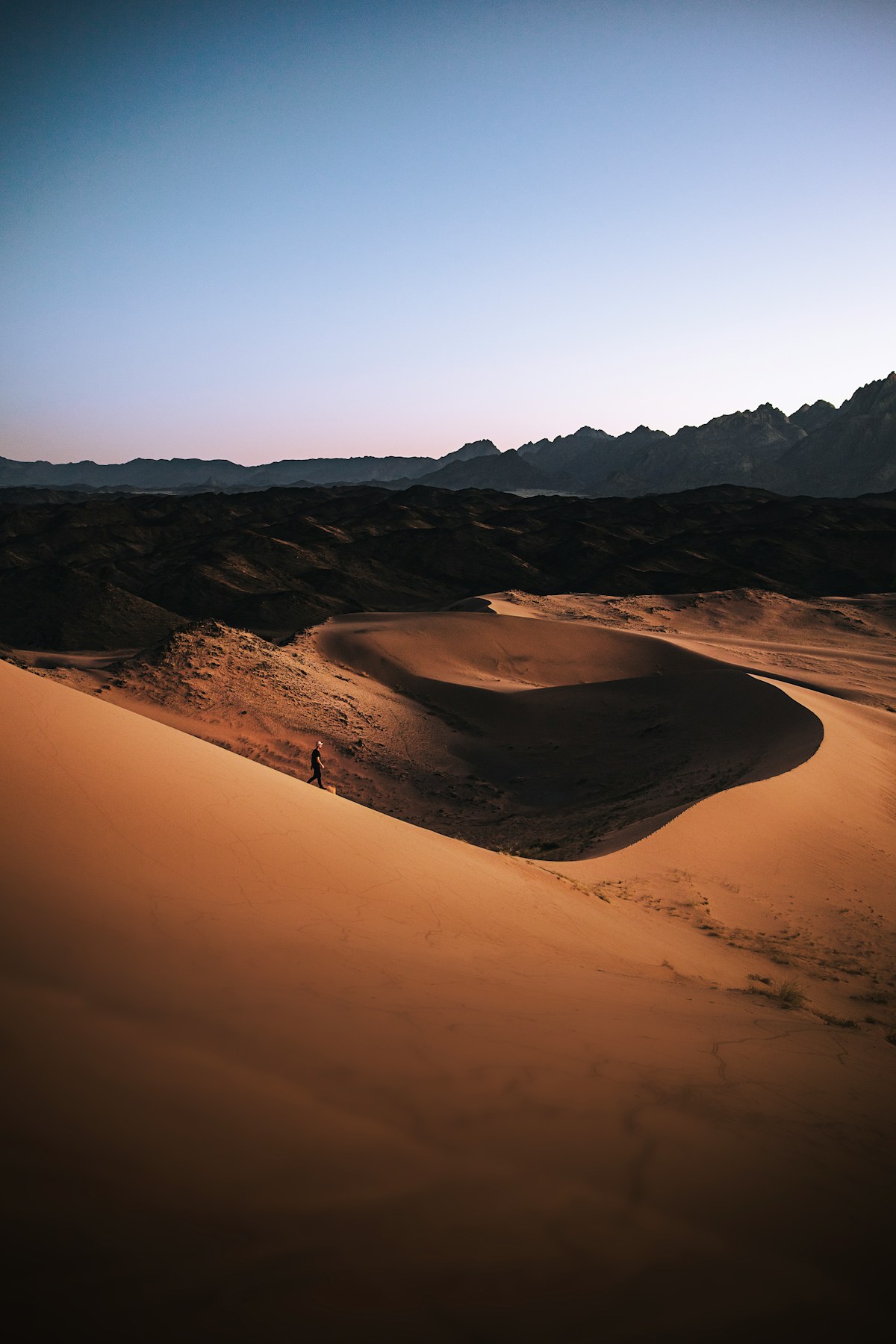
Guides for Taif
Taif is one of Saudi Arabia’s most pleasant cities for visitors - a mountain city at 1,800 metres above sea level in the Hejaz Mountains, with a cool climate, rose farms, honey markets, and a long history as a retreat for the Saudi royal family and wealthy Hijazis escaping summer heat. The combination of accessible agriculture, mountain scenery, and a compact historic centre makes it one of the more rewarding cities to spend two or three days in.
Driving on towards Abha? The quieter highland town of Al Bahah, with its Dhee Ayn marble village, makes a natural overnight stop about 220 km south.
Taif at a glance, using the figures covered in this guide:
| Topic | Details |
|---|---|
| Setting | Hejaz Mountains city at about 1,800 m, cooler than Jeddah and Riyadh |
| Rose harvest | March to April; farms in Al-Hada and Al-Shafa are 25-40 minutes from the city |
| Al Hada Cable Car | Adult SAR 70, child SAR 40; daily 9am-10pm |
| Shubra Palace | Free entry; Ottoman-era museum built in 1905 |
| Taif Zoo | Adult SAR 10, child SAR 5 (reported, confirm on arrival); daily 8am-10pm |
| Taif honey | Quality sidr honey about SAR 200-600 per kg |
The Rose Farms
Taif produces approximately 70% of Saudi Arabia’s supply of rose oil (attar al-ward) - used in the region’s distinctive perfume culture and exported throughout the Gulf. The roses grown here are the Taif rose (Rosa damascena trigintipetala), harvested in a short window in March and April. During the harvest, the hillside farms in the Al-Hada and Al-Shafa districts - 25 to 40 minutes from Taif city - are fragrant for kilometres around.
Official visitor information is available from Visit Saudi, the national tourism board.
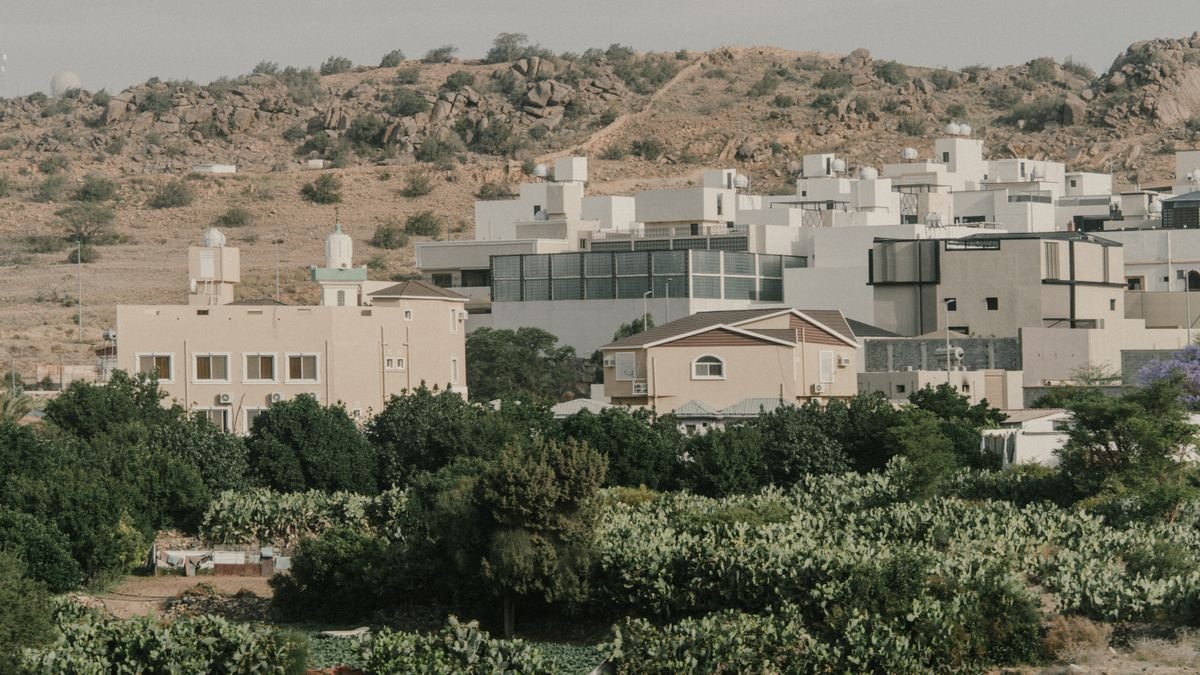 Green orchards and farm plots below the rocky hills are what make Taif unusual in the Hijaz.
Al-Ameer Farm on the Al-Shafa road welcomes visitors during the March–April season, with free entry and demonstrations of the traditional distillation process. Watching fresh petals go into a copper still and rose water emerge at the other end is a genuine education in how attar is made - the process has changed little in centuries. Staff explain each stage, and rose products are available for purchase on site. Dates, farms and prices are in our Taif Rose Festival guide.
Al-Zahrani Farm runs a similar setup nearby. Both farms are best visited early morning when the petals are freshest and the distilleries are running at full output.
What to buy: Rose water costs approximately SAR 15 as of 2026–30 per 500ml bottle - a significant saving on what airport perfumeries charge for the same volume. Rose oil (pure attar) is considerably more expensive: expect SAR 100–500 per 10ml depending on concentration and quality. The best prices are at the farms themselves, not the souvenir shops in the city.
Al Hada Cable Car
The Taif Cable Car runs from the Al Hada area, 25km south of Taif city on the mountain road, down through a 3.8km run with views across the Hijaz escarpment and the coastal plain far below. Adult tickets cost SAR 70; children SAR 40. The cable car operates daily from 9am to 10pm.
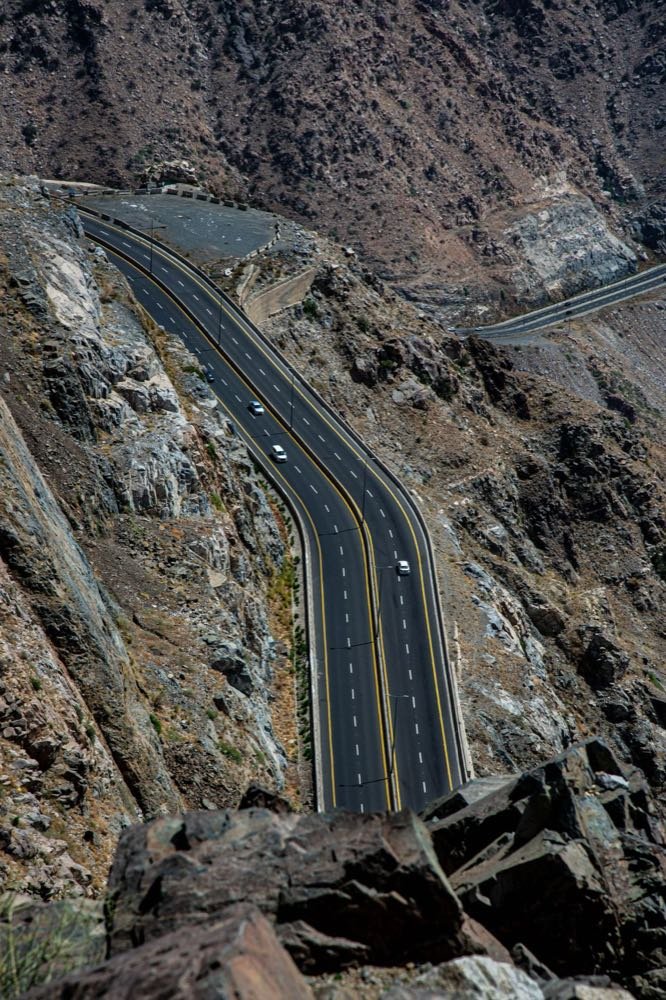 The Al Hada road climbs the Hijaz escarpment in a series of switchbacks above the coast.
Al Hada sits on the edge of the mountain, and the views from the top station on a clear day extend to the horizon. The descent into the valley below gives a visceral sense of the elevation change between Taif and the coast - the mountain drops away steeply, and the terrain below looks entirely different from the plateau above. Allow an hour for the round trip, and check operating conditions before going, as the cable car closes in high winds.
Shubra Palace
Shubra Palace is an Ottoman-era building in the city that now functions as a regional museum. Built in 1905 and used as a royal summer residence for several decades, it is a rare example of an eclectic architectural style - Italian neoclassical exterior combined with Ottoman interior detailing - in a region where most historic buildings are vernacular mud-brick. Entry is free. Opening hours are Saturday through Thursday, 8am to 5pm. Related reading: Where to Eat in Taif.
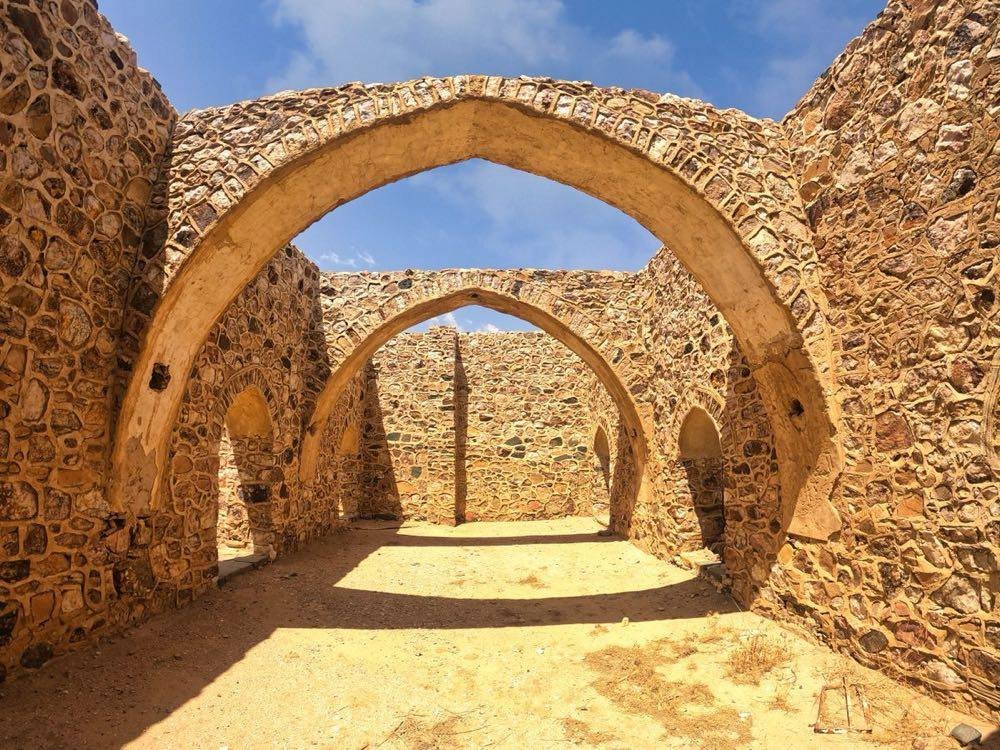 Stone arches like these are typical of older Hijaz buildings around Taif.
The museum collection covers the history of the Hejaz region and the Taif area specifically, with a focus on the period of the Saudi unification. The building itself is the main draw - the painted ceilings and tiled floors of the main reception rooms are well-preserved.
Taif Zoo
Taif Zoo (Al-Hawiyah) is one of Saudi Arabia’s larger zoos, on the southern outskirts of the city. Adult entry costs SAR 10; children SAR 5. It is open daily from 8am to 10pm. The collection is notably strong on Arabian species: Arabian wolves, striped hyenas, sand cats, and a substantial bird section that includes houbara bustards - a large migratory bird central to Gulf falconry culture. For families or those with an interest in the fauna of the Arabian Peninsula, it is a worthwhile two-hour stop.
Al Rudaf Park
Al Rudaf Park is a free public green space in the city with rose gardens, walking paths, and picnic areas. It is most rewarding in March and April when the roses are in bloom and the garden fragrance combines with the mountain air. The park is a popular family destination in the evening, particularly on weekends, and gives a good sense of how Taif residents use their city’s unusual outdoor amenities.
The Honey Market and Old Souk
Taif honey is the other major food product the city is known for - sold alongside rose products in the old souk area and in dedicated honey shops near the city centre. Sidr honey (from the sidr tree) is the most prized variety and commands the highest prices: expect SAR 200–600 per kilogram for quality sidr, significantly less for blended varieties. The shops allow tasting before purchase.
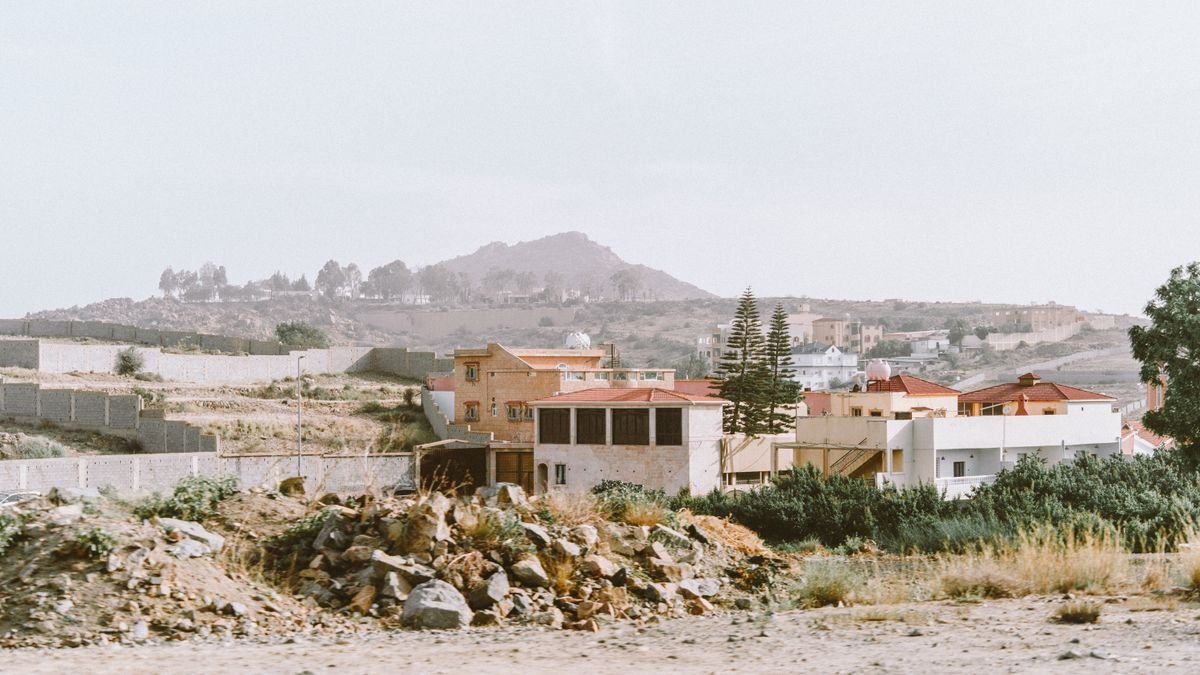 Hillside neighbourhoods on the edge of Taif, where the old souk draws shoppers from across the city.
Tea rooms and small restaurants around the old souk serve traditional Hijazi breakfasts - flat ful mudammas (stewed fava beans), eggs cooked in clarified butter, and fresh bread. Worth seeking out if you are in the area early in the morning.
Where to Stay
For a full breakdown of hotels by area and price, see the where to stay in Taif guide.
InterContinental Taif is the best hotel in the city for views and facilities - the mountain-facing rooms look across the escarpment, and the property is well-managed with good restaurants. Rates from approximately SAR 500 per night. We go into more detail in Taif Food Tours.
Le Méridien Taif is positioned near Al Hada, closer to the cable car and the rose farm districts than the InterContinental, making it a practical choice if the farms and cable car are the main focus. Rates from approximately SAR 450 per night.
Al Qasr Hotel Taif is a four-star option in the city proper, at around SAR 350 per night - centrally located and good value for the standard.
Search hotels in Taif on Booking.com
Where to Eat
Al-Romansiah is a reliable national chain with a branch in Taif - consistent kabsa and grilled meats in an air-conditioned setting. A safe default if you arrive without a specific plan.
Makkah Makkah restaurant is the local recommendation for Hijazi slow-cooked lamb - the house dish is lamb cooked overnight in an earthen pot, served with rice and a spiced broth on the side. It is the kind of restaurant that appears unremarkable from the outside and serves food that stays with you.
The Al Bab Al-Jadeed district has a concentration of shawarma and falafel stalls doing brisk trade through the evening - cheap, fast, and consistently good.
Honey shops near the old souk double as informal tea rooms where you can sit, sample, and buy without any pressure to purchase. The rose tea served in several of these shops - made from dried Taif rose petals - is worth seeking out specifically.
Getting There
Taif Regional Airport (TIF) has domestic connections from Riyadh (approximately one hour, SAR 120–280 return on Flynas or Saudia) and some international routes. The airport is a practical option if you are flying in specifically for the rose season.
By road from Jeddah, Taif is about 200km - roughly two hours via the mountain highway. The road climbs through the Hijaz escarpment with dramatic views and a series of switchbacks; take it at a comfortable pace rather than pushing speed through the bends. From Mecca, it is much shorter - approximately 80km, 1 to 1.5 hours.
The mountain road approach from Al-Hada below Taif is scenic and often recommended as the preferred entry route if you are coming from the coast. If the cable car is on your itinerary, consider driving up the mountain road and taking the cable car down - then being collected or Uber-ing back up to retrieve the car. See the things to do in Taif guide for a complete breakdown of attractions and seasonal activities. Deciding between Taif and Abha for a highland escape? See the Abha vs Taif comparison. Visitors driving up from Jeddah or Mecca can hire a car to explore the rose farms and cable car at their own pace. Browse Taif tours and experiences including rose farm visits, cable car packages, and day trips from Mecca or Jeddah.
See Also
- Things to do in Taif - Al Hada cable car, rose farms, and Shubra Palace in detail
- Where to stay in Taif - InterContinental, Le Méridien, and the best-value options
- Jeddah city guide - the Red Sea gateway city, about 200km west of Taif
- Abha city guide - the other major highland destination in Saudi Arabia
- Abha vs Taif comparison - side-by-side breakdown of the two highland cities
- Best time to visit Saudi Arabia - when the rose season falls and highland temperatures
- Mecca city guide - the holy city about 80km west of Taif, accessible to Muslims only
Frequently Asked Questions
What is Taif known for?
When is the Taif Rose Festival?
How far is Taif from Mecca?
Is Taif a good day trip from Jeddah?
Book an experience
Top experiences in Taif
Explore the best tours and activities in Taif , with instant confirmation and free cancellation on most bookings.
Book experiences in Saudi Arabia