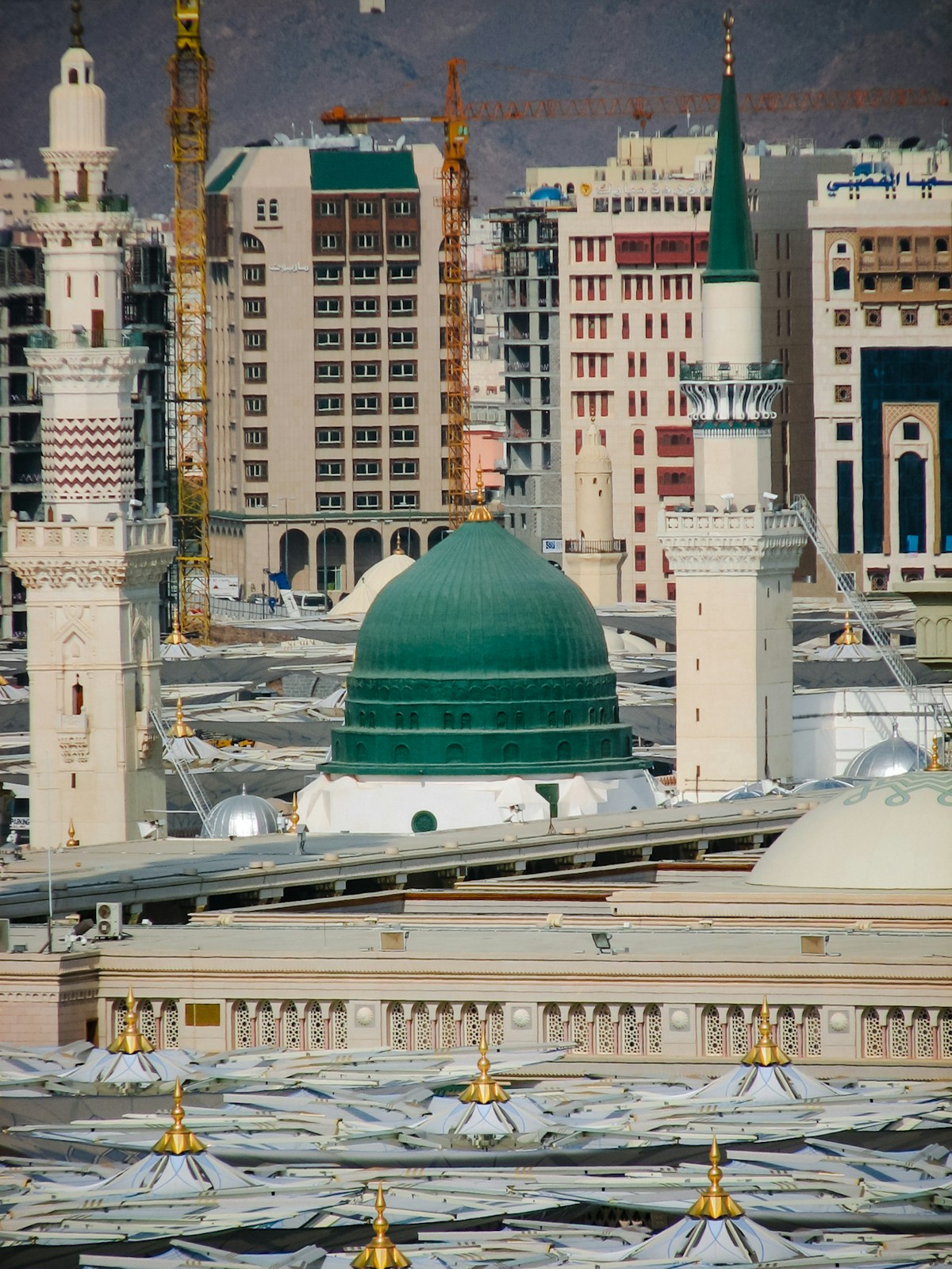
Mecca Travel Guide: Al-Masjid al-Haram, the Kaaba & Pilgrimage Sites
Al-Masjid al-Haram holds over two million worshippers at Hajj. This guide covers the holy sites, access rules, and what to plan before you arrive.
Guides for Mecca
Important: Mecca is accessible to Muslims only. Non-Muslims are prohibited from entering the city - this is enforced by checkpoints on all roads into Mecca and applies regardless of nationality or travel purpose.
Mecca is the holiest city in Islam and the spiritual centre of the Muslim world. It is the birthplace of the Prophet Muhammad (born 570 CE) and the location of Al-Masjid al-Haram - the Grand Mosque - which contains the Kaaba, the Zamzam Well, and other sites central to Islamic faith and practice. Approximately two million Muslims perform Hajj here each year, and tens of millions more perform Umrah throughout the year. The city is located in the Hijaz region of western Saudi Arabia, roughly 80 kilometres east of Jeddah and 450 kilometres south of Medina, sitting in a valley ringed by the Hejaz Mountains at approximately 277 metres elevation.
Al-Masjid al-Haram
Al-Masjid al-Haram - the Grand Mosque - is the largest mosque in the world and can accommodate up to four million worshippers simultaneously during peak Hajj periods. The complex covers approximately 356,000 square metres and has been expanded in major phases throughout the 20th and 21st centuries. The Saudi government continues investing in expansion to accommodate growing pilgrim numbers.
At the centre of the mosque is the Kaaba - the cubic stone structure that Muslims face during prayer. Performing tawaf (walking seven times counter-clockwise around the Kaaba) is one of the central rituals of both Hajj and Umrah. The Zamzam Well, also inside the mosque complex, provides water that pilgrims collect to take home. Entry to Al-Masjid al-Haram is free for all Muslim pilgrims with a valid Umrah or Hajj visa. The mosque is open 24 hours, though the area around the Kaaba becomes extremely congested during midday and evening prayers. Early morning (before Fajr) is the least crowded time for tawaf.
See the full guide to Al-Masjid al-Haram for details on the mosque’s history, the Zamzam Well, the Black Stone, and what to expect during a visit.
Other Holy Sites in Mecca
Beyond the Grand Mosque, several key sites draw pilgrims:
Jabal al-Nour (Cave of Hira): The mountain where the Prophet Muhammad received the first Quranic revelation. The climb to the cave takes approximately 45 minutes and involves around 1,000 steps. No entry fee. Open daily; most accessible early morning before heat builds. Located about 4 kilometres north of Al-Masjid al-Haram.
Jabal Thawr: The cave where the Prophet sheltered during the migration to Medina. A steeper, longer climb than Jabal al-Nour - approximately 1.5 hours up. No entry fee. Located south of the city centre, roughly 6 kilometres from the mosque.
Mina and Jamarat Bridge: Used during Hajj for the symbolic stoning of the devil ritual. Outside Hajj season the area is accessible, though the significance is primarily during the pilgrimage. Located approximately 5 kilometres east of the Grand Mosque.
Arafat Plain: The gathering site on the 9th of Dhul Hijjah - standing at Arafat is considered the central pillar of Hajj. Approximately 20 kilometres east of Mecca. During Hajj, pilgrims travel by bus or on foot; outside Hajj the plain is open to visit.
Getting to Mecca
Mecca does not have its own airport - the nearest is King Abdulaziz International Airport in Jeddah, 80 kilometres away. From Jeddah, the Haramain High-Speed Railway connects to Mecca at Haramain Station in approximately 30 minutes; tickets cost approximately SAR 80-100 one-way as of 2026. The train also runs north to Medina (approximately 2 hours from Mecca) and east to King Abdullah Economic City.
Bus services (SAPTCO) run between Jeddah and Mecca for approximately SAR 20-30. Shared taxis (GMC vans) run for roughly SAR 50-70 per person. Private taxis typically cost SAR 150-250 depending on negotiation and traffic. Welcome Pickups offers fixed-rate private transfers from Jeddah airport directly to Mecca - a straightforward option for pilgrims arriving after a long flight who want a pre-booked transfer without negotiating on arrival.
From Medina, the Haramain High-Speed Railway runs to Mecca in approximately 2 hours; tickets cost approximately SAR 130-180 one-way as of 2026. Bus services between the two cities operate frequently and take 4-5 hours by road.
Muslim visitors should carry evidence of their faith - some nationalities may be asked to demonstrate their Muslim identity at checkpoints. An Umrah visa confirms your status and is the most reliable documentation to have available.
Accommodation in Mecca
The accommodation market in Mecca is unlike anywhere else in the world. Thousands of hotels are concentrated within walking distance of Al-Masjid al-Haram, and proximity to the mosque is the primary decision factor.
Luxury (within 200-500 metres of the mosque): The Abraj Al-Bait complex - the Makkah Royal Clock Tower - is directly adjacent to the Grand Mosque and includes the Fairmont Makkah Clock Royal Tower, where rooms start at approximately SAR 1,500-3,500 per night during Ramadan and Hajj season as of 2026. The Swissotel Makkah in the same complex offers rooms from approximately SAR 900-2,000 per night. The Hilton Suites Makkah on Ajyad Street (roughly 300 metres from the mosque) runs from approximately SAR 700-1,500 per night. These hotels book out months in advance for Hajj and Ramadan.
Mid-range (500 metres to 1.5 kilometres): The Movenpick Hotel & Residences Hajar Tower Makkah on Ibrahim Al Khalil Road offers rooms from approximately SAR 450-900 per night. Anwar Al Madinah Mövenpick Hotel and Millennium Makkah Al Naseem Hotel are popular mid-range options in the 800 metre to 1.2 kilometre range, typically running SAR 350-700 per night outside peak periods.
Budget: Pilgrim houses (locally known as funduqs) in the Al Ajyad and Ajyad Rusayfah areas offer basic rooms from approximately SAR 100-200 per night and cater primarily to pilgrims on group packages. Standards vary significantly; check recent reviews before booking.
Book as far in advance as possible for Hajj season and the last ten days of Ramadan - these periods are fully booked up to a year ahead at premium properties. For a full breakdown of hotels by proximity tier and price, see the where to stay in Mecca guide.
Where to Eat Near Al-Masjid al-Haram
Mecca’s food scene is shaped by its role as a destination for pilgrims from across the Muslim world. The streets around the mosque are dense with restaurants serving cuisines from South Asia, Southeast Asia, the Arab world, and beyond.
Al Baik is the most iconic Saudi fast food chain and has multiple locations in Mecca, including near the Grand Mosque. A full meal (chicken + sides) costs approximately SAR 30-50. It is extremely popular during Umrah season and queues can be long.
Zamzam Restaurant on Ibrahim Al Khalil Road is a reliable option for hearty Saudi and South Asian meals, with mains from approximately SAR 30-60 per person. Known for large portions suited to pilgrims who have been walking.
Fakieh Seafood Restaurant and other mid-range dining options along Ibrahim Al Khalil Road typically run SAR 60-120 per person for a full meal. Many hotels in the Abraj Al-Bait complex have restaurants serving international buffets at SAR 150-250 per person, popular with tour groups.
For quick, cheap eating between prayers, small restaurants and food stalls throughout the Al Musfalah and Ajyad areas serve shawarma, foul, and manakeesh for SAR 10-25 per meal.
Practical Information for Muslim Visitors
Ihram: Entering Mecca to perform Umrah or Hajj requires entering the state of ihram - wearing the white seamless garments and observing ritual purity - before crossing the designated miqat (boundary points). For pilgrims arriving at Jeddah airport, the miqat is Yalamlam or the airport mosque (depending on departure direction); pilgrims typically enter ihram before boarding their flight or at the airport’s designated area. Pilgrims arriving by road from Medina cross the Dhul Hulayfah miqat near Medina.
Best times: Mecca receives pilgrims year-round. Umrah can be performed at any time, but the last ten days of Ramadan and Hajj season (8th-13th Dhul Hijjah) are the most spiritually significant - and also the most crowded. Outside these peak periods (particularly January-March and September-November, avoiding Ramadan), crowds thin considerably and accommodation is easier to book.
Weather: Mecca is hot year-round. Average highs exceed 40°C in summer (June-August); winter (December-February) averages 30-35°C. The valley location limits any coastal breeze. Plan physical activity (mountain climbs, walking between sites) for early morning or after sunset.
Currency and payments: Saudi riyal (SAR) is the only currency. Cards are widely accepted at hotels and larger restaurants; smaller eateries and market stalls prefer cash. ATMs are available throughout the city and inside the Abraj Al-Bait complex.
See the Umrah guide and Hajj guide for comprehensive pilgrimage planning information. For detailed guidance on things to do in Mecca beyond the main mosque, see the Mecca things to do guide. For eating options near the mosque, see the Mecca food guide. Deciding between the two holy cities? See the Mecca vs Medina comparison for a full pilgrimage logistics breakdown. For guided tours of Mecca’s holy sites and surrounding region, browse Mecca tours and experiences.
Book an experience
Top experiences in Mecca
Explore the best tours and activities in Mecca , with instant confirmation and free cancellation on most bookings.
Book experiences in Saudi Arabia