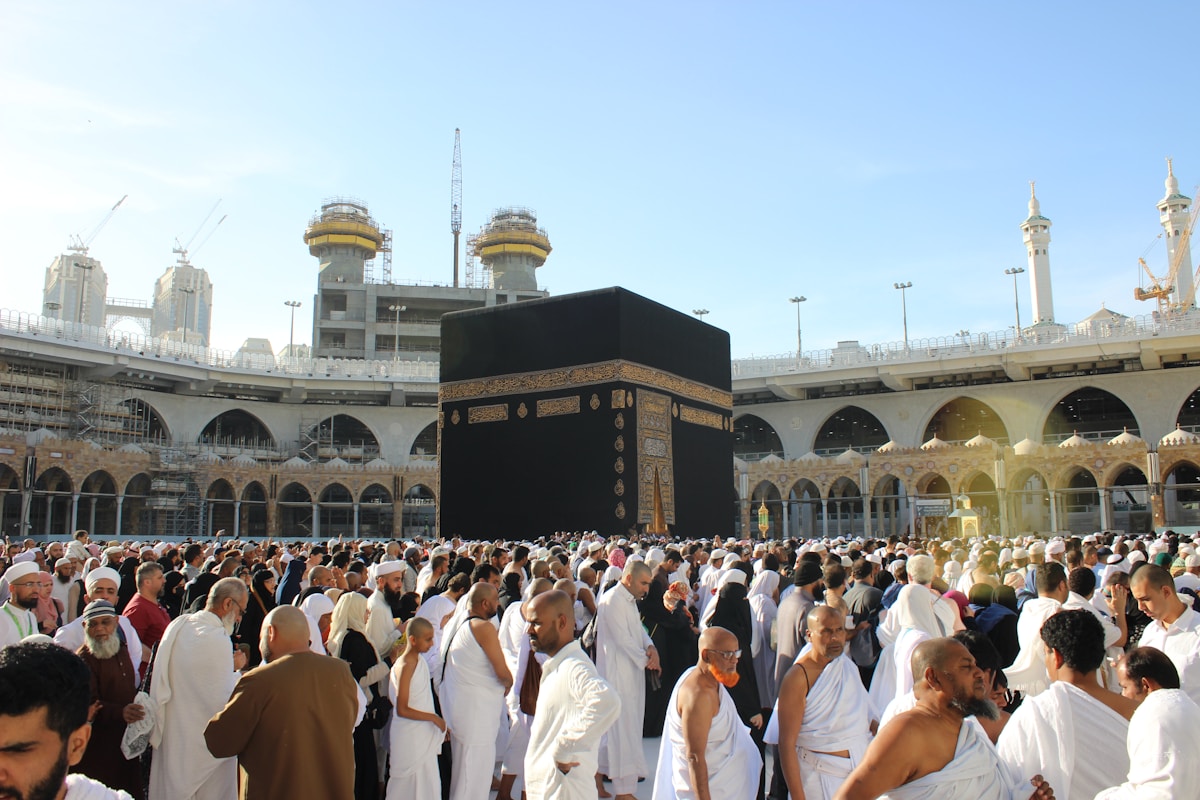
Mecca is the holiest city in Islam - the birthplace of the Prophet Muhammad (peace be upon him) and the destination of both the annual Hajj pilgrimage and the year-round Umrah. Access is restricted to Muslims only; non-Muslims are prohibited from entering the city under Saudi law, with checkpoints enforcing this on all approach roads.
For Muslim visitors, Mecca offers a depth of religious experience found nowhere else on earth. The following covers the main pilgrimage sites, historic landmarks, and practical considerations.
Masjid al-Haram and the Kaaba
Masjid al-Haram - the Grand Mosque - is the focal point of every visit to Mecca. At its centre stands the Kaaba, the cubic black-draped structure that Muslims orient their prayers toward. Circumambulating the Kaaba (tawaf) is central to both Hajj and Umrah rituals. The mosque is free to enter for Muslims and operates 24 hours a day throughout the year.
The Zamzam Well - located within the mosque complex - provides water that carries deep spiritual significance in Islamic tradition. Visitors receive Zamzam water throughout the mosque complex during their stay.
During peak Hajj season (Dhul Hijjah), the mosque and surrounding areas accommodate millions of pilgrims simultaneously. The Haramain Expansion project has extended the mosque significantly, but crowd management remains a key consideration. Authorities recommend following official guide instructions closely during Hajj.
For Umrah visitors, the mosque is accessible year-round with significantly lower crowd levels outside Hajj season and Ramadan. See our Umrah guide for the full ritual sequence.
Jabal al-Nour and the Cave of Hira
Jabal al-Nour (Mountain of Light) is a 640-metre peak approximately 2 kilometres northeast of the Grand Mosque. The Cave of Hira near the summit is where, according to Islamic tradition, the Prophet Muhammad received the first Quranic revelation in 610 CE. The climb involves approximately 1,200 steps and takes 20–40 minutes at a moderate pace. There is no entry fee. The cave itself is small - roughly four metres deep and two metres wide - and can accommodate only a few people at a time.
Visit early morning to avoid the combined heat and crowds. Water and light snacks are available from vendors along the ascent route.
Jabal Thawr and the Cave of Thawr
Jabal Thawr is south of Mecca at approximately 4.5 kilometres from the Grand Mosque. The Cave of Thawr is where the Prophet and his companion Abu Bakr sheltered for three days during the Hijra (migration to Medina) in 622 CE. The climb is steeper than Jabal al-Nour - allow 30–50 minutes for the ascent. No entry fee.
Mount Arafat (Jabal ar-Rahmah)
The Plain of Arafat is 20 kilometres east of Mecca. During Hajj, the “Standing at Arafat” (Wuquf) on 9 Dhul Hijjah is the most critical ritual - regarded as the spiritual centrepiece of the pilgrimage. The Jabal ar-Rahmah (Mount of Mercy) at the centre of the plain is where pilgrims gather. During Umrah and outside Hajj season, the site is visitable but holds less ceremonial significance.
Bus services connect the Grand Mosque area to Arafat during Hajj. Transport from Mecca during non-Hajj periods is available by taxi (approximately SAR 80–120 round trip as of 2026).
Mina
Mina is the vast tent city 5 kilometres from Mecca. During Hajj, pilgrims spend the nights of 10–13 Dhul Hijjah here and perform the Rami (stoning of the devil) ritual at the Jamarat Bridge. The tent camp accommodates over 3 million pilgrims in air-conditioned tents. Outside Hajj season, Mina is largely empty.
Muzdalifah
Between Arafat and Mina, Muzdalifah is where pilgrims collect pebbles for the Rami ritual and spend the night of 9–10 Dhul Hijjah in open prayer. Like Mina, it functions exclusively as a pilgrimage site and is not a tourist destination outside Hajj season.
Abraj Al-Bait Clock Tower
The Abraj Al-Bait complex - the distinctive four-faced clock tower visible from across Mecca - rises to 601 metres adjacent to the Grand Mosque. Beyond its hotel and residential function, the complex contains the Mecca Museum on an upper floor (covering the history of Mecca’s development), a shopping mall at the base levels, and observation facilities. The clock tower itself is the third-tallest building in the world.
Search hotels in Mecca on Booking.com
Museum opening hours vary - check the current schedule on arrival. Entry to the mall and public areas is free. The connected hotels (Fairmont, Swissotel, and Mövenpick towers) are among the most convenient accommodations for the Grand Mosque.
Makkah Museum (Qishla Palace)
The Qishla Palace Museum in the old city district preserves an Ottoman-era fortress that served as a garrison and administrative centre. The museum documents Mecca’s history across the pre-Islamic, early Islamic, and modern eras. Entry is generally free. Opening hours are approximately 8am–10pm, Sunday–Thursday, though these change during Ramadan and pilgrimage seasons.
Quba Road Dates Market and Shopping
The markets along and around Quba Road and the central souk areas offer dates, prayer items, perfumes (oud and attar), and religious goods. Prices range from SAR 20 for basic dates to SAR 300+ for premium Ajwa dates (the most prized Medina variety). Shopping near the Grand Mosque is concentrated in the Abraj Al-Bait Mall and street-level shops in the Ajyad district.
Getting Around Mecca
The Mecca Metro (Al Mashaaer Al Mugaddassah Metro) connects the key pilgrimage sites - Grand Mosque, Mina, Muzdalifah, and Arafat - and operates during Hajj season. Outside Hajj, the main transport options are taxis and the Haramain High-Speed Railway from Jeddah (approximately SAR 45 one way, journey time 30 minutes as of 2026). See our Mecca city guide for full transport and accommodation details.
To make the most of your visit, browse Tours in Mecca for guided experiences, sort travel insurance before you depart, and pick up a Saudi eSIM for easy navigation on the ground.
See Also
- Mecca Food Guide - restaurants and food near the Grand Mosque
- Mecca Hotels - accommodation proximity guide
- Mecca City Guide - transport, logistics, and overview of Mecca
- Masjid al-Haram Guide - the Grand Mosque and the Kaaba explained
- Hajj Guide - the annual pilgrimage and Mount Arafat rituals
- Umrah Guide - the lesser pilgrimage and how to plan a Mecca visit
- Mecca accommodation guide - full hotel tier comparison near the Haram
- Mecca vs Medina - comparing the two holy cities for pilgrims
- Jeddah City Guide - the gateway city 80km west of Mecca with international flights
- Taif City Guide - the highland city 75km southeast of Mecca