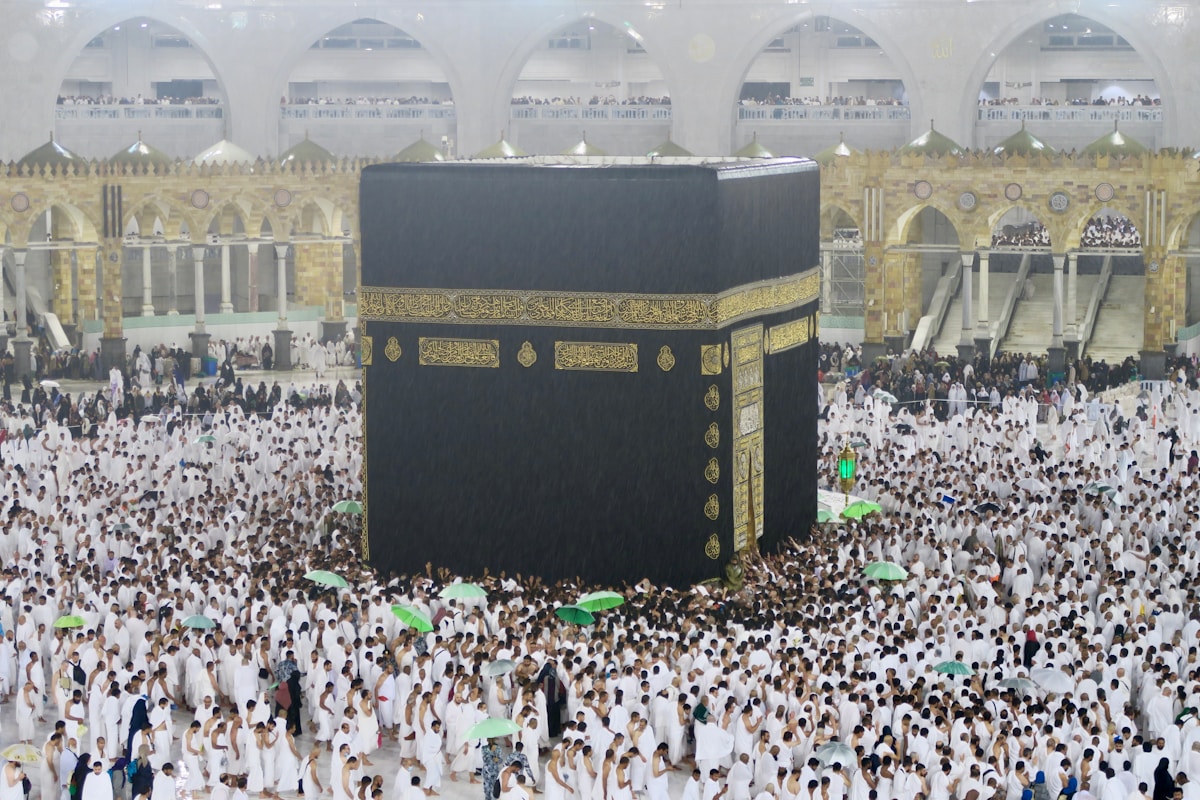
Mecca is accessible to Muslims only. Non-Muslims are prohibited from entering the city - this is enforced at all checkpoints on roads into Mecca.
Hajj is the fifth pillar of Islam - the annual pilgrimage to Mecca that every Muslim who is physically and financially able must perform at least once in their lifetime. Approximately two million Muslims from across the world converge on Mecca each year during the Islamic month of Dhul Hijjah, making Hajj one of the largest annual gatherings of people on Earth.
When Hajj Occurs
Hajj takes place on specific days of the Islamic month of Dhul Hijjah - the 12th month of the lunar Islamic calendar. The key ritual dates are the 8th through the 13th of Dhul Hijjah. Because the Islamic lunar calendar is 354 days (approximately 11 days shorter than the Gregorian year), the Hajj date shifts earlier each year in the Gregorian calendar.
Hajj 2026 is expected to fall in late May - exact dates depend on the lunar moon sighting and can vary by a day from projections. Always verify with the official Saudi Ministry of Hajj and Umrah or an authorised Hajj operator - do not rely on projected dates alone.
What Hajj Costs
Hajj is a significant financial commitment. The costs below reflect 2025–2026 figures and are subject to change:
From the United Kingdom: Approximately £5,000–8,000 per person through ATOL-bonded operators. This typically includes return flights from London, accommodation in Mecca and Medina (usually 5–7 nights in each), ground transport between sites, group guidance from a licensed scholar, and most meals. Premium packages with closer hotel proximity to Al-Masjid al-Haram cost more. Look for operators registered with the Association of British Hujjaj and ATOL-bonded under UK Civil Aviation Authority rules.
Search hotels in Mecca on Booking.com
From the United States: USD 6,000–12,000 per person depending on the package tier. The higher end reflects first-class accommodation within the Abraj Al-Bait complex (immediately adjacent to the mosque). Economy packages with accommodation further from the mosque run SAR 6,000 as of 2026–8,000.
From Muslim-majority countries: Government-organised Hajj packages typically run USD 3,000–8,000 per person including flights, accommodation, transport, and meals. The Saudi government-managed Hajj package for Saudi citizens is heavily subsidised. Waiting lists in some countries run years.
What is included in a standard package: Return flights from your departure city, accommodation in Mecca (typically 5–7 nights, distance from mosque varies by package tier), accommodation in Medina (2–4 nights for the Al-Nabawi visit), ground transport between Mecca, Mina, Muzdalifah, and Arafat, a licensed Hajj guide/group leader, and meals during the core Hajj days.
What is typically not included: Travel insurance (essential - purchase separately), personal medical costs, additional nights before or after the package, and personal shopping.
The Quota System
Each Muslim-majority country receives a Hajj quota from Saudi Arabia based on approximately 1 pilgrim per 1,000 Muslims in the national population. In practice this means:
- Countries with large Muslim populations have formal waiting lists, sometimes running years
- Quota allocation varies year to year and can be adjusted by Saudi authorities
- Applications must go through national Hajj authorities - the Ministry of Religious Affairs or its equivalent - not directly to Saudi Arabia
- Saudi Arabia also allocates a smaller quota for Muslims in non-Muslim-majority countries, distributed through approved private operators
How to apply: Contact your country’s Ministry of Religious Affairs, national Hajj mission, or an authorised Hajj tour operator. Submit documentation including your passport, proof of Muslim faith where required, health certifications, and mahram documentation where applicable. Meningococcal vaccination (ACWY) is mandatory for Hajj - obtain this well in advance.
The Five Pillars of Hajj
Hajj consists of a specific sequence of rituals performed over five days. Missing or incorrectly performing certain acts invalidates the Hajj entirely.
1. Ihram (Day 8 - Dhul Hijjah 8)
Pilgrims enter the state of ihram before crossing the miqat (designated boundary points outside Mecca). Men wear two white seamless cloths (izar and rida). Women wear modest clothing covering everything except face and hands. The pilgrim declares the intention (niyyah) and recites the talbiyah:
Labbayk Allahumma Labbayk (Here I am, O Allah, here I am).
In ihram, certain actions are prohibited: cutting hair or nails, using perfume, engaging in sexual relations, hunting, and (for men) covering the head. All pilgrims converge on Mecca; those arriving by air enter ihram at the miqat boundary corresponding to their direction of travel.
2. Tawaf and Sa’i (Initial)
Upon arriving at Al-Masjid al-Haram, pilgrims perform an initial tawaf - seven counter-clockwise circumambulations of the Kaaba - followed by Sa’i, seven walks between the hills of Safa and Marwah (enclosed within the mosque building, approximately 450 metres each way). These rites also constitute part of Umrah for those performing Hajj al-Tamattu (the most common form).
3. Wuquf at Arafat (Day 9 - Dhul Hijjah 9)
The central pillar of Hajj. Pilgrims travel to the plain of Arafat (approximately 20km from Mecca) and stand in prayer and supplication from noon to sunset. The Prophet Muhammad said: “Hajj is Arafat.” Missing the standing at Arafat invalidates the entire Hajj - there is no substitute act. The plain holds millions of pilgrims simultaneously.
4. Muzdalifah (Night of Dhul Hijjah 9–10)
After Arafat, pilgrims travel to Muzdalifah (between Arafat and Mina), where they pray Maghrib and Isha combined, spend the night, and collect pebbles for the stoning ritual. The stay at Muzdalifah is obligatory.
5. Rami al-Jamarat - Stoning the Devil (Days 10–13)
Pilgrims throw pebbles at three stone pillars (the Jamarat) in Mina, representing the rejection of Satan’s temptations as experienced by the Prophet Ibrahim. On Day 10, seven pebbles are thrown at the largest pillar (Jamarat al-Aqaba). On Days 11, 12, and optionally 13, seven pebbles are thrown at each of the three pillars. The Jamarat Bridge has been extensively expanded to manage crowd flow - the stoning rite caused fatal crushes in previous decades and the Saudi government has invested heavily in infrastructure to reduce the risk.
6. Eid al-Adha Sacrifice, Halq/Taqsir (Day 10)
On the day of Eid al-Adha, pilgrims sacrifice an animal (or pay for one to be sacrificed on their behalf through the official Saudi Adahi project) and then shave (halq) or trim (taqsir) their hair, exiting a portion of ihram. Men typically shave; women cut a small amount.
7. Tawaf al-Ifadah and Sa’i (Day 10–12)
After the sacrifice and hair-cutting, pilgrims return to Al-Masjid al-Haram to perform Tawaf al-Ifadah (the main Tawaf of Hajj) and a second Sa’i. This is one of the most crowded moments at the mosque - perform early on Day 10 if possible.
8. Tawaf al-Wada (Farewell Tawaf)
Before leaving Mecca, pilgrims perform a final Tawaf as farewell to the Kaaba. This is the last obligatory act of Hajj.
Physical Preparation
Hajj is physically demanding. Pilgrims walk many kilometres daily across multiple days, often in intense heat - Hajj 2026 falls in late May when temperatures in Mecca and at Arafat can exceed 40°C. Prepare physically by:
- Building cardiovascular fitness (walking 5–10km daily) in the months before
- Acclimatising to heat if you live in a cool climate - consider practising walking in warm conditions
- Packing well-broken-in supportive footwear appropriate for long walking on stone, marble, and sand
- Consulting a physician if you have any conditions affected by heat, exertion, or crowd environments
See the Umrah guide if you are planning a non-Hajj pilgrimage visit to Mecca.
Pilgrims travelling to Saudi Arabia should arrange travel insurance well in advance, book an airport transfer to reach Mecca or Medina without hassle, and pick up a Saudi eSIM for reliable connectivity throughout the journey.
See Also
- Mecca City Guide - transport, districts, and practical logistics in the holy city
- Masjid al-Haram Guide - the Grand Mosque, the Kaaba, and the Mataf explained
- Mecca Accommodation Guide - hotels by distance from the Haram, Hajj vs Umrah pricing
- Where to Stay in Mecca - full hotel guide with prices and proximity
- Umrah Guide - the lesser pilgrimage rites for non-Hajj visits to Mecca
- Mecca vs Medina - comparing both holy cities for pilgrimage planning
- Masjid al-Nabawi, Medina - the Prophet’s Mosque visited by most Hajj pilgrims
- Saudi Arabia Visa Guide - Hajj visa requirements and the official application process