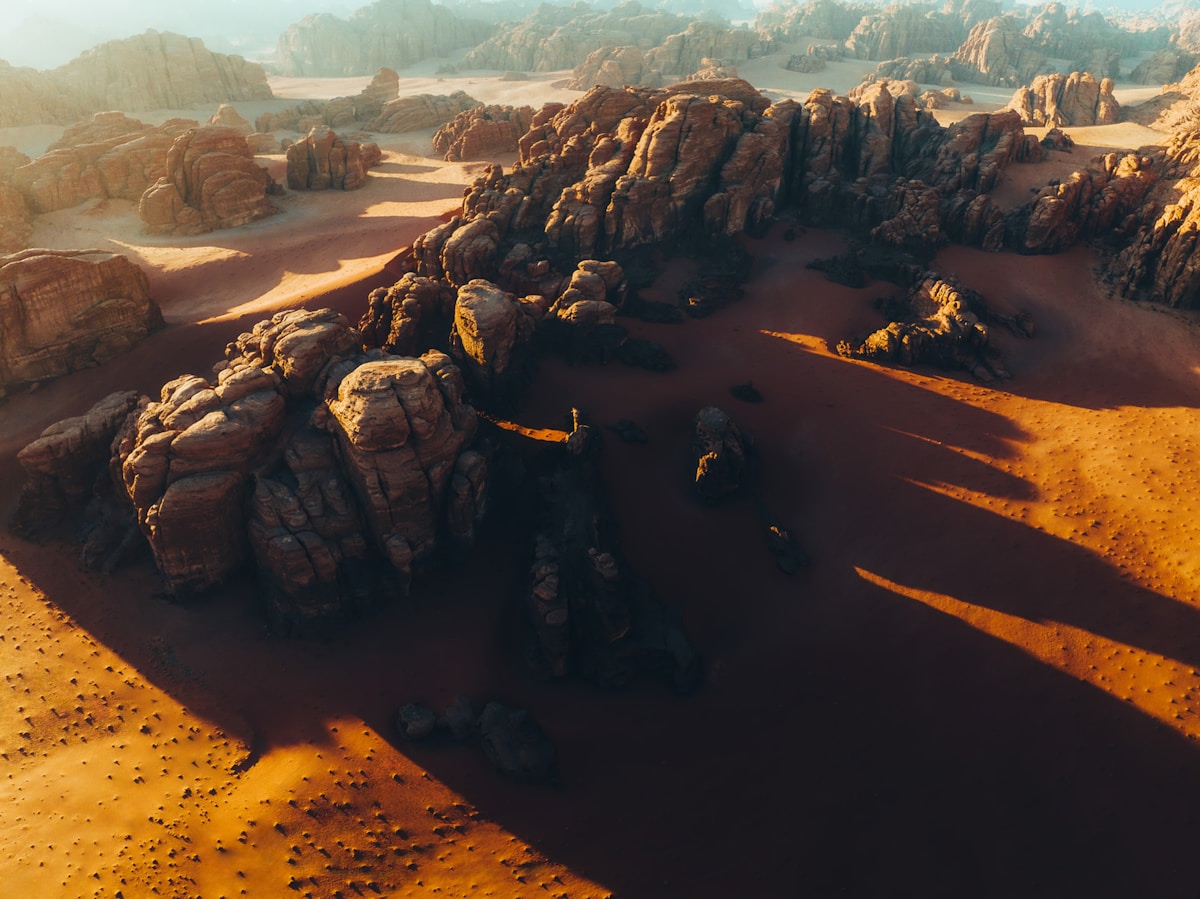
Saudi Arabia contains some of the most extraordinary desert landscapes on Earth - from the massive orange dunes of the Rub’ al Khali (Empty Quarter) to the red sands of the Nefud desert in the north. Desert camping has a long tradition in the Kingdom, and organised experiences ranging from simple overnight camps to multi-day desert expeditions are now available to international visitors.
The Rub’ al Khali (Empty Quarter)
The Rub’ al Khali is the headline desert destination. The world’s largest continuous sand desert, it covers approximately 650,000 square kilometres - an area larger than France. The dunes are monumental: some exceed 250 metres in height. The colours shift through the day from pale cream to deep orange to blood red in the evening light.
The interior of the Rub’ al Khali is one of the most remote places on Earth. Daytime temperatures in summer exceed 50°C. There is no water, no roads, and no infrastructure beyond a handful of oil industry access tracks.
Visiting the Empty Quarter from Najran: The most accessible Saudi-side entry point to the Rub’ al Khali’s star dune fields is from Najran in the southwest. The dune fields are 2–3 hours by 4WD from Najran city. Empty Quarter Experience runs 2-day guided trips from Najran starting from SAR 800 as of 2026–1,500 per person, including 4WD transport across the dunes, camping equipment, meals, and an experienced guide. The trip includes an overnight camp in the dune sea - sleeping under a sky with essentially zero light pollution. Book at least a week ahead during the October–March season.
Accessible Desert Camping Near Riyadh
For visitors based in Riyadh who want a desert experience without committing to a multi-day expedition, several locations offer good camping within easy reach of the city.
Wadi Hanifah
Wadi Hanifah is 30 minutes from central Riyadh by car - accessible on the valley floor by standard vehicle, with 4WD needed for upper wadi reaches. Free camping is permitted along the wadi bed (no formal sites, no booking required). The wadi’s landscape - a wide dry riverbed with date palms and sandstone walls - is a genuine desert experience close to a major city. This is a popular spot with local Saudi families on weekends; weekday visits are quieter.
AlUla Desert: Elephant Rock and Surroundings
Camping near Elephant Rock (Jabal al-Fil) in AlUla is permitted in designated areas free of charge. The desert landscape around Elephant Rock - monolithic sandstone formations, open dunes, silence - is one of the most photogenic camping environments in Saudi Arabia.
For those wanting comfort, Memories of AlUla runs glamping (luxury desert tenting) near Elephant Rock from SAR 1,200 per night for a 2-person tent with bedding, electricity, and breakfast. A step up from basic camping that retains the desert experience without sleeping on the ground.
Wadi Disah (Tabuk Region)
The canyon of Wadi Disah, approximately 120km south of Tabuk, is one of the most scenic camping locations in Saudi Arabia. The canyon’s towering sandstone walls, year-round stream, and date palm grove create an environment unlike the open desert - camping here is dramatically beautiful and relatively accessible by 4WD. See the Tabuk guide for logistics.
Equipment and Gear
Most visitors don’t bring camping equipment to Saudi Arabia - organised tours supply everything. For independent campers:
In Riyadh: Several outdoor equipment shops in the industrial area south of the city centre offer camping gear rental. Camping gas canisters, sleeping bags, and basic tents can be rented from SAR 50 per day. Al-Massa Sport in Al-Akariya Mall stocks camping and outdoor gear for purchase or can advise on rental options.
Essential kit for any desert overnight:
- Sleeping bag appropriate for the season (desert nights in winter can reach 5°C)
- Ground mat or sleeping pad
- Tent with good pegging for sand (standard pegs don’t hold in dunes - bring sand anchors)
- Headlamp with spare batteries
- Fire-starting equipment if you plan a campfire (check local rules - open fires are restricted in some areas)
Safety: Non-Negotiable Rules
Desert camping in Saudi Arabia is genuinely rewarding and can also be genuinely dangerous if approached carelessly. Several tourists have required rescue or been found in serious difficulty in Saudi desert environments in recent years.
Water: Carry 4+ litres of water per person per day minimum in cool weather, more in warm weather. Desert dehydration is faster than most visitors expect. Drink before you feel thirsty.
Tell someone your location: Before driving into the desert, share your GPS coordinates and planned return time with someone not in your group. If something goes wrong, this information is what enables rescue.
GPS and navigation: Download offline maps before departing. Mobile signal is unreliable beyond Riyadh’s suburbs. Sand tracks shift and change - do not navigate on landmarks alone.
Vehicles: A reliable 4WD is the minimum for any off-road desert camping. For any remote area, two vehicles are safer than one - a single vehicle breakdown in the desert is a serious emergency.
Emergency services: Dial 911 in Saudi Arabia. If you have satellite communication (recommended for remote Empty Quarter trips), use it.
Season
October–March is the optimal camping window. Nights are cool to cold; days are comfortable. April–May and September: transitional - manageable but warm. June–August: Extreme heat; desert camping is dangerous and not recommended. Summer temperatures in the Saudi interior regularly exceed 45–50°C during the day.
For organised tours combining camping with dune driving and cultural experiences, book through our Saudi Arabia tours page.
See Also
- Riyadh desert safari - accessible dune driving and Bedouin camps near the capital
- Edge of the World (Jebel Fihrayn) - dramatic escarpment hiking 90 minutes from Riyadh
- AlUla things to do - camping near Elephant Rock and the star dune fields
- Tabuk City Guide - Wadi Disah canyon, one of Saudi Arabia’s top camping destinations
- Getting around Saudi Arabia - car hire essentials for reaching remote desert sites
- Best time to visit Saudi Arabia - October to March for desert camping season