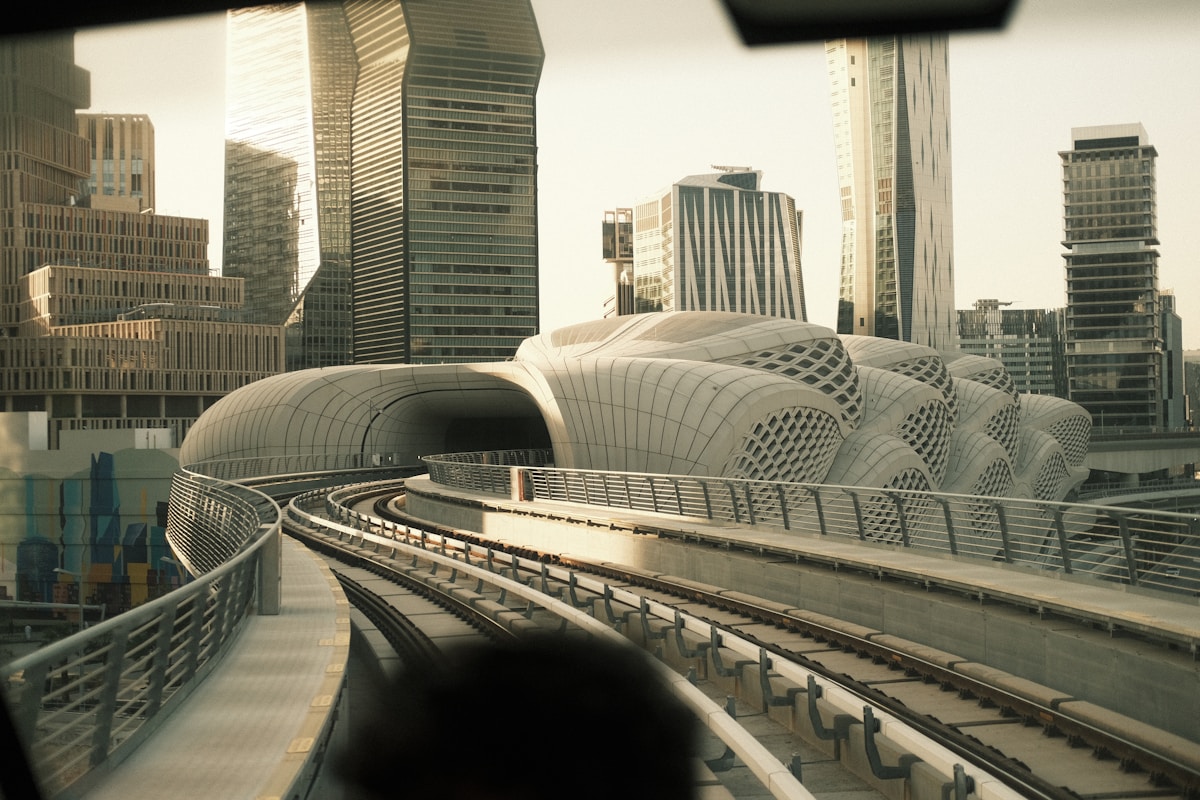
Saudi Arabia is a large country - about the size of Western Europe - and the distances between its most interesting destinations are significant. Riyadh to AlUla is nearly 1,100km. Jeddah to Abha is 650km. Getting this right shapes your entire trip. The good news is that transport infrastructure has improved dramatically since 2019, and visitors now have more options than ever: two high-speed rail lines, a new city metro, reliable ride-hailing across all major cities, and competitive domestic airfares.
Domestic Flights
For journeys over 500km, flying is almost always the right choice. Saudi Arabia has three main domestic carriers:
Saudia (Saudi Arabian Airlines) is the national carrier, operating the most comprehensive route network. Quality is broadly equivalent to any full-service regional carrier. Check-in baggage is included on most fares. The mobile app works well for booking and boarding passes.
flynas is a low-cost carrier with strong coverage of Riyadh, Jeddah, Dammam, Abha, Tabuk, and Medina. Fares are competitive and punctuality is generally good. flynas is typically the cheapest option on popular routes.
flyadeal is Saudia’s own low-cost subsidiary, competing on Riyadh–Jeddah and a handful of secondary routes. Fares are similar to flynas; compare both before booking.
Key routes and approximate flying times:
- Riyadh ↔ Jeddah: 1 hour 15 minutes (very frequent, 8–12 departures daily from each carrier)
- Riyadh ↔ Dammam: 1 hour (though the train is a competitive alternative)
- Riyadh ↔ Abha: 1 hour 30 minutes
- Jeddah ↔ Tabuk: 1 hour 20 minutes (useful for AlUla access from the north)
- Riyadh ↔ Medina: 1 hour 15 minutes
AlUla note: The nearest airport to AlUla is Prince Abdul Majeed bin Abdulaziz Airport (ULH), approximately 25 minutes from the AlUla Heritage Sites. Regular direct flights from Riyadh (1.5 hours), Jeddah (1 hour 15 minutes), and occasional seasonal routes from other cities. Check current schedules - AlUla’s route network expanded significantly from 2023 and continues to develop.
Book domestic flights via each airline’s app or website. Third-party aggregators (Google Flights, Skyscanner) cover Saudi domestic routes. Prices are generally low by international standards - Riyadh to Jeddah frequently comes in below SAR 200 as of 2026 on budget carriers. Book 2–4 weeks ahead for the best fares during peak season (October–March) and around public holidays.
Haramain High Speed Railway
The Haramain High Speed Railway (HHR) is one of the most impressive rail projects in the region: 450km of track built to handle the specific demands of pilgrimage travel, running at speeds up to 300km/h. It connects five stations:
- King Abdulaziz International Airport (Jeddah)
- Jeddah Al Sulaymaniyah (city centre station)
- Mecca - non-Muslims cannot disembark here
- King Abdullah Economic City (Rabigh) - limited visitor interest
- Medina (Al Harmain station)
What visitors need to know:
- Non-Muslims can ride the Haramain Railway freely except for the Mecca station - you cannot board or disembark there. Trains pass through Mecca station at speed; you simply remain on board.
- Journey times: Jeddah city to Medina approximately 2 hours (versus 5–6 hours by road). Jeddah airport to Medina approximately 1 hour 45 minutes.
- Booking: Advance booking at haramainhrail.sa is strongly recommended, particularly for Friday–Saturday and during public holidays. Tickets sell out. The website offers booking in English.
- Fares: Business class and economy class are available. Economy Jeddah to Medina runs approximately SAR 90–150 as of 2026.
- Frequency: Trains run 8–10 times daily in each direction. More frequent around pilgrimage periods.
Medina is a worthwhile destination for non-Muslim visitors - the area around Al-Masjid an-Nabawi, the Prophet’s Mosque, has a striking atmosphere and the old city has areas of genuine historic interest. Non-Muslims can access the outer plazas. The train is the most comfortable way to get there from Jeddah.
SAR Train: Riyadh to Dammam
The Saudi Railway Organization (SAR) operates a conventional rail service between Riyadh and Dammam (on the Arabian Gulf coast), via Hofuf. This is an older line - not high-speed - but comfortable and significantly cheaper than flying.
- Journey time: approximately 4.5–5 hours, Riyadh to Dammam
- Frequency: 3–4 departures daily in each direction
- Fares: approximately SAR 70–130 economy as of 2026
- Station: Riyadh’s King Fahd railway station, well north of the city centre (budget 30–45 minutes from central Riyadh by Uber)
For a Riyadh–Dammam day trip or if you prefer rail to flying, this is a reliable option. The Eastern Province around Dammam and Al Khobar is Saudi Arabia’s oil heartland - not the most tourist-heavy region, but with some interesting coastal scenery and the Edge of the World escarpment accessible from Riyadh on a day trip.
Intercity Buses (SAPTCO)
SAPTCO (Saudi Public Transport Company) operates an intercity bus network covering most major cities and many provincial towns. Buses are modern, air-conditioned, and relatively comfortable for shorter routes.
Where buses work well:
- Riyadh to Dammam (for travellers who don’t want the train)
- Jeddah to Abha (5–6 hours)
- Jeddah to Taif (1.5 hours)
- Regional connections throughout Hejaz province
Where buses are impractical:
- Riyadh to Jeddah (10+ hours - fly)
- Riyadh to AlUla (15+ hours - fly)
- Any journey where the alternative is a 1-hour domestic flight
Book via the SAPTCO app or ticket offices at main bus stations. Fares are consistently cheaper than domestic flights and the train; comfort is adequate for journeys under 5 hours. Separate seating areas for men and women/families apply on SAPTCO services. To compare train and bus options side by side before you book, Omio covers intercity routes across Saudi Arabia in one search.
Ride-Hailing: Uber and Careem
Both Uber and Careem operate in Saudi Arabia and are the most practical way to move within cities for visitors.
Coverage: Riyadh, Jeddah, Dammam/Al Khobar, Tabuk, Abha, Taif, Ha’il, Medina, and AlUla. Coverage in AlUla is limited - there are few drivers, waits can be long, and having a rental car is significantly more practical for touring the valley and surrounding sites.
Practical notes:
- Both apps work with international credit cards
- English-language interface on both
- Fares are metered and fixed - no negotiation
- Cars are generally in good condition; drivers are professional
- Female drivers are available on Careem - a useful option for women travelling alone (select via the app)
- Airport pickups work well at Riyadh (King Khalid), Jeddah (King Abdulaziz), and Dammam (King Fahd) airports
If you want a named driver waiting at arrivals with a fixed price, Welcome Pickups is a good alternative to ride-hailing for Riyadh and Jeddah airports - particularly useful on a first visit or when arriving late.
Careem also operates Careem Bus, a minibus-sharing service in Riyadh, which is cheaper than standard ride-hailing for popular fixed routes.
Traditional taxis (yellow cabs) still operate in some cities. Fares should be agreed in advance - they don’t use meters. For most visitors, Uber or Careem is easier and more reliable.
Riyadh Metro
The Riyadh Metro opened fully in December 2024 and is one of the largest urban rail investments in the Middle East. Six lines cover approximately 178km, connecting King Khalid International Airport, the city centre, the diplomatic quarter, and major suburbs.
For visitors:
- Tap-to-pay contactless payment works on all lines (most international Visa/Mastercard contactless cards are accepted)
- Single journey tickets and day passes available from station machines (Arabic and English interface)
- Women’s carriage at the front of each train, clearly marked; mixed carriages are standard for the rest of the train
- Key stations for visitors: Al Urubah (near Olaya district hotels), King Fahd (city centre), Qasr Al Hokm (Heritage District), Batha (shopping and souks)
- Operating hours: approximately 6am–midnight; extends to 2am on Thursdays and Fridays
The metro is significantly cheaper than Uber for getting around central Riyadh - a single journey is approximately SAR 3–6 depending on distance. For airport connections, the metro now connects King Khalid Airport to central Riyadh.
Car Rental
A rental car is worth the effort for AlUla, Abha, Tabuk, and the Red Sea coastal route north of Jeddah. In major cities, Uber is easier and parking is genuinely difficult in central Riyadh.
Requirements:
- Valid national driving licence
- International Driving Permit (IDP) - get this before travel; it cannot be obtained in Saudi Arabia. Most national motoring organisations issue them on the same day for a small fee.
- Minimum age is typically 21 at major rental companies; some require 25 for larger vehicles
Rental companies operating at major airports: Hertz, Avis, Budget, Europcar, and local firms Lumi and Yelo. Local firms are consistently cheaper; international names offer more predictable terms.
Fuel costs: Petrol (unleaded) costs approximately SAR 2.18 per litre as of 2026 - among the cheapest in the world. Fill up when you have the chance in rural areas; petrol stations are sparse in parts of Tabuk province and along some mountain roads.
Driving notes:
- Drive on the right
- Speed cameras are numerous on highways and enforced
- Road fatality rates are high - defensive driving is genuinely important, particularly on inter-city highways where overtaking at high speed is common
- GPS apps (Google Maps, Waze) work well throughout Saudi Arabia including rural areas
- Seatbelts are mandatory
Getting Between Cities: Quick Decision Guide
| Route | Best Option | Why |
|---|---|---|
| Riyadh → Jeddah | Fly | 1h15m vs 10h+ by road |
| Jeddah → Medina | Haramain Rail | 2h, comfortable, great value |
| Riyadh → Dammam | SAR Train | 5h, scenic, no security queues |
| Riyadh → AlUla | Fly to ULH | 1.5h; no practical road alternative |
| Jeddah → Abha | Fly or bus | 1h30m flight vs 5h comfortable bus |
| Within Riyadh | Metro + Uber | Metro for key routes; Uber for the rest |
| Within Jeddah | Uber/Careem | No metro yet; Uber reliable |
| AlUla valley | Rental car | Uber coverage is sparse |
See also: our flights to Saudi Arabia guide for international arrival options, and our first time in Saudi Arabia guide for a complete orientation.
For intercity travel, airport transfers cover the first leg between airport and hotel, while car hire gives you the flexibility to reach sites that public transport doesn’t reach. A Saudi eSIM keeps navigation running throughout.
Plan Your Trip
- Flights - Find the best fares to Saudi Arabia
- Travel Insurance - Get covered before you go
- eSIM - Stay connected from landing
- Car Rental - Compare prices across providers