Tabuk Travel Guide: Wadi Disah, Tabuk Castle & the Northwest
Northwest Saudi Arabia's most dramatic destination: Wadi Disah canyon, Tabuk Castle, and Red Sea diving - consistently overlooked, always spectacular.
Guides for Tabuk
Tabuk is the capital of Saudi Arabia’s northwestern Tabuk region - a province bordering Jordan to the north, the Red Sea to the west, and connecting to the Hejaz heartland in the south. The region has been inhabited since antiquity, with the Nabataeans and Byzantines leaving traces here, and the Hijaz Railway passing through on its route from Damascus to Medina.
Tabuk at a glance, using the figures covered in this guide:
| Topic | Details |
|---|---|
| Region | Northwest Saudi Arabia, bordering Jordan and the Red Sea |
| Tabuk Station | Ottoman railway station museum with two restored locomotives; free entry |
| Wadi Disah | 250-260 km (2.5-3 hours) from Tabuk; free, no facilities, 4WD and a local guide essential |
| Haql | 300 km northwest; clear Gulf of Aqaba diving with 20-30 m visibility |
| Aqaba ferry | SAR 120 return, subject to Jordan entry requirements |
| NEOM | 200 km northwest and not open to general visitors as of 2026 |
| Hotels | Marriott from SAR 450, Coral from SAR 300, Ramada from SAR 200 per night |
Tabuk City
Tabuk city is primarily a military and administrative centre, but it has a worthwhile historic attraction in Tabuk Station - the Ottoman-era railway station in the city centre, now a museum. Two restored locomotives are displayed inside, and the building itself is an intact example of Ottoman railway architecture. Free entry. Open Saturday–Thursday 9am–1pm and 4pm–8pm. No guide is required; the site is self-explanatory and well-labelled.
Official visitor information is available from Visit Saudi, the national tourism board.
The historic Tabuk Castle (Al-Qasabah) dates to the Ottoman period and has been restored as a museum. The castle is associated with the Prophet Muhammad’s military campaign to Tabuk in 630 CE. It is small but well-presented and free to enter.
The Al-Shallal waterfall area north of Tabuk is a winter phenomenon - in years of good rainfall, water cascades from the escarpment and creates temporary waterfalls and pools.
Wadi Disah (Wadi Qaraqir)
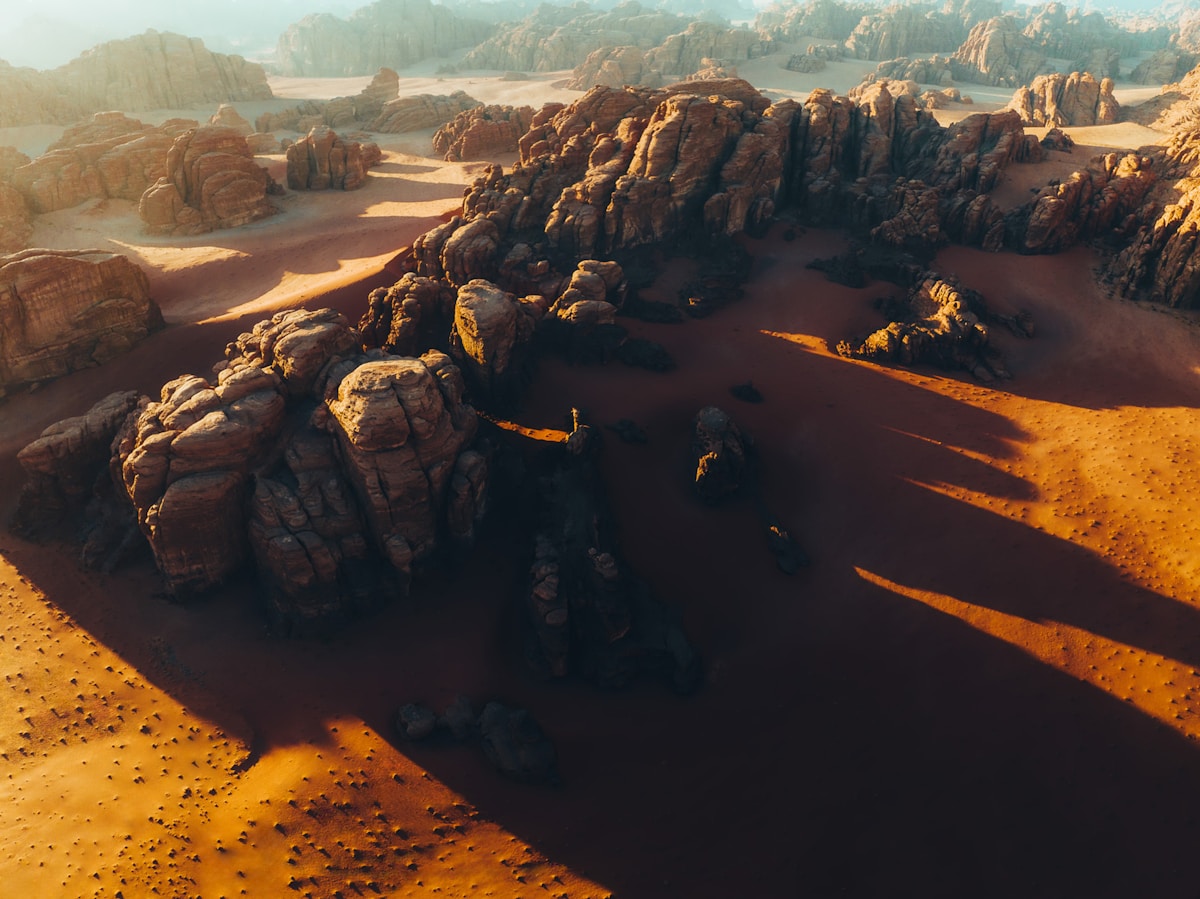
Wadi Disah is the standout natural attraction of the Tabuk region. Located roughly 250 to 260 kilometres from Tabuk city - about 2.5 to 3 hours by road - the wadi cuts a canyon through sandstone walls several hundred metres high. A seasonal stream runs through the canyon floor, date palms grow in the shade, and primitive camping spots sit among the boulders.
There is no entry fee and no facilities. A local guide is strongly recommended for navigation within the wadi - guides are findable through the Tabuk tourism office or Facebook groups serving the region. A 4WD vehicle is essential; standard cars cannot navigate the canyon floor. Bring all food, water, and camping equipment from Tabuk city - the nearest accommodation is back in Tabuk or down at AlUla.
Early morning gives the best light on the sandstone walls. In winter, the canyon can be cold overnight.
Haql and the Gulf of Aqaba
Haql is 300 kilometres northwest of Tabuk, near the Saudi-Jordan border - the Gulf of Aqaba’s coastline here is one of the least-dived sections of the Red Sea system. Visibility routinely reaches 20–30 metres, coral coverage is excellent, and dive tourism has been minimal until recently. Haql Dive Center (haql-dive.com) runs day trips including equipment from SAR 400 as of 2026 per person.
For those interested in crossing to Jordan: Aqaba city is visible from the Saudi shoreline, approximately 20 kilometres across the water. Ferry crossings are available (SAR 120 return), subject to Jordan entry requirements - check current visa status for your nationality.
The Hijaz Railway
The Ottoman Hijaz Railway connected Damascus to Medina in the early 20th century, carrying pilgrims and supplies across 1,300 kilometres of desert. Several stations and engine sheds survive in the Tabuk region in varying states of preservation. The stations at Halat Ammar and Bir al-Sheikh are accessible for those interested in Ottoman and early 20th-century railway history - remote, evocative, and rarely visited.
NEOM
The NEOM megaproject - including The LINE and associated development - is under construction 200 kilometres northwest of Tabuk city. As of 2026, the construction zone is not open to general visitors. Tabuk is the nearest city with hotels and airport access to the project site, making it the base for media and contractor visits. The surrounding landscape - Gulf of Aqaba coastline, Sharma beaches, and the Hisma desert plateau - is separately accessible.
Where to Stay in Tabuk
For a full breakdown of hotels across all price tiers, see the where to stay in Tabuk guide.
Tabuk Marriott Hotel: The best option in the city, with consistent 5-star standards. From SAR 450 per night.
Coral Hotel Tabuk: A reliable 4-star choice in a central location. From SAR 300 per night.
Ramada Tabuk: A practical 3-star option that works well as a base for day trips. From SAR 200 per night.
Search hotels in Tabuk on Booking.com
Where to Eat in Tabuk
Najd Palace Restaurant: Traditional Saudi cooking in a mid-range setting - grilled meats, rice dishes, and fresh bread. Expect to pay SAR 40–80 per person.
Al-Romansiah: The national grill chain; consistent, reliable, and well-suited to groups with varied tastes.
Al-Baik: The Saudi fast-food benchmark - fried chicken and shrimp at low prices. Multiple branches in Tabuk city; the best quick option before or after long drives. See the Tabuk food guide for a broader range of dining options.
Getting to Tabuk
By air: Tabuk Regional Airport (TUU) has daily flights from Riyadh (1 hour 45 minutes, SAR 200–400 on Saudia/Flynas) and Jeddah (1 hour 15 minutes, from SAR 150). Flying is the right choice for most visitors.
By road: Tabuk is approximately 1,500 kilometres from Riyadh (14 hours) and 900 kilometres from Jeddah (9 hours). The drive is possible but offers little advantage over flying given the distances involved.
There is no rail connection to Tabuk. A car is essential once you arrive - the key sites are spread over a wide area - car hire booked in advance is strongly recommended. See the things to do in Tabuk guide for a full rundown of the region’s sites and activities. Our Wadi Disah guide covers the route, the 4WD entrance and the flood season. Book Wadi Disah and Red Sea tours through our Tabuk page.
See Also
- NEOM and Vision 2030 guide - the giga-project zone that borders Tabuk Province
- Red Sea diving guide - the Gulf of Aqaba reefs accessible from Tabuk
- AlUla city guide - the heritage destination 400km southeast of Tabuk
Frequently Asked Questions
What is Tabuk known for?
What is Wadi Disah?
Is it possible to visit NEOM as a tourist?
When is the best time to visit Tabuk?
Book an experience
Top experiences in Tabuk
Explore the best tours and activities in Tabuk , with instant confirmation and free cancellation on most bookings.
Book experiences in Saudi Arabia