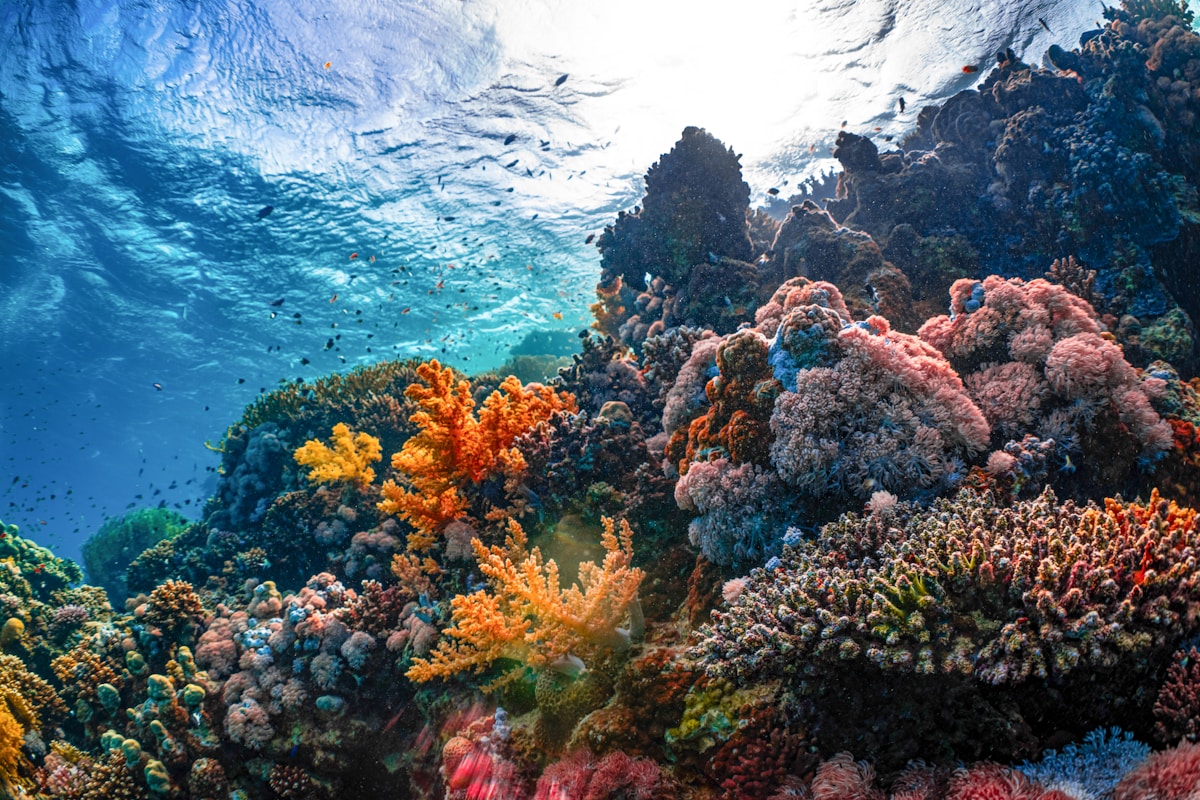
The Saudi Red Sea coast stretches approximately 1,800 kilometres from the Gulf of Aqaba in the north to the border with Yemen in the south. The reefs along this coastline were largely untouched by recreational diving for decades - Saudi Arabia’s closed tourist policy meant that international dive tourism went to Egypt, Jordan, and Sudan while the Saudi side of the Red Sea was left almost entirely to its marine ecosystem.
The result is reefs in exceptional condition. Since 2019, Saudi dive tourism has developed rapidly, and the Red Sea from Yanbu to the Farasan Islands is now establishing itself as one of the more significant Red Sea diving destinations.
Jeddah
Jeddah is the most convenient dive hub for international visitors - it has the largest airport, the most dive infrastructure, and the widest range of operators.
Shi’b Nazar: Approximately 30 minutes by boat from Jeddah marina. Depth 8–18m. Strong coral coverage, regular turtle sightings, and the kind of reef fish density that reflects years of minimal human pressure. A good introductory site for Jeddah diving.
Abu Madafi: 40 minutes from Jeddah marina. Depth 15–30m. Reef shark encounters are common - mostly grey reef sharks and whitetips cruising the reef edge. This is the site to request if you want pelagic encounters rather than just reef fish.
Operators: Diving World Jeddah runs day trips from SAR 350 as of 2026 per person including equipment rental and a guide. PADI Open Water certification courses are available from SAR 1,800 (4 days, all equipment and certification fee included). Book trips at least 2–3 days ahead in peak season (November–April).
Yanbu
Yanbu is the most established dive destination on the Saudi Red Sea coast - a port city with several offshore reef systems that have been largely untouched. The dive infrastructure is well-developed and the reefs are in excellent condition.
Abu Galawa Kebira: 30 minutes from Yanbu marina by boat. Depth 5–25m. Pristine coral coverage across a wide shallow reef system, suitable for beginners and snorkellers as well as experienced divers. One of the consistently best-rated sites in Yanbu.
Marsa Shoaiba: A shallow site (3–15m) ideal for first dives and beginners. The sheltered bay conditions make it a practical starting point before progressing to deeper offshore sites.
The Caves of Yanbu: A drift dive along a coral wall with swim-through cave sections. Visibility typically 20+ metres. Common sightings include moray eels, Napoleon wrasse, sea turtles, and schooling fish in large numbers.
Farasan Bank area: Offshore banks accessible from Yanbu for more experienced divers - blue-water diving with pelagic fish including barracuda schools and occasional hammerhead sharks.
Operators: Scuba Arabia Yanbu runs day trips from SAR 350 per day, with all equipment included. Multiple PADI certification levels available. The team is experienced and the boats are well-maintained.
Tabuk and Haql: Gulf of Aqaba Diving
The Gulf of Aqaba on Saudi Arabia’s northwest coast offers some of the most dramatic diving topography in the Red Sea system. Visibility here runs 20–30m year-round, often exceeding conditions further south.
Haql dive sites: The Saudi coast near Haql, close to the Saudi-Jordan border, has access to the northern Gulf of Aqaba’s reef systems. The Aqaba Canyon - a world-class wall dive - starts at 10m depth and drops to 800m, with a wall covered in hard and soft corals and regular encounters with pelagic fish at the edge.
Haql Dive Center (haql-dive.com) runs day trips from SAR 400 per day from Haql port. Accommodation in Haql is basic - most serious divers base themselves here for 2–4 nights to cover the canyon and surrounding sites.
The Farasan Islands
The Farasan Archipelago in the southern Red Sea, accessible from Jizan, is Saudi Arabia’s most biodiverse marine environment and its most remote dive destination.
The islands are a protected nature reserve - Red Sea green turtles, dugongs, hammerhead sharks, and spectacular coral gardens all feature. The marine biodiversity here reflects decades of effectively zero recreational dive pressure.
The Farasan Islands are not day-trip territory. The only viable access for diving is via liveaboard dive vessel from Jeddah or Yanbu. Trips typically run 4–7 days (from SAR 4,000 per person for a 4-day trip). Only 2–3 operators currently run liveaboards to the Farasan Islands - check availability well in advance. Permits are required and are handled by the operator as part of the booking.
Seasonal highlights: Hammerhead sharks and manta rays are most reliably encountered April–June. Whale sharks occasionally appear in the same window. The rest of the year the diving is outstanding for coral and reef fish but megafauna encounters are less predictable.
Getting Certified
If you are not yet dive-certified, Saudi Arabia is a reasonable place to do it. Multiple PADI centres in Jeddah, Yanbu, and Tabuk offer Open Water certification:
- Duration: 4 days
- Cost: SAR 1,800–2,500 including all equipment, pool training, open water dives, and the PADI digital certification
- What you get: PADI Open Water Diver certification, valid for life and recognised globally
The certification is best completed before arriving in Saudi Arabia if you want to maximise dive time - spending 4 days on a course in Jeddah leaves less time for the reef sites. If you are already certified, just bring your certification card.
Practical Information
Best diving season: October–May. Water temperature 24–28°C; air temperature comfortable for surface intervals. June–September: water 30–32°C, reduced visibility at some inshore sites, but diving remains feasible year-round.
Equipment: Most operators provide rental equipment at reasonable rates (SAR 50–100/day for full kit). Bringing your own mask and fins is worth it for comfort.
Wetsuit: 3mm is adequate year-round; 5mm is more comfortable November–February.
Decompression facilities: Hyperbaric chambers are available in Jeddah and Yanbu - important information for any diver to know before planning a trip.
Visa: A Saudi tourist eVisa covers diving trips - no separate dive permit is required for recreational diving.
Book Red Sea Dive and Snorkel Tours
Organised trips handle the boat logistics, equipment hire, and guide — particularly worthwhile if you are unfamiliar with the reef locations or are visiting solo.
| Tour | Location | Duration | From | What’s included |
|---|---|---|---|---|
| Jeddah: Bayada Leisure Boat Trip with Snorkeling | Jeddah reef | 3–4 hrs | ~$50/person | Boat transfer, snorkeling equipment, licensed guide, reef access |
Browse all Jeddah and Red Sea tours for certified dive operators, multi-dive packages, and Yanbu departures. Book 48–72 hours ahead for weekend reef trips.
See Also
- Jeddah City Guide - the main entry point for Red Sea diving tourism
- Yanbu City Guide - the most established dive hub on the Saudi Red Sea coast
- Tabuk City Guide - gateway to the Gulf of Aqaba and Haql dive sites
- Farasan Islands - the most pristine diving in the Saudi Red Sea system
- Red Sea vs Arabian Gulf comparison - which coast to choose for your Saudi visit
- Jeddah 3-Day Itinerary - how to fit in a dive day on a Jeddah trip
- Saudi Arabia travel insurance - hyperbaric chamber coverage for divers
- Best time to visit Saudi Arabia - October to May for optimal diving conditions