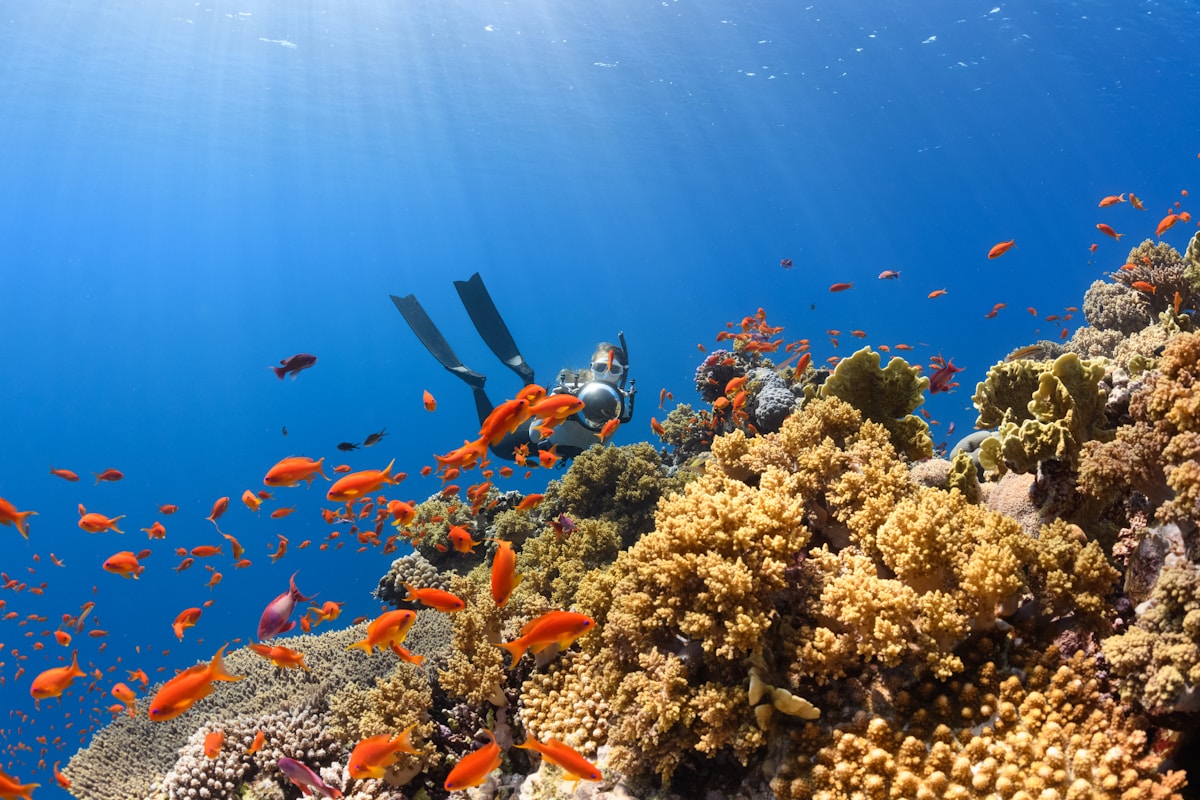
Saudi Arabia is one of the few countries in the world with coastlines on two separate seas. The Red Sea runs 1,800 kilometres down the country’s western edge. The Arabian Gulf (known in Saudi Arabia by that name, also called the Persian Gulf in some contexts) runs 560 kilometres along the eastern coast of the Eastern Province. They differ in every way that matters for a beach or diving trip.
Quick Comparison
| Category | Red Sea | Arabian Gulf |
|---|---|---|
| Main Saudi cities | Jeddah, Yanbu, Jizan, Tabuk coast | Dammam, Al-Khobar, Jubail |
| Water clarity | Excellent (20–30m visibility) | Good (10–20m visibility) |
| Coral quality | Outstanding | Moderate (degraded in places) |
| Water temperature | 22–28°C year-round | 18–34°C (varies seasonally) |
| Best for | Diving, snorkelling, premium beach | Family beaches, water sports, Bahrain day trips |
| Coastline character | Cliffed and reef-fringed | Flat, sandy, shallow |
| International flights | Via Jeddah (major hub) | Via Dammam (regional hub) |
Water Temperatures by Season
| Season | Red Sea | Arabian Gulf | Notes |
|---|---|---|---|
| Winter (Dec–Feb) | 22–24°C | 18–22°C | Gulf gets genuinely cool — bring a 5mm wetsuit |
| Spring (Mar–May) | 24–26°C | 22–27°C | Ideal on both coasts |
| Summer (Jun–Aug) | 26–28°C | 30–34°C | Gulf feels like a warm bath; Red Sea diving still excellent |
| Autumn (Sep–Nov) | 24–27°C | 26–30°C | Good transition; Gulf cools to comfortable by November |
The Red Sea’s narrower temperature band (22–28°C year-round) is a practical advantage: no thick wetsuit needed at any season, and diving is comfortable from January to December. The Gulf’s summer maximum of 32–34°C makes swimming technically possible but not refreshing. Winter Gulf water at 18–20°C is cold enough that casual swimmers will want a wetsuit — an expectation most Saudi beach visitors don’t have.
Which Has Better Beaches?
For a straightforward beach day — swimming, sunbathing, paddleboarding — the Arabian Gulf wins. The Gulf coast is shallower and calmer: water depths rarely exceed 5 metres close to shore, the current is gentle, and beaches like Half Moon Bay (Al-Khobar) are specifically designed for leisure with beach clubs, watersports hire, and easy parking. Water temperature in the Gulf can reach 32–34°C in summer, though this makes it uncomfortably warm for many swimmers.
The Red Sea does not really compete as a beach destination in the traditional sense. The coastline around Jeddah is reef-fringed rather than sandy-shored in most places. The few public beaches in Jeddah are narrow strips, and the better coastal experiences are accessed through private beach clubs (approximately SAR 150–350 day entry) or hotel access. The Red Sea’s appeal is overwhelmingly underwater — coral quality and visibility that most of the world cannot match — not topside beach leisure.
Summary: If someone is asking “which has better beaches”, the Arabian Gulf is the answer. If the question is really “where should I go for a water holiday”, the answer depends entirely on whether diving and snorkelling are priorities.
The Red Sea Coast
The Red Sea is ecologically one of the richest marine environments on the planet. Enclosed by arid land on both sides, it has received almost no agricultural runoff for millennia - the water is startlingly clear. Visibility regularly reaches 20–30 metres, and the reef systems along Saudi Arabia’s western coast have never been commercially fished at scale, which means marine life density is high.
Jeddah Reefs
The most accessible Red Sea diving from Saudi Arabia is off Jeddah. The city’s coastline has a series of well-documented reef systems within 30–60 minutes by boat. Dive centres clustered around the northern Corniche and the Obhur inlet offer morning and afternoon boat dives for approximately SAR 200–350 per person including equipment as of 2026. PADI open water courses run approximately SAR 1,500–2,200 as of 2026.
Notable dive sites near Jeddah include the Durra wreck (15–25m depth, good for intermediate divers), the Sha’ab Abu Nuhas coral garden (2–18m, suitable for beginners), and the Obhur Creek reef system. Water temperature averages 26°C in summer and 22°C in winter - no wetsuit needed except at depth.
Jeddah’s private beach clubs charge approximately SAR 150–350 for day access including pool and loungers as of 2026. Hotel beaches are typically restricted to guests.
Yanbu Reefs
Yanbu, 350 km north of Jeddah, has a strong claim to being the best shore-accessible diving in Saudi Arabia. The Yanbu Marine Protected Area limits commercial activity, and the reefs within 15–30 minutes of shore show exceptional coral health. A growing number of liveaboard operators are now using Yanbu as a base for multi-day Red Sea trips, typically priced from approximately SAR 2,500–5,000 per person for 3–4 nights as of 2026.
Farasan Islands
The Farasan Archipelago, administered from Jizan in the far southwest, is the most remote and pristine marine environment on the Saudi Red Sea coast. The islands are a protected area with limited visitor infrastructure. Access is by ferry from Jizan (approximately SAR 40 each way as of 2026). Camping and snorkelling are the primary activities; a small number of guesthouses operate in the main island village from approximately SAR 200–400/night as of 2026. Dugong sightings have been reported here - one of the few remaining populations in the Red Sea.
Northern Red Sea (Tabuk Coast)
The Gulf of Aqaba, at the northern end of the Red Sea near Tabuk, has exceptional visibility and dramatic drop-offs. This is the coast adjacent to the NEOM project. Access points include the coastal town of Sharma and the new development around SINDALAH island. Dive infrastructure here is still limited but growing fast.
Red Sea Accommodation
In Jeddah: The coastal hotel strip on the Corniche has the widest choice. Park Hyatt Jeddah Marina from approximately SAR 1,100/night (USD 295) as of 2026 has direct water access. Marriott Jeddah has a beach club and rooms from approximately SAR 600/night (USD 160) as of 2026.
In Yanbu: Yanbu’s hotel market is more limited. Millennium Hotel Yanbu runs approximately SAR 550–750/night (USD 145–200) as of 2026 and is the most comfortable mid-range option with Corniche access.
In Jizan: Pearl Continental Jizan from approximately SAR 450–650/night (USD 120–175) as of 2026 is the best option for Farasan Islands base camp.
The Arabian Gulf Coast
The Eastern Province’s Gulf coast is different in character - shallower, warmer, flatter, and more developed. The cities are older as industrial and oil centres but younger as tourist destinations. The appeal here is less about the sea itself and more about the urban scene, the connection to Bahrain, and easy-access family beaches.
Al-Khobar and Dammam
Al-Khobar is the more tourist-oriented of the two cities, with a developed waterfront Corniche, good restaurants, and the King Fahd Causeway linking Saudi Arabia to Bahrain - a 25-km drive that has made this the easiest cross-border trip in the Gulf region. The causeway toll is approximately SAR 50 per vehicle one-way as of 2026. Many visitors base themselves in Al-Khobar for a day trip to Bahrain.
The Gulf here is shallow and calm - water depths rarely exceed 5 metres within a few kilometres of shore, making it excellent for paddleboarding, kayaking, and family swimming. Dive sites are further offshore and visibility is typically 10–20 metres, with coral coverage that is adequate but does not approach Red Sea quality.
Half Moon Bay (Al-Khobar, approximately 30 km south of the city) is the most popular beach destination on the Gulf coast - a crescent of sand with shallow warm water, beach clubs, and watersports hire. Day access to beach club facilities runs approximately SAR 100–200 per person as of 2026.
Tarout Island, accessible by causeway from Qatif, has one of the oldest archaeological sites on the Gulf coast (a Dilmun-era settlement) alongside a fishing village and date palm groves. Entry is free.
Diving on the Arabian Gulf
The Gulf’s dive scene is modest compared to the Red Sea but has real highlights for those based in the Eastern Province. Jana Island (roughly 80 km offshore from Al-Khobar) is the standout site: visibility reaches 12–18 metres, coral coverage is the best in Saudi Gulf waters, and sea turtle sightings are reliable from March to October. Karan Island, further north near the Abu Ali peninsula, is a protected coral atoll with reasonable hard coral coverage and occasional hammerhead sightings in deeper water (15–25m).
Both Jana and Karan require full-day boat charters from Al-Khobar, typically SAR 350–550 per person including equipment and lunch as of 2026 — operators cluster around the King Fahd Causeway marina area. Abu Ali artificial reef (accessible from Jubail, 1.5 hours north of Al-Khobar) offers decent wreck-style diving on submerged industrial structures at 8–15m depth.
Inshore, the reef fringe at Half Moon Bay is suitable for snorkelling and beginner open-water dives (1–6m, calm conditions, good on weekday mornings before crowds arrive). Tarout Bay has scattered coral structures and is often used as a checkout dive by Al-Khobar dive centres — not a destination dive, but convenient. Neither impresses experienced divers, but both are accessible without advance booking.
Gulf Coast Accommodation
In Al-Khobar: InterContinental Al-Khobar sits directly on the Gulf with rooms from approximately SAR 800–1,100/night (USD 215–295) as of 2026. Courtyard by Marriott Al-Khobar is a solid mid-range at approximately SAR 450–650/night (USD 120–175) as of 2026.
In Dammam: Sheraton Dammam is a long-established address with rooms from approximately SAR 600–850/night (USD 160–225) as of 2026. Holiday Inn Dammam runs approximately SAR 350–500/night (USD 95–135) as of 2026.
Gulf Coast Dining
Shrimpy, a seafood chain with branches in Al-Khobar and Dammam, is the regional institution - Gulf prawn platters at approximately SAR 60–100 per person as of 2026. Alhamra Fish Market in Dammam is a working fish market where you select fresh catch and have it cooked - budget approximately SAR 80–150 depending on species. Fireplace Restaurant in Al-Khobar covers the upscale end at approximately SAR 150–250 per person as of 2026.
Best Season for Each Coast
Red Sea Season
October to May is the prime window for both diving and beach visits. Water temperatures hold at 22–26°C and air temperatures in Jeddah sit at 22–32°C — comfortable on deck between dives. January to March is peak season for underwater visibility (25–30m is routine) and marine life activity: mantas cruise the offshore pinnacles from December, whale sharks appear in the Farasan area from February, and the reef fish density is at its annual high.
July and August are the low season: air temperatures reach 38–42°C in Jeddah with high humidity, and though diving remains possible (water temperature is at its peak warmth), the surface experience is uncomfortable and most operators reduce their schedules. Accommodation prices drop 30–40% from peak.
Yanbu has a slightly longer comfortable season than Jeddah — its latitude is further north, summer temperatures are a couple of degrees lower, and the afternoon sea breeze off the Gulf of Suez is more reliable. For dedicated divers wanting to push the season into early June or late September, Yanbu is the better base.
The Farasan Islands are only practicable from October to April: limited infrastructure shuts down through the summer and the heat is prohibitive for camping.
Arabian Gulf Season
November to March is the sweet spot on the Gulf coast: air temperatures of 18–26°C, Gulf water at 20–24°C — genuinely refreshing rather than the warm bath of summer. February is typically the most pleasant month in Al-Khobar: clear skies, mild temperatures, and a full calendar of events at the resort beach clubs around Half Moon Bay. The Saudi National Day events in September and the cooler evenings of October–November make the shoulder seasons worth considering.
Summer (June–August) on the Gulf coast is harsh — temperatures of 40–44°C combined with intense humidity from the shallow, enclosed sea make outdoor activity uncomfortable. Many local families head to Abha or Taif during these months; the beach clubs and resorts remain open but are quiet on weekday afternoons. Sunrise and sunset beach walks are possible; extended midday swimming is not advisable.
Which Coast Should You Choose?
Choose the Red Sea if: Marine quality is your priority. Jeddah gives you the easiest access to excellent reefs, the best dive infrastructure, and the most varied coastal tourism options. Yanbu is for dedicated divers wanting pristine conditions.
Choose the Arabian Gulf if: You want easy family beaches, the Al-Khobar restaurant scene, a day trip to Bahrain, or you’re already in Riyadh (the Gulf coast is 4 hours east versus Jeddah’s 10 hours west). The Gulf is also more affordable for casual beach days.
Getting There: Airports and Drive Times
Red Sea Access
- King Abdulaziz International Airport (JED), Jeddah — the main Red Sea gateway with extensive direct international connections. The northern Corniche dive district is 25 minutes from arrivals; the Obhur inlet (home to most liveaboard and day-trip dive operators) is 35 minutes.
- Prince Abdulmohsen bin Abdulaziz Airport (YNB), Yanbu — served by Saudia and Flynas from Riyadh (45 min), Jeddah (50 min) and Dammam. From the airport to Yanbu’s dive area and Corniche is under 20 minutes.
- Jizan Regional Airport (GIZ) — gateway to the Farasan Islands. Domestic connections from Riyadh (approximately 1 hr) and Jeddah (approximately 50 min). The Jizan ferry terminal for Farasan is approximately 15 minutes from the terminal.
- Tabuk Regional Airport (TUU) — covers the northern Red Sea and Gulf of Aqaba coast. Connections from Riyadh and Jeddah. Drive time to Sharma and the coastal access points adjacent to the NEOM zone is approximately 90 minutes.
Arabian Gulf Access
- King Fahd International Airport (DMM), Dammam — the Eastern Province hub. Al-Khobar’s waterfront is 35 minutes by taxi (approximately SAR 50–70); Half Moon Bay is 65 minutes south. Dammam’s own Corniche is 20 minutes.
- From Riyadh by road: The E40 (Dammam Highway) covers approximately 380 km and takes 3.5–4.5 hours depending on traffic through Riyadh. This makes the Gulf coast by far the more accessible option for Riyadh-based travellers — Jeddah is 950 km west and typically 8–10 hours by road.
The road comparison matters: the Gulf coast’s relative proximity to Riyadh (roughly one-third the drive time) means that Eastern Province beach clubs see significant Riyadh weekend traffic, particularly in the November–February peak season.
For city guides to the Gulf coast, see Al-Khobar, Dammam, and Jubail. For Red Sea context, see the Jeddah city guide and the Yanbu travel guide for the premier diving base on the Red Sea coast.
Before you travel, compare flights to Saudi Arabia, arrange travel insurance that covers the region, and pick up a Saudi eSIM so you have data from the moment you land.
See Also
- Red Sea diving guide - Yanbu, Jeddah, and Farasan Islands dive sites
- Farasan Islands guide - the most remote and pristine diving in Saudi Arabia
- Jeddah City Guide - Al-Balad, diving, and the Red Sea Corniche
- Yanbu City Guide - Saudi Arabia’s top Red Sea dive hub
- Al Khobar City Guide - Gulf coast waterfront and Half Moon Bay
- Things to do in Al Khobar - Half Moon Bay, Tarout Island, and the King Fahd Causeway
- Dammam City Guide - Eastern Province capital on the Arabian Gulf
- Saudi Arabia visa guide - planning your entry for coastal travel
- Best time to visit Saudi Arabia - October to April for both coasts
More Saudi Comparisons
- Riyadh vs Jeddah — Jeddah is Saudi Arabia’s Red Sea gateway city; here’s how it compares to the capital
- AlUla vs NEOM — NEOM’s SINDALAH island sits on the northern Red Sea; here’s the full picture
- Abha vs Taif — the Asir mountains behind the Red Sea coast, Saudi Arabia’s cool highland retreat
- Saudi Arabia vs UAE — comparing Saudi Arabia’s coast to the broader UAE experience
Plan Your Trip
✈️ Book your flights to Saudi Arabia 🛡️ Get travel insurance 📱 Stay connected with an eSIM 🚗 Rent a car