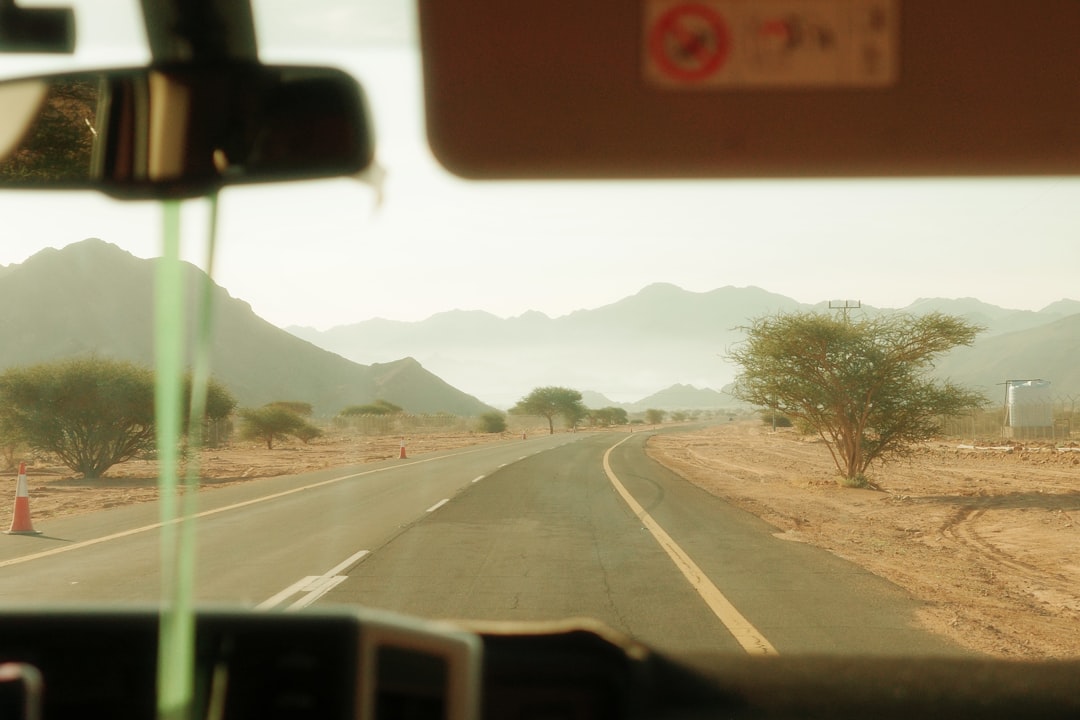
Renting a car in Saudi Arabia gives you access to the country’s vast interior - the sandstone canyons of AlUla, the Asir highlands above Abha, the Red Sea coast south of Jeddah, and the empty quarter-adjacent highways of the Eastern Province. Public transport outside Riyadh and the main intercity rail line is limited, so a rental is often the practical choice for anything off the beaten urban circuit.
Here is everything you need to know before you pick up the keys.
Driving Licence Requirements and the IDP
Saudi Arabia requires two documents to legally drive as a visitor:
- Your national driving licence - a full, valid licence from your home country.
- An International Driving Permit (IDP) - a paper translation of your licence, issued by your national motoring association.
You cannot obtain an IDP in Saudi Arabia. Apply before you travel:
- UK: AA or RAC - issued same-day in branch, approximately £10–15
- USA: AAA - approximately $20, issued same-day at AAA offices
- Australia: NRMA, RAA, RACV - approximately AUD $30
The IDP is valid for 12 months from the issue date. GCC (Gulf Cooperation Council) nationals - citizens of UAE, Kuwait, Bahrain, Oman, Qatar - can drive on their home licence without an IDP.
Nationals of countries with which Saudi Arabia has bilateral driving agreements (some EU states, UK, USA, Australia, Canada) are technically covered, but rental companies and police checkpoints vary in their interpretation. Carry the IDP regardless.
International vs Local Rental Agencies
Both international chains and Saudi-based operators have strong networks. Here is a comparison:
| Agency | Type | Airport desks | Approximate daily rate (economy) | Notes |
|---|---|---|---|---|
| Hertz | International | Riyadh, Jeddah, Dammam | SAR 150–220/day | Wide selection, English-speaking staff |
| Avis | International | Riyadh, Jeddah, Dammam, Medina | SAR 140–210/day | Reliable CDW options |
| Budget | International | Riyadh, Jeddah, Dammam | SAR 130–200/day | Part of Avis group |
| Europcar | International | Riyadh, Jeddah | SAR 145–215/day | Strong business traveller focus |
| Lumi | Local (Saudi) | Major airports + city branches | SAR 120–180/day | App-based pickup, good for locals |
| Yelo | Local (Saudi) | Riyadh, Jeddah, Dammam | SAR 110–170/day | Lowest base rates, app-only |
| Saudi Rent a Car | Local | 25+ city branches | SAR 100–160/day | Widest non-airport network |
| Al-Maha | Local | Riyadh, Jeddah | SAR 130–190/day | Strong SUV fleet |
Rates as of 2026 - economy class (Toyota Yaris, Hyundai Accent or similar). Exclude insurance add-ons and Darb tag fees.
International chains are generally easier for visitors who need English support and straightforward insurance claims. Local operators (Lumi, Yelo) are app-focused with often-lower base rates, but customer service can be challenging if you have a problem outside major cities.
Booking via comparison platforms such as GetRentacar aggregates inventory from both categories and typically yields better rates than booking direct, especially 2–4 weeks ahead.
Vehicle Types and Rental Costs
| Vehicle class | Example models | Daily rate (SAR) | Best for |
|---|---|---|---|
| Economy | Toyota Yaris, Kia Picanto | 100–180 | City driving, short distances |
| Compact | Toyota Corolla, Hyundai Elantra | 140–220 | Intercity highway runs |
| Mid-size SUV | Toyota RAV4, Hyundai Tucson | 200–320 | Families, regional touring |
| Full-size SUV | Toyota Prado, Nissan Patrol | 350–550 | Desert off-road, mountain passes |
| Premium SUV | Toyota Land Cruiser 300 | 500–800 | Extended desert expeditions |
| 7-seat MPV | Toyota Hiace, Kia Carnival | 280–420 | Groups, airport transfers |
Rates as of 2026. Weekly rates typically 15–25% cheaper than 7× daily. Airport pickup adds a surcharge of SAR 30–60 at most agencies.
Fuel Costs
Saudi Arabia subsidises fuel heavily. As of 2026, prices at Saudi Aramco-operated stations (most petrol stations nationwide):
| Grade | Price (SAR/litre) |
|---|---|
| 91 (regular) | approximately SAR 0.91 |
| 95 (premium) | approximately SAR 1.10 |
Fill with 91 unless your rental vehicle specifies 95. Most economy and mid-size rentals run on 91. Petrol stations are plentiful on inter-city highways; the exception is deep desert routes in the Empty Quarter or the far northwest - top up whenever you see a station.
Rental cars in Saudi Arabia are returned with a full tank (or you pay the agency’s marked-up rate for any shortfall - typically 2–3× pump price).
Toll Roads: The Darb System
Riyadh’s urban expressways use the Darb electronic toll system, operated by NCA. Cameras read transponder tags on vehicles - there are no toll booths.
- Charges: SAR 2 per gantry on urban expressways, up to SAR 4 on premium sections (as of 2026)
- Most rental cars have a Darb tag pre-fitted
- The rental agency invoices you for tag usage at collection or return
- Daily tag access fee: SAR 5–15 depending on the agency
Outside Riyadh: Jeddah and Dammam do not currently have active urban toll networks. Inter-city highways are toll-free for regular vehicles.
Check whether your rental agreement includes Darb usage or charges extra. Some agencies offer an unlimited-use Darb package for a fixed daily fee (approximately SAR 30–40) - worth it if you are driving around Riyadh extensively.
Speed Limits and Traffic Enforcement
The Saher automated camera network is dense across Saudi Arabia - arguably one of the most extensive enforcement systems in the region.
| Zone | Speed limit |
|---|---|
| Residential streets | 40–60 km/h |
| Urban main roads | 60–80 km/h |
| Ring roads and urban expressways | 100–120 km/h |
| Inter-city highways | 120 km/h (some sections 140 km/h) |
Fines are issued automatically and linked to the vehicle’s plate. Rental companies will charge these back to you with an administration fee (SAR 50–100 on top of the fine). Fines range from SAR 300 (minor speeding) to SAR 2,000+ (serious violations).
Seatbelts are mandatory for all occupants. Mobile phone use while driving: SAR 300 fine. Running red lights: SAR 600+.
Desert Driving Tips
Saudi Arabia’s desert terrain is beautiful and unforgiving in equal measure.
Before you go off-road:
- Only ever take a 4WD vehicle with high clearance into sand or off-road terrain - a 2WD economy rental will become stuck and the recovery cost is on you
- Reduce tyre pressure to 1.0–1.2 bar for soft sand; carry a portable compressor to re-inflate before returning to tarmac
- Carry a minimum of 10 litres of drinking water per person for any off-road excursion
- Tell someone your route and expected return time
- Download offline maps (Google Maps, Maps.me) before leaving mobile coverage areas
Navigation:
- Google Maps works well on Saudi highways and cities, but off-road tracks in AlUla, Hegra, and the Asir are not always mapped
- A GPS device with Saudi Arabia maps (Garmin, Navitel) is recommended for remote driving
- Arabic signage is universal; major inter-city routes also have English signs
Checkpoints:
- Police and military checkpoints operate on inter-city highways, especially routes near Mecca/Medina (non-Muslims must take bypass roads)
- Have your passport, IDP, and rental agreement accessible
Insurance Considerations
Standard rental agreements include third-party liability insurance (legally required). The key optional add-ons:
| Coverage | Approximate daily cost | What it covers |
|---|---|---|
| Collision Damage Waiver (CDW) | SAR 30–70 | Damage to the rental vehicle |
| Theft Protection (TP) | SAR 20–50 | Theft of the vehicle |
| Personal Accident Insurance (PAI) | SAR 10–25 | Medical costs for occupants |
| Super CDW / Zero Excess | SAR 50–100 | Reduces excess to SAR 0 |
Without CDW, you are liable for the first SAR 1,500–5,000 of any damage (the “excess” varies by agency and vehicle class). On a 10-day rental, the cost of CDW typically pays for itself if there is any incident at all.
Travel insurance: Many travel insurance policies include rental car damage cover - check before paying the agency’s CDW. Some credit cards (Amex Platinum, certain Visa Signature cards) include car hire collision cover when you pay with the card. Read the policy terms carefully.
Off-road exclusions: CDW and TP almost universally exclude off-road use. If you take a rental vehicle off-road and damage it, you pay in full regardless of your insurance add-ons.
What to Do If Something Goes Wrong
- Accident: Do not move vehicles until Saudi Police attend and issue an accident report (bayan haadith). Insurance claims require this report.
- Breakdown: All major agencies provide 24-hour roadside assistance - save the number before driving away.
- Fine disputes: Ask the agency for the Saher fine reference and contact Saher (Mwasalat Masr portal) if you believe the fine was issued incorrectly.
Planning Your Route
For city-to-city driving in Saudi Arabia, see our full getting around Saudi Arabia guide which covers domestic flights, the Haramain High Speed Railway, intercity buses, and Riyadh Metro alongside car travel.
Distances between major cities:
- Riyadh to Jeddah: 950 km - approximately 9 hours drive (recommended to fly or take Haramain rail)
- Riyadh to AlUla: 1,100 km - approximately 10 hours (consider flying to AlUla Airport)
- Jeddah to Abha: 450 km - approximately 4.5 hours (scenic Asir mountain road)
- Riyadh to Dammam: 400 km - approximately 3.5 hours (straightforward highway)
- Jeddah to NEOM/Tabuk: 800 km - approximately 7.5 hours
For routes under 500 km, self-driving is practical and rewarding. For longer distances, a domestic flight and then a local rental at the destination often makes more sense financially and practically.
Renting a car in Saudi Arabia is straightforward once you have the IDP sorted in advance. Book via a comparison platform a week or two ahead for the best rates, take CDW on longer trips, and never take a 2WD vehicle off sealed roads. The country’s highway network is modern, well-signed, and fuel is among the cheapest in the world - road tripping here is genuinely excellent value.
Plan Your Trip
- Flights - Find the best fares to Saudi Arabia
- Travel Insurance - Get covered before you go
- eSIM - Stay connected from landing
- Car Rental - Compare prices across providers