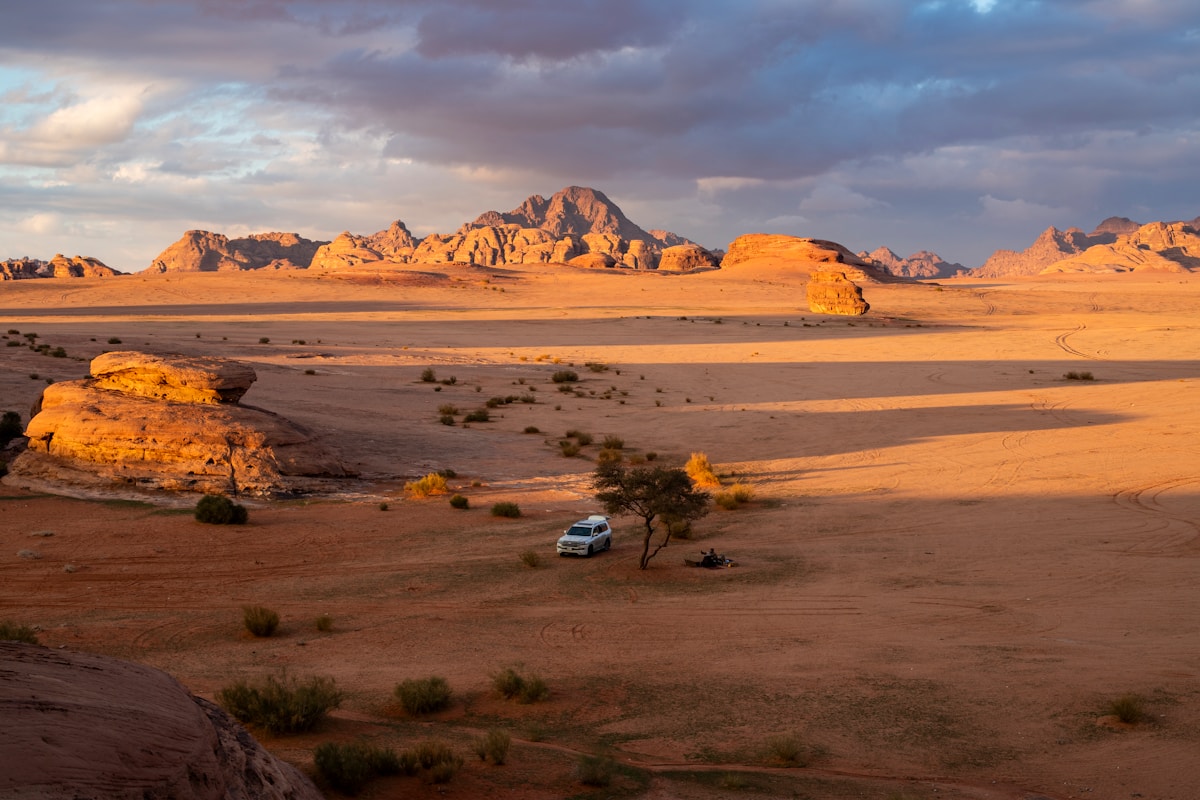
Tabuk is the gateway to some of the most geologically dramatic landscapes in Saudi Arabia - sandstone canyons, date palm oases, Hejaz Railway ruins, and access to both the Gulf of Aqaba coastline and the emerging NEOM project zone. The city itself is a functional regional centre rather than a major tourist destination, but the surrounding region deserves two to three days of exploration.
Tabuk Castle (Al-Qal’a)
Tabuk Castle stands in the centre of the old city - an Ottoman-era fortress built in 1559 CE on the site of earlier structures. The castle served as a way station on the Hajj route and later as a military garrison. The restored building is now a museum covering the regional history of Tabuk and its role in the Hejaz Railway era. Well-presented exhibits with Arabic and English labelling.
Entry is approximately SAR 15 as of 2026. Opening hours are approximately 8am–9pm Sunday–Thursday, 2pm–9pm Friday–Saturday (hours subject to change; confirm locally). A visit takes approximately 45–60 minutes.
Hejaz Railway Ruins
Tabuk is dotted with remnants of the Hejaz Railway - the Ottoman-era railway line built between 1900 and 1908 to connect Damascus to Medina. The line passed through Tabuk, and abandoned stations, water towers, and kilometre markers survive in varying states of preservation across the region. The Tabuk Railway Station ruins are the most accessible, approximately 2 kilometres from the city centre. The site is evocative of the early 20th-century Arabian landscape and photographically striking.
Wadi Disah Canyon
Wadi Disah - approximately 150 kilometres south of Tabuk - is one of the northwestern Saudi Arabia’s most rewarding natural sites. The canyon is a palm-filled valley (approximately 15 kilometres long) enclosed by sheer sandstone cliffs rising 400–600 metres. The valley floor supports a genuine oasis: date palms, acacia trees, and small farms that create a contrast with the surrounding desert that feels almost cinematic.
The canyon is best explored on foot - a 2–4 hour walk through the valley floor. A guided Tabuk day trip is the most practical approach, providing 4WD transport (some sections of the access road require high clearance) and local knowledge of the best viewpoints. The spring months (March–April) bring greenery to the valley floor; October–November offers comfortable walking temperatures.
Hisma Desert Formations
The Hisma Desert - south of Tabuk extending toward the Jordanian border - is a landscape of isolated sandstone formations rising from flat desert plains: natural columns, arches, and erosion-sculpted towers that evoke the Wadi Rum landscape across the border in Jordan. Less developed for tourism than Wadi Rum but equally striking.
4WD access is required. Organised tours from Tabuk (approximately SAR 300–500 per person for a full-day trip as of 2026) typically cover both Hisma and Wadi Disah. Wild camping in the Hisma Desert under clear skies is one of the most memorable experiences in the region.
Sharma and the Red Sea Coastline
The Gulf of Aqaba coastline north of Tabuk includes beaches and snorkelling sites around the Sharma area, approximately 200 kilometres from the city. The coral reefs in this section of the Red Sea are among the most pristine in Arabia, benefiting from limited coastal development. As NEOM’s coastal components develop, access infrastructure to this coastline is improving.
A 4WD is needed for the final approach to most beach access points. The clearest water conditions are in summer, though the heat (often above 40°C in July–August) makes non-water time challenging.
Archaeological Museum of Tabuk
The Tabuk Archaeological Museum within the restored castle complex covers the pre-Islamic history of the Tabuk region - Nabataean trade routes, Bronze Age settlements, and the area’s role in ancient Arabian commerce. Displays include artefacts excavated from sites across the wider Tabuk Province. Entry is included with the castle ticket.
Proximity to Hegra (AlUla)
While Hegra (Madain Saleh) lies within the AlUla region rather than Tabuk Province, the distance from Tabuk to AlUla is approximately 400 kilometres - roughly a five-hour drive. Visitors flying into Tabuk sometimes combine the city with an AlUla trip. The Hegra guide covers the Nabataean rock-cut tombs in detail. AlUla has its own regional airport (Prince Abdul Majeed bin Abdulaziz Airport), making direct flights more practical if AlUla is the primary destination.
Getting Around Tabuk
Tabuk city centre is compact enough to walk major sights, but a rental car or 4WD is essential for canyon, desert, and coastal excursions. Car hire is available at Tabuk airport and in the city centre from approximately SAR 150–300 per day as of 2026 (budget to mid-range). 4WD hire costs approximately SAR 300–500 per day. See the Tabuk city guide for accommodation and practical planning.
Search hotels in Tabuk on Booking.com
See Also
- Tabuk City Guide - full travel guide with accommodation and getting there
- Tabuk where to stay - hotels and accommodation near the city centre
- Red Sea diving guide - diving the Gulf of Aqaba and NEOM coastal reefs
- Red Sea vs Arabian Gulf comparison - understanding Saudi Arabia’s two coastlines
- NEOM and Vision 2030 guide - what’s open and what’s still under construction
- AlUla vs NEOM comparison - comparing the heritage and future visions of northwest Saudi Arabia
- Desert camping Saudi Arabia - camping in Wadi Disah and the Hisma plateau
- AlUla City Guide - the heritage destination 400km southeast of Tabuk