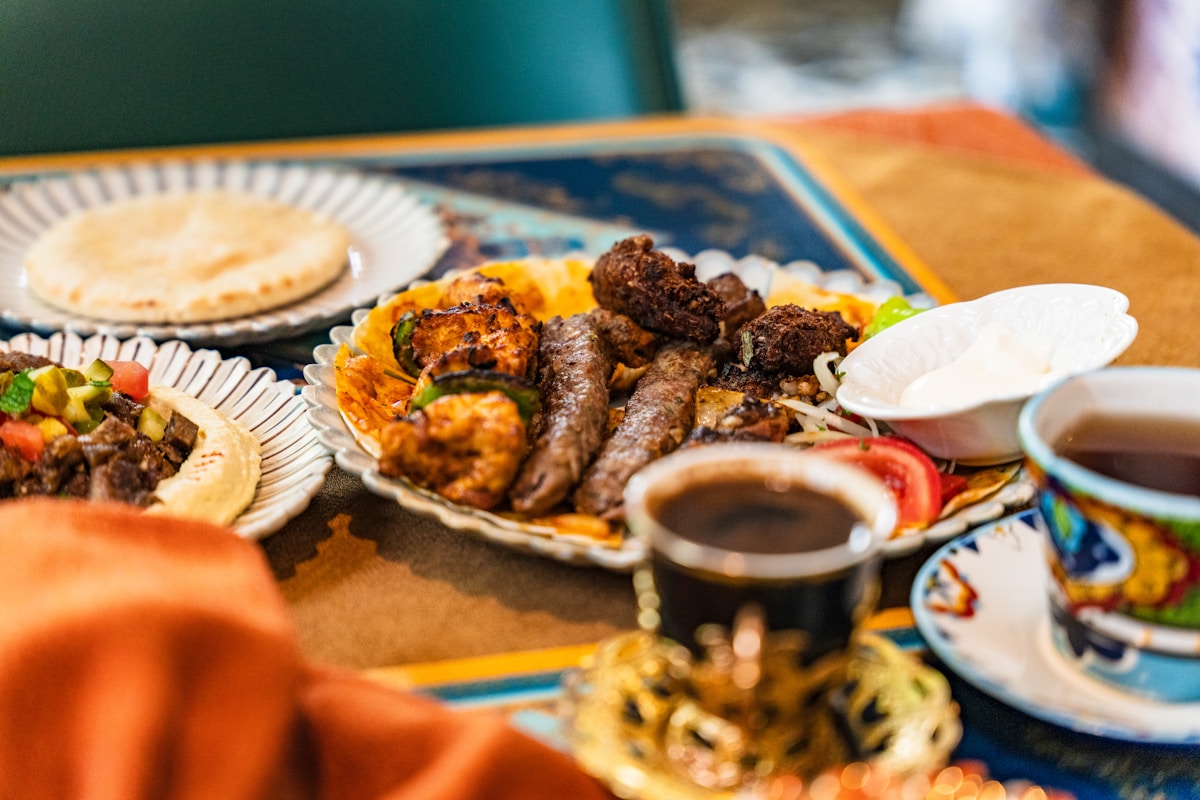
Jeddah’s food culture has been shaped by the sea and by pilgrimage. The Red Sea provides fresh fish and shellfish. Centuries of merchants and pilgrims from across the Muslim world passing through on the way to Mecca have introduced food influences that have been absorbed and localised. The result is the most interesting and diverse food city in Saudi Arabia.
Red Sea Seafood
Fresh seafood is the centrepiece of Jeddah’s culinary identity. The main fish:
Hamour (grouper): The most popular fish in Jeddah. Firm, white flesh, grilled over charcoal. Best ordered whole - point at the fish you want.
Safi (rabbitfish): Common and affordable. Mild flavour, good when fried.
Zubaidi (pomfret): Flat fish with tender flesh. Often fried or baked with spices.
Shrimp and crab: Gulf and Red Sea prawns are large and flavourful. Crab is seasonal but appears at specialist seafood restaurants.
Where to eat it:
Southern Corniche seafood cluster: Immediately recognisable - rows of restaurants with fish displays at the entrance and plastic tables. No frills, excellent freshness. SAR 50–100 per person. Layali Al-Bahr and Al-Mina Fish Restaurant are consistent performers here — both open daily from noon until midnight (as of 2026).
Al-Shallal area (near the southern port): Restaurants sourcing directly from the wholesale market. Early lunch only. More local, less tourist-facing. Sealane is a long-standing favourite in this area, popular with Jeddah families for its no-nonsense freshness and reasonable pricing (approximately SAR 80–120 per person).
Al-Hamra and Al-Rawdah: Air-conditioned seafood restaurants at higher price points. Quality similar to the Corniche options but with formal service. SAR 150–300 per person. Fish House on Tahlia Street (Al-Hamra) is probably the most well-known upscale option in Jeddah, with a broad menu covering regional fish varieties alongside shrimp and lobster dishes.
Hijazi Specialities
Saleeg: The most distinctive Hijazi rice dish - white rice slow-cooked in a meat broth enriched with milk until creamy and soft. Served with a whole roasted chicken and a side of spiced tomato sauce (shattah). The milk gives it a richness that sets it apart from the dry-cooked kabsa. Find it at traditional Hijazi restaurants in Al-Balad and the older city districts. Al-Baik (the Saudi fast-food institution) does a solid fried chicken accompaniment to saleeg dishes if you want a cheaper entry point, though specialist Hijazi restaurants do it best.
Mandi: Slow-cooked lamb or chicken steamed over fragrant rice in a clay-sealed pot. Similar to kabsa in format but lighter in spicing. Jeddah’s mandi tends toward the milder Hijazi style rather than the spicier Najdi version. Al-Madina Mandi in the Bab Al-Makkah district is a well-regarded local choice — expect approximately SAR 40–70 per person for a full meal.
Saltah: Yemeni-influenced meat stew with fenugreek foam, served in a clay bowl. Yemen’s proximity to the Hijaz means this dish appears at a few traditional restaurants in Jeddah. Look for it at Yemeni-run restaurants in the Al-Baghdadiyah neighbourhood, which has historically housed a significant Yemeni community.
Haneeth: Whole slow-cooked lamb, baked low and slow until the meat falls off the bone, served over rice. Less common than mandi or kabsa but worth seeking out. Several restaurants in the Al-Safa district specialise in this preparation — budget approximately SAR 60–90 per person.
Al-Balad Street Food
Mutabbaq: The essential Al-Balad food experience. Traditional stalls in the souk area fold and fry these stuffed pastries to order. Meat and egg filling is the classic; sweet banana versions are for dessert. SAR 5–15. The stalls on the main Al-Alawi Souk pedestrian street are the most active in the evenings — look for the plumes of steam and the crowds gathering around the folding tables.
Ful medames: Spiced broad bean stew eaten with flatbread and a drizzle of olive oil. A Hijazi breakfast staple influenced by Egyptian and Sudanese communities that settled in Jeddah through pilgrimage. Available at traditional breakfast cafes in Al-Balad from early morning. Hejazi Heritage and several unnamed neighbourhood cafes open from around 6am for the breakfast crowd — look for the SAR 5–10 ful and bread combinations chalked on boards outside.
Shawarma: Jeddah’s shawarma is similar to Riyadh’s - chicken or lamb in flatbread with toum and pickles. The best stalls are in the working-class areas around the central market, and along Al-Corniche Road where late-night shawarma spots stay open past midnight. Around SAR 10–20 per wrap.
Kabsa: Though Riyadh is most associated with kabsa, Jeddah has its own version — typically lighter in spicing, sometimes incorporating Red Sea fish as an alternative to the standard lamb or chicken. Some Hijazi restaurants serve a version of kabsa using hamour as the protein, which is worth trying if you see it on the menu.
Coffee and Drinks
Saudi coffee (qahwa) - flavoured with cardamom and occasionally saffron - is served at traditional cafes and at the end of every restaurant meal alongside dates. It is typically served in small handleless cups and refilled until you shake the cup side to side to signal you have had enough.
Jeddah has a strong specialty coffee scene. Brew92 (multiple locations; flagship on Prince Mohammed Bin Abdulaziz Road) and % Arabica (Corniche Road) are the most acclaimed operators. Expect to pay SAR 20–35 for specialty espresso drinks.
Karak chai (strong Indian-style spiced tea with milk) is popular throughout the day, particularly at street-side kiosks in the older areas. In the South Asian communities around the Al-Hindawiyah and central market districts, karak stalls serve large glasses for SAR 2–5.
Where to Eat in Jeddah by Neighbourhood
Al-Balad (Historic District): Mutabbaq stalls, traditional breakfast cafes, ful medames, Yemeni restaurants. Budget to mid-range. Best in the evening.
The Corniche (northern and southern): Seafood restaurants, juice bars, shawarma stalls, and modern cafes. All price points. The northern Corniche has more upscale options.
Al-Hamra / Tahlia Street: Jeddah’s main restaurant and cafe strip. International food alongside Saudi options; also the location for most specialty coffee shops. Mid-range to high-end.
Al-Baghdadiyah: Traditional Yemeni cooking, local breakfast joints, affordable seafood. Working-class neighbourhood, best for authentic lower-budget eating.
Book a Guided Food Tour of Jeddah
The food described above is spread across Jeddah’s distinct neighbourhoods — Red Sea seafood on the Corniche, mutabbaq and ful medames in Al-Balad’s alleys, Hejazi home cooking in the older commercial districts — and knowing which stall is authentic, what the price should be, and how the Egyptian and Yemeni community connections shaped the menu is the knowledge a good guide carries. A Jeddah food tour walks you through Al-Balad’s street food ecosystem, explains the pilgrimage-route history behind each dish, and ends with a properly guided seafood meal at the Corniche. For first-time visitors, it converts Jeddah’s food scene from overwhelming to navigable.
Search hotels in Jeddah on Booking.com