Jeddah sits on the eastern shore of the Red Sea, at the geographic and historical intersection of the ancient spice and pilgrimage trade routes. For over two thousand years it was the gateway to Mecca - the port where pilgrims arrived from East Africa, South Asia, the Malay world, Egypt, the Levant, and Central Asia. What those centuries of human movement produced is the most cosmopolitan food culture in Saudi Arabia: Hejazi cuisine, a culinary tradition that absorbed, adapted, and retained the cooking practices of every community that passed through or settled.
The Red Sea as a Culinary Highway
The Red Sea was one of antiquity’s most significant trade corridors. Spices from the Malabar Coast of India, frankincense from Somalia and Oman, gold from sub-Saharan Africa, and silk from China all moved through these waters. Jeddah’s position as the dominant Red Sea port gave its merchants and cooks direct access to ingredients that arrived nowhere else in Arabia.
This matters because the Red Sea spice access created a qualitatively different cooking tradition from the Najdi interior. Where Riyadh’s cuisine is characterised by a relatively restrained spice palette - the black lime, cinnamon, and cardamom of kabsa - Hejazi cuisine layers a wider range of aromatics including turmeric, coriander, dried chilli, star anise, and fenugreek. The difference is not a matter of sophistication but of geography: these spices arrived by sea on the Jeddah docks before they reached the inland caravan routes.
The Red Sea also provided a protein source unavailable to the Najdi interior: fresh saltwater fish. The fish and shellfish of the Red Sea - hamour (grouper), zubaidi (pomfret), safi (rabbitfish), shrimp - became central to Jeddah’s food identity in ways that have no equivalent in central Arabian cooking.
The Pilgrimage Economy and Food Culture
The Hajj created an extraordinary demographic situation in Jeddah. Every year for over a millennium, hundreds of thousands of Muslim pilgrims from every part of the world arrived by sea at the Jeddah port. The journey to Mecca and back could take months or years. Many pilgrims settled permanently - running guest houses, working as guides or traders, and eventually integrating into Jeddah society while maintaining their culinary traditions.
The communities that settled most visibly in Jeddah’s food culture include Egyptian and Sudanese communities (who brought ful medames - the spiced broad bean stew that became a Hejazi breakfast staple), South Asian Muslim merchants (who introduced techniques closely related to biryani in rice cooking), Yemeni communities (whose saltah stew crossed into Hijazi kitchens), and Malay pilgrims (whose influence on stuffed pastry traditions may be part of mutabbaq’s Jeddah history).
The result is a city whose food culture cannot be understood as purely Arabian. Jeddah’s cuisine is the physical record of Islamic pilgrimage geography - every immigrant community that settled here over the centuries left its mark in the way the city cooks.
Mutabbaq: A History in Layers
Mutabbaq - the folded pancake of minced meat, egg, and onion, fried until crispy - is Jeddah’s most distinctive street food and one whose history illustrates the pilgrimage connection directly. The dish appears across a wide belt of the Islamic world: in Malaysia and Indonesia as martabak, in India as a Muslim community street food, in Yemen, and in Egypt. Its distribution follows the pilgrimage routes almost precisely.
In Jeddah, mutabbaq became embedded in the Al-Balad historic district’s street food culture over centuries. The cooking method - thin pastry stretched and folded around a filling, fried on a flat griddle - requires skill that was transmitted within specific communities of cooks rather than from recipe books. The families who operate traditional mutabbaq stalls in Al-Balad are carrying a food tradition whose origins lie in the movement of people across the Indian Ocean world.
The sweet version of mutabbaq - filled with banana, egg, and sweetened condensed milk - is also found across Southeast Asian Islamic communities, suggesting the same transmission route.
Ful Medames and the Egyptian Connection
Ful medames - slow-cooked broad beans seasoned with olive oil, lemon, cumin, and garlic - is not a native Hijazi dish. It arrived in Jeddah with Egyptian and Sudanese pilgrims and workers over centuries and was so thoroughly adopted that it is now treated as a Hijazi breakfast staple. This is the standard pattern of Jeddah food culture: external dishes arriving via the pilgrimage economy and becoming local over generations.
The Egyptian version of ful medames uses fava beans slow-cooked until creamy. The Jeddah version is often spiced more assertively - closer to the Sudanese style - with the addition of local aromatics. It is eaten with flatbread (khoubz) and eggs, the same breakfast pattern found in Cairo, Khartoum, and across the Muslim diaspora that settled in the Hijaz.
Saleeg: Hejazi Rice Culture
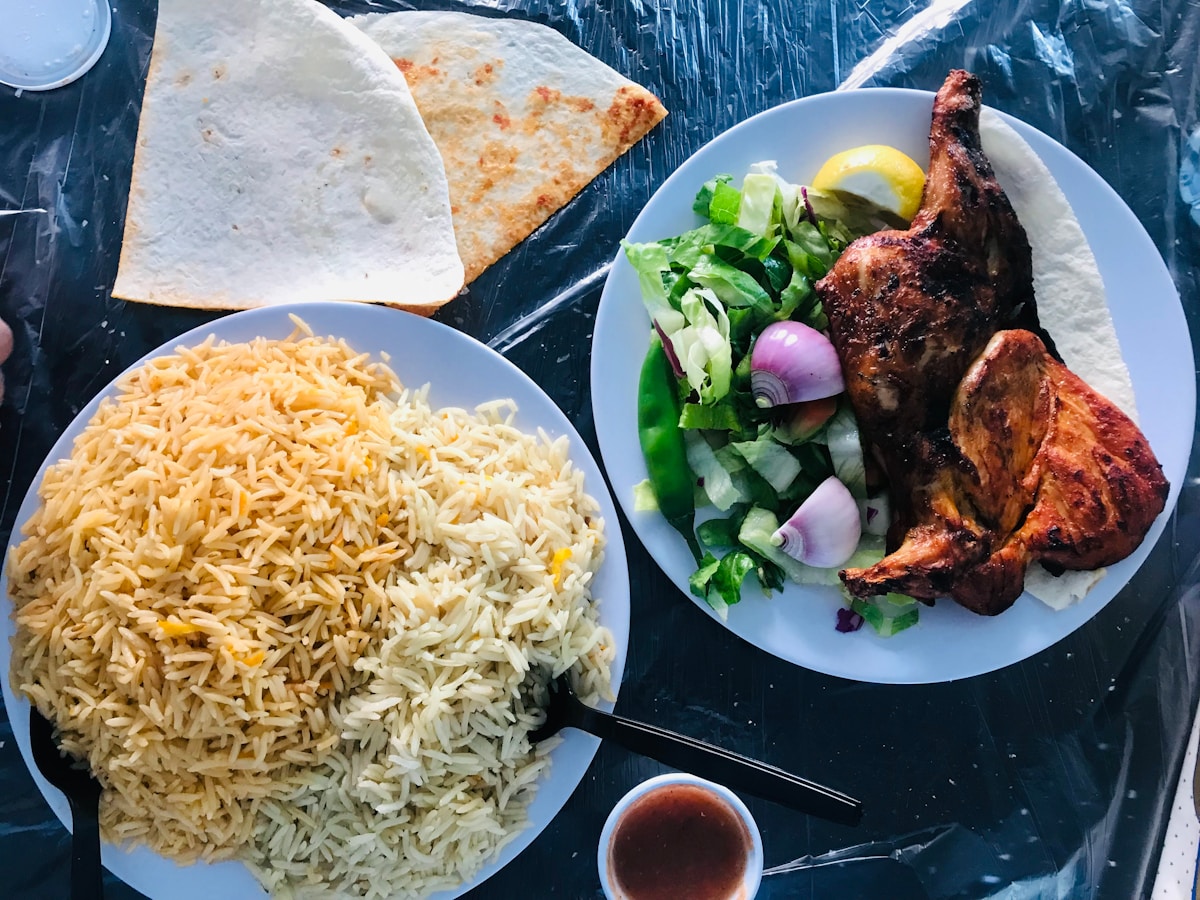
Saleeg is the dish that most clearly differentiates Hejazi rice cooking from Najdi kabsa. White rice cooked in meat broth with milk until it becomes rich and creamy - served with roasted chicken and a spiced tomato dip - it shares nothing with the dry, spiced rice of Riyadh’s kabsa tradition. The milk-cooked rice technique has parallels in East African and South Asian cooking, and its presence in Jeddah cuisine likely reflects the same pilgrimage transmission routes.
Hejazi food’s relationship with dairy - milk in saleeg, labneh (strained yoghurt) as a common accompaniment - is more developed than in Najdi cooking, where the drier desert climate made fresh dairy more perishable and therefore less central to the cuisine.
The Port City Palate
What Jeddah’s food culture demonstrates, across all these threads, is how a port city becomes a culinary crossroads. The Red Sea trade routes, the pilgrimage economy, and the permanent settlement of immigrant communities from three continents produced a cuisine of unusual diversity for its location. Hejazi cooking is lighter in texture than Najdi food, wider in its spice palette, and more comfortable with fish, fresh dairy, and non-Arabian vegetables - all of which reflect direct contact with the broader Indian Ocean food world.
This is the food history that the physical fabric of Al-Balad records. The coral-stone merchant houses with their carved rawasheen balconies were built by traders who came from across the Islamic world and stayed. What they cooked, and what their descendants continued to cook, became Jeddah’s cuisine.
Take a Guided Food Tour of Jeddah
Al-Balad’s layered food culture — mutabbaq stalls whose families arrived from South Asia via the pilgrimage routes, Egyptian ful medames stands, and coral-stone merchant houses converted to Hejazi restaurants — rewards time spent with a guide who can explain what you’re eating. A guided food tour of Jeddah walks you through the Al-Balad historic district, connects the dishes to the pilgrimage communities that brought them, and takes you to the Red Sea seafood spots on the Corniche where you select your catch by weight. Jeddah’s food history is also the history of a thousand years of pilgrimage trade; a guided tour tells both stories at once.
Browse Jeddah Al-Balad walking tours with tea and music, tours with a local certified guide, or the full Jeddah tour listing. Our Jeddah food tours guide covers all the main operators and what each format includes.
See Also
- Jeddah City Guide - full guide including accommodation and transport
- Things to Do in Jeddah - Al-Balad, Corniche, and Red Sea diving
- Where to Stay in Jeddah - hotels by area and price tier
- Saudi Arabia Food Guide - national dishes and what to expect across the country
- Jeddah 3-Day Itinerary - day-by-day plan with meal recommendations
- Riyadh vs Jeddah comparison - how the two cities’ food scenes compare
Plan Your Stay
Find hotels in Jeddah — search accommodation across all budgets in Jeddah.