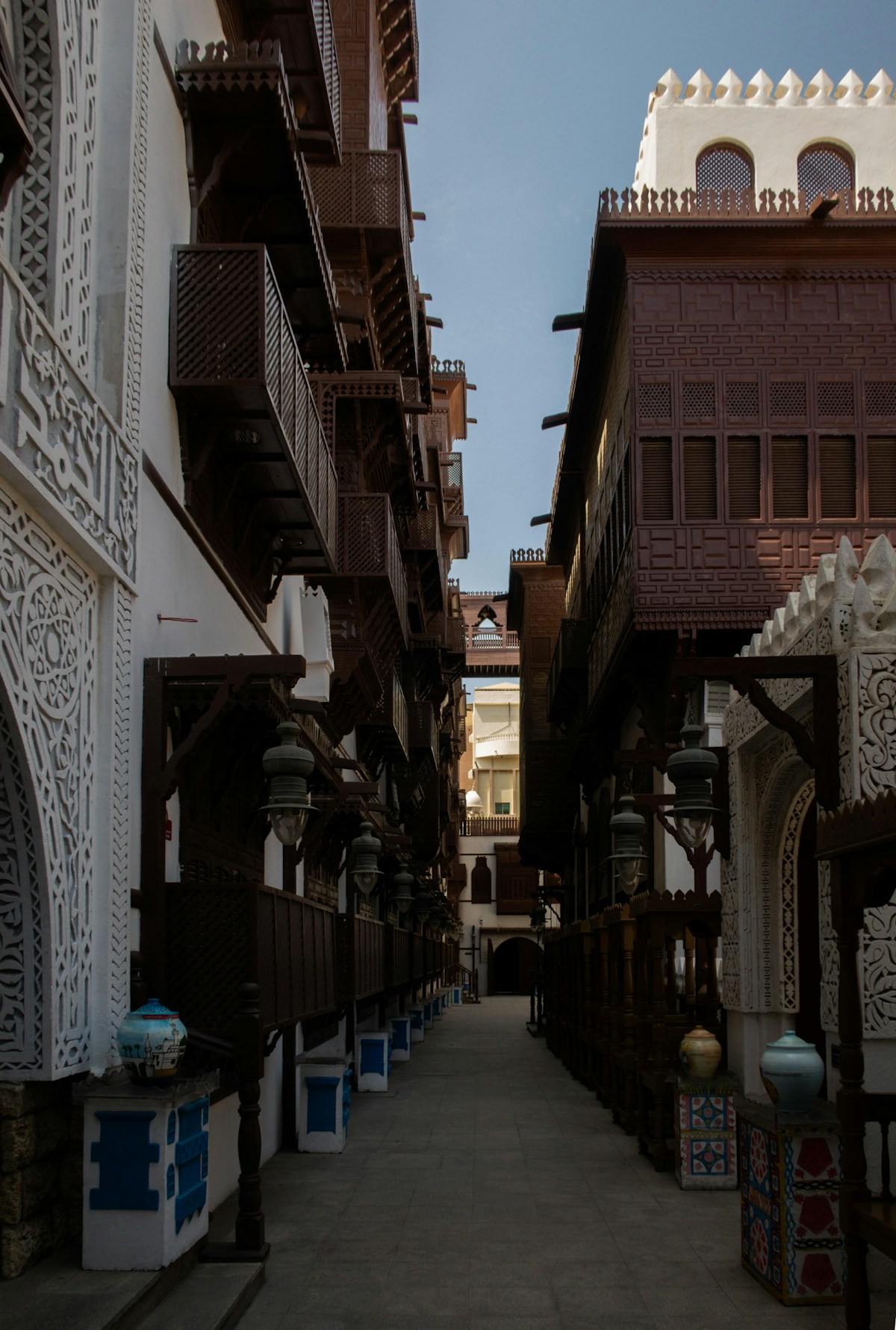
Jeddah is Saudi Arabia’s most layered city for tourists - an ancient port with a UNESCO-listed historic district, a 30-kilometre Corniche waterfront, the world’s tallest fountain, and offshore Red Sea reefs accessible as day trips. Here is how to approach each of the city’s main experiences.
Al-Balad: The UNESCO Historic District
Al-Balad is Jeddah’s defining attraction - a district of centuries-old coral-stone merchant houses built with elaborate carved wooden balconies (Rawasheen) that were the defining feature of Hijazi urban architecture. The buildings served the merchants who controlled the Red Sea trade and pilgrim traffic routes for generations.
UNESCO inscribed Al-Balad in 2014 under its World Heritage programme. The inscription recognised both the architectural uniqueness of the Rawasheen and the district’s role in connecting the Islamic world through centuries of pilgrimage commerce.
What to see in Al-Balad:
Nassif House - one of the largest and best-preserved Hijazi merchant houses, now a museum. Four storeys with original interior woodwork and a famous old tree (a sidr tree said to be centuries old) in the courtyard. Entry is free; opening hours are approximately 9am–1pm and 4pm–9pm Saturday to Thursday (confirm locally as hours vary seasonally).
Al-Shafi’i Mosque - an active mosque in the heart of Al-Balad, adjacent to the traditional souk. Non-Muslims should observe from outside and should not approach during prayer times.
Al-Matbouli House - another well-preserved traditional Hijazi house open to visitors, smaller than Nassif House but in good condition. Worth 20–30 minutes if you are already in the area.
The old souks - Al-Alawi Souk and the streets around Bab Makkah have traditional stalls selling textiles, spices, Hijazi herbal remedies, frankincense, and miscellaneous goods. Less commercial than the modern malls and a more authentic window into traditional trade culture. The main souk area runs between the two gates (Bab Makkah and Bab Sharif) — a 10-minute walk connects them.
Al-Balad walking routes: The Jeddah Municipality has marked walking routes through the district with signage in Arabic and English. A self-guided evening walk can cover the main facades in 1.5–2 hours. Guided tours are also available through our Jeddah tours page — local guides explain the inscriptions on the Rawasheen and the histories of the major merchant families.
Best time: Evening (after 5pm). The district is cooler, the carved facades are lit dramatically, the street vendors are active, and the mutabbaq stalls are open. Friday mornings see religious visitors and are less tourist-oriented. Avoid the heat of the afternoon (12pm–4pm) especially April–October.
King Fahd Fountain
At 312 metres, the King Fahd Fountain holds the record for the world’s tallest fountain. It operates in the Red Sea just offshore from the Corniche promenade, typically running evenings from around 9pm. When illuminated at night, the water column and surrounding mist are lit in white and gold - visible from many kilometres away.
The best viewing spots are along the northern Corniche, where you can walk for 2–3 kilometres with the fountain visible offshore. The promenade is well-lit and busy with families in the evenings.
The Corniche
Jeddah’s 30-kilometre Corniche runs along the Red Sea - a continuous waterfront promenade of parks, cafes, and restaurants. It is Jeddah’s principal public space. In the cooler months (November–March), the Corniche is busy at all hours. A walk from the King Fahd Fountain north to the Al-Hamra district covers approximately 5 kilometres and passes the main waterfront landmarks.
The Al-Shallal Theme Park sits on the southern Corniche — an amusement park with rides and an ice rink, popular with families. Entry fees vary by attraction (approximately SAR 30–80 per person for individual rides as of 2026).
Corniche sculpture route: The northern Corniche has a series of large outdoor sculptures and public art installations — the famous Globe (Al-Kura) roundabout sculpture and various abstract pieces along the waterfront. It is an unusual open-air gallery and a pleasant 2-kilometre evening walk.
North Corniche (Obhur): About 20 kilometres north of the city centre, the Obhur Creek area is where Jeddah residents go for waterside restaurants, jet skis, and a more resort-style atmosphere. If you have a car or are willing to take an Uber (approximately SAR 40–60 from central Jeddah), the seafood restaurants along Obhur are considered the best in the city by local standards.
Red Sea Diving and Snorkelling
Jeddah is one of the access points for Saudi Red Sea diving. Day trips from the marina reach reef sites with good coral coverage and visibility. Half-day snorkel trips are accessible for non-divers. The reefs off Jeddah benefit from relatively low fishing pressure — expect reasonable coral health and good fish diversity including parrotfish, angelfish, and moray eels.
Jeddah Yacht Club and Al-Balad Marina are the main departure points for diving and snorkelling day trips. Operators typically run boats to reef sites 10–20 kilometres offshore. A half-day snorkelling trip costs approximately SAR 150–300 per person including equipment and boat transport (as of 2026). PADI certification courses are available through several operators based at the marina.
For serious diving and a full list of Red Sea sites, the Red Sea diving guide covers the range from Jeddah south to the Farasan Islands.
Book diving and snorkelling trips through our Jeddah tours page.
Floating Mosque (Al-Rahma Mosque)
The Al-Rahma Mosque — also called the Floating Mosque — is built on platforms over the Red Sea at the northern Corniche, giving the impression of floating on the water at high tide. It is an active mosque (non-Muslims cannot enter for prayer) but is visually striking from the Corniche promenade, especially in the morning light. It is approximately 2 kilometres north of the King Fahd Fountain.
Practical Notes
Jeddah is the most cosmopolitan Saudi city for tourists but all Saudi laws apply - alcohol is illegal, and modest dress is expected in public. Al-Balad is safe in the evenings. Uber and Careem are the most practical city transport — budget SAR 15–30 for most journeys within the city centre. From Al-Balad to the northern Corniche is approximately 20 minutes by Uber. See the full Jeddah travel guide for accommodation and food.
Search hotels in Jeddah on Booking.com
See Also
- Where to stay in Jeddah - hotels from budget to luxury near Al-Balad and the Corniche
- Food to try in Jeddah - Hijazi street food, seafood and restaurant picks
- Jeddah 3-day itinerary - day-by-day guide to the city
- Red Sea diving guide - dive sites from Jeddah to the Farasan Islands