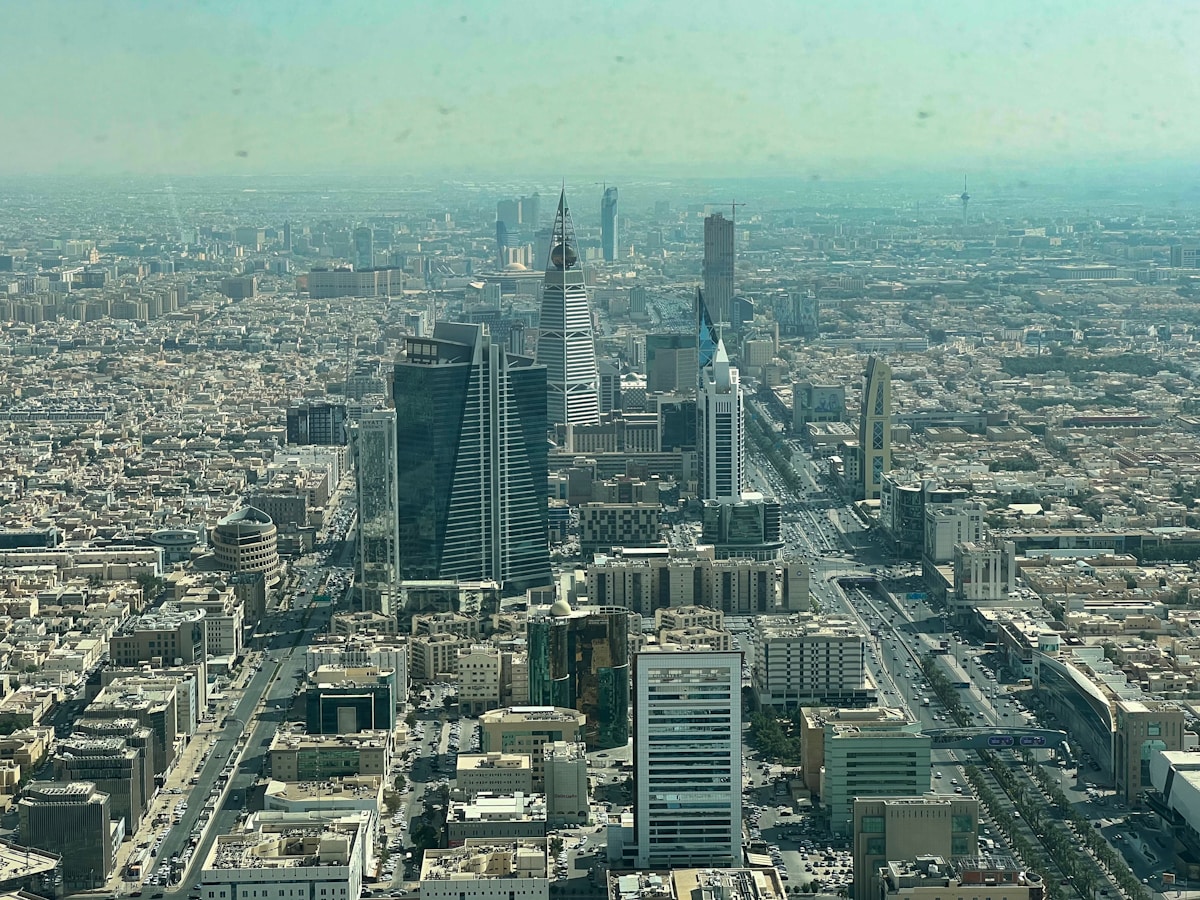
Saudi Arabia’s two largest cities feel like different countries. Riyadh is the capital: vast, modern, ambitious, a city that has poured oil wealth into towers, museums, and megaprojects. Jeddah is the port: older, more layered, facing the Red Sea with a historic core that earned UNESCO recognition in 2021. Choosing between them depends on what you want from a Saudi trip - or whether you can do both.
Quick Comparison
| Category | Riyadh | Jeddah |
|---|---|---|
| Location | Central plateau, 2,300m altitude | Red Sea coast |
| Population | ~7.7 million | ~4.7 million |
| Vibe | Modern capital, ambitious scale | Cosmopolitan port, historic layers |
| Best for | Museums, megaprojects, business | Heritage, seafood, beaches |
| Sea access | None | Red Sea (diving, swimming) |
| UNESCO site | Diriyah (nearby) | Al-Balad (city centre) |
| Average hotel mid-range | SAR 500–800/night | SAR 450–750/night |
| Summer temperatures | 40–46°C | 36–42°C |
Riyadh: Capital at Scale
Riyadh sprawls across a high desert plateau at around 600 metres elevation. The city’s transformation over the past decade has been extraordinary - museums, entertainment venues, and infrastructure that would be remarkable anywhere in the world arrived in concentrated bursts. The King Abdulaziz Center for World Culture (Ithra) in nearby Dhahran is the cultural centrepiece, but Riyadh itself has the National Museum (entry approximately SAR 25 as of 2026, free on Tuesdays), the Masmak Fortress (free entry), and the restored Diriyah heritage site on the western edge of the city.
What to Do in Riyadh
The Diriyah district is the birthplace of the first Saudi state and now an immersive heritage precinct. Entry to the main Bujairi Terrace area is free; guided tours of the At-Turaif UNESCO ruins cost approximately SAR 95 as of 2026. The site is most atmospheric at dusk when the mud-brick towers catch the last light.
The Edge of the World - a dramatic escarpment 90 minutes northwest of the city - costs nothing to enter but requires a car and ideally a guide. Tours from Riyadh run approximately SAR 200–350 per person as of 2026. See our Edge of the World guide for logistics.
For shopping and dining, the Boulevard Riyadh City entertainment complex and the older Al-Nakheel Mall both draw crowds. Kingdom Centre Tower has a skybridge (approximately SAR 25 entry as of 2026) with city views.
Where to Stay in Riyadh
Luxury: Four Seasons Riyadh at Kingdom Centre is the flagship address, with rooms from approximately SAR 1,500/night (USD 400) as of 2026. The Ritz-Carlton Riyadh, set in a former palace complex, starts from approximately SAR 1,200/night (USD 320) and remains one of the more unusual hotel stays in the region.
Mid-range: Hilton Riyadh Hotel & Residences runs approximately SAR 650–850/night (USD 175–225) and is well-located for business and leisure. Novotel Riyadh Al Anoud comes in at approximately SAR 400–550/night (USD 105–145) as of 2026.
Budget: Holiday Inn Riyadh Al Qasr offers comfortable rooms from approximately SAR 280–380/night (USD 75–100) as of 2026.
Where to Eat in Riyadh
Najd Village is the benchmark for traditional Saudi cooking - a meticulously recreated Najdi village where you eat on floor cushions, surrounded by artefacts and the scent of coffee. Expect to pay approximately SAR 120–180 per person as of 2026. Reserve in advance; it fills up nightly.
Byblos in the Sheraton Riyadh is a long-standing Lebanese favourite, with mezze and grills at approximately SAR 100–150 per person. Nusr-Et Riyadh (Salt Bae’s steakhouse) runs approximately SAR 300–500 per person for the full experience.
For casual and cheap: Al-Baik is the Saudi fast-food institution - fried chicken, shrimp, and fries at under SAR 30 per person - though Al-Baik’s main presence remains in Jeddah and the Western Region.
Jeddah: Red Sea Gateway
Jeddah has been a trading port for centuries. Merchants from across the Indian Ocean, East Africa, and the Arab world settled here, and the legacy is visible in the ornate coral-stone architecture of Al-Balad - the old city that earned UNESCO World Heritage Status in 2021. Modern Jeddah runs along the Red Sea Corniche for over 30 kilometres, with the King Fahd Fountain (the world’s tallest at 312 metres) visible from much of the waterfront.
What to Do in Jeddah
Al-Balad is the centrepiece. The latticed wooden balconies (rawasheen) on the old merchant houses are distinctive to Jeddah and found nowhere else. Walking the narrow lanes takes a few hours; entry to the area is free. Several restored houses are being converted into museums and galleries.
The Corniche runs from the old city north to the upscale Obhur district. It’s best at dusk when the city promenades. Al-Shallal Theme Park and the new Jeddah Season entertainment zone are family draws on the northern Corniche.
Diving and snorkelling access is far easier here than anywhere else in Saudi - see our Red Sea vs Arabian Gulf comparison for specifics.
Where to Stay in Jeddah
Luxury: Rosewood Jeddah is the standout, set on the Corniche with rooms from approximately SAR 1,400/night (USD 375) as of 2026. Park Hyatt Jeddah Marina starts from approximately SAR 1,100/night (USD 295) with views over the marina.
Mid-range: Hilton Jeddah runs approximately SAR 600–800/night (USD 160–215) and has good Corniche access. Radisson Blu Jeddah Corniche comes in at approximately SAR 450–650/night (USD 120–175) as of 2026.
Budget: Marriott Jeddah’s Courtyard brand offers rooms from approximately SAR 300–420/night (USD 80–110) with a central location as of 2026.
Where to Eat in Jeddah
Jeddah’s seafood is the draw. White Restaurant on the Corniche is the upscale destination - Red Sea catch prepared with contemporary technique, approximately SAR 200–350 per person as of 2026. Beit Bagdad in the Al-Balad area serves Hejazi cooking (the regional tradition of Mecca and Jeddah) at approximately SAR 80–130 per person.
Al-Baik has its original and most legendary branches here - the chain was founded in Jeddah in 1974. A full meal costs approximately SAR 20–35 per person and the queues at flagship branches are a Jeddah rite of passage.
Balcony Restaurant overlooking the old harbour serves a mix of Middle Eastern and international food at approximately SAR 120–180 per person as of 2026.
Practical Differences
Getting there: Jeddah’s King Abdulaziz International Airport handles more international routes, including many low-cost carriers from Europe and Africa. Riyadh’s King Khalid International Airport is the larger hub overall, with more connections to Southeast Asia and the Gulf.
Getting around: Both cities require a car or ride-hailing app (Uber and Careem operate widely). Riyadh’s metro opened in 2024 and covers the main north-south and east-west corridors, making it the more public-transit-friendly option - though it serves tourists less directly than business districts.
Climate: Jeddah is coastal and humid; summers are hot (36–42°C) but more bearable with sea breezes than Riyadh’s dry 40–46°C. Both cities are best visited October–April.
Alcohol: Saudi Arabia prohibits alcohol in both cities. The entertainment scene has expanded dramatically post-2019 but alcohol remains unavailable.
Which Should You Visit?
Visit Riyadh if: You want to understand modern Saudi Arabia’s ambitions at scale - Diriyah, the National Museum, the city’s extraordinary pace of change, and the desert escarpments nearby.
Visit Jeddah if: You want historic depth (Al-Balad), Red Sea access (diving, beaches, the Corniche), and a social atmosphere that reflects Saudi Arabia’s most cosmopolitan city.
Visit both if: You have a week or more. The contrast between the two cities is itself the experience - they represent genuinely different Saudi Arabias, and neither tells the full story alone.
For a detailed Riyadh itinerary, see our 3 days in Riyadh guide. For Jeddah, our Jeddah 3-day itinerary covers the essentials.
Before you travel, compare flights to Saudi Arabia, arrange travel insurance that covers the region, and pick up a Saudi eSIM so you have data from the moment you land.
See Also
- Riyadh City Guide - the full guide to Saudi Arabia’s capital
- Jeddah City Guide - the full guide to Saudi Arabia’s Red Sea city
- Things to do in Riyadh - Diriyah, Masmak Fortress, and day trips
- Things to do in Jeddah - Al-Balad, Red Sea diving, and the Corniche
- Riyadh food guide - restaurants across all price tiers
- Jeddah food guide - seafood and Hijazi cuisine
- Diriyah tours guide - the heritage site that anchors any Riyadh visit
- Red Sea diving guide - Jeddah’s biggest outdoor advantage over Riyadh
- Saudi Arabia budget guide - comparative costs across Saudi cities
- 1 week in Saudi Arabia - how to split a week between Riyadh, AlUla, and Jeddah
More Saudi Comparisons
- Saudi Arabia vs UAE — planning across the wider Gulf if you’re weighing Saudi against the UAE
- Riyadh vs Dubai — how Riyadh stacks up against Dubai specifically
- Mecca vs Medina — the two holy cities that many Jeddah visitors combine on the same trip
- Abha vs Taif — Saudi Arabia’s two highland mountain escapes
Plan Your Trip
✈️ Book your flights to Saudi Arabia 🛡️ Get travel insurance 📱 Stay connected with an eSIM 🚗 Rent a car