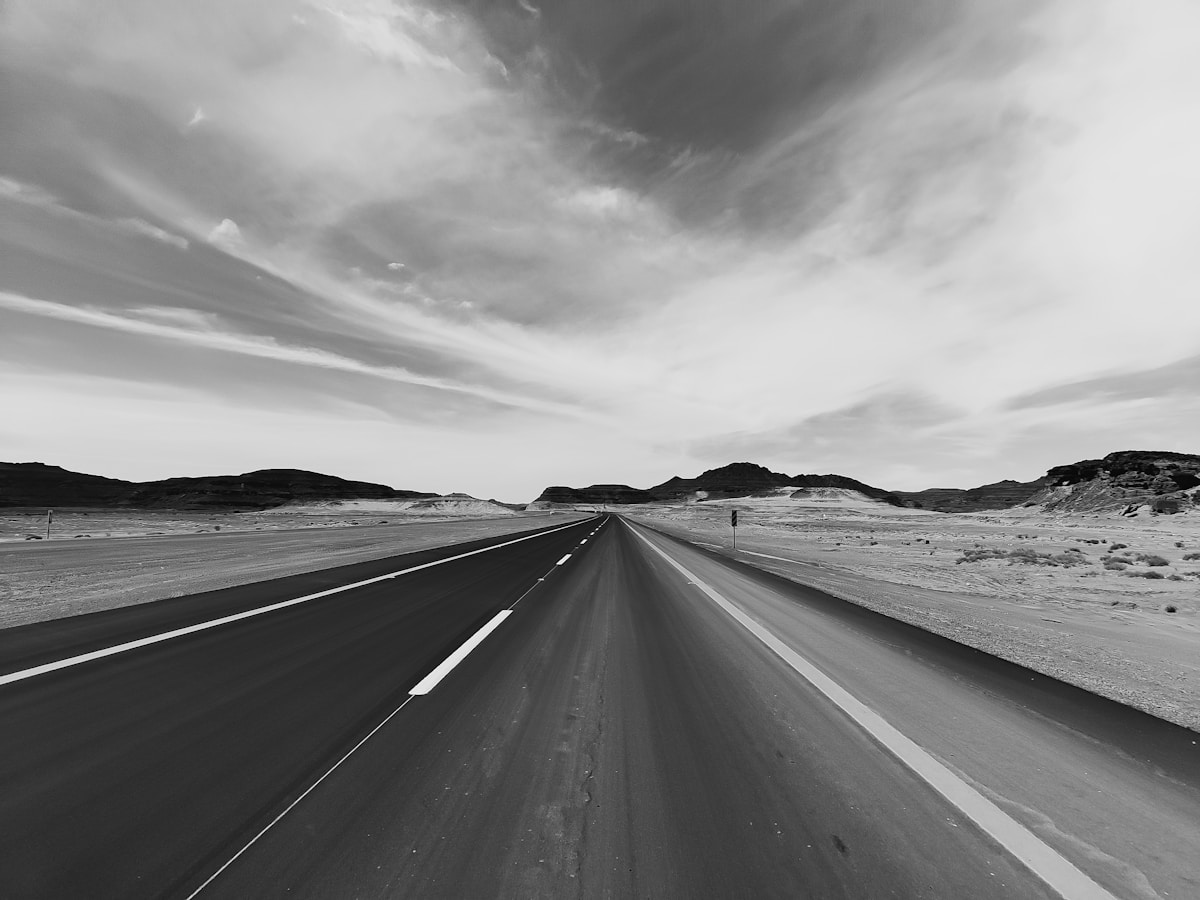
The drive from Riyadh to AlUla is one of the most rewarding road trips in the Arabian Peninsula. Over roughly 1,080 km, the landscape shifts from the urban sprawl of the Najd plateau to volcanic basalt fields, sandstone escarpments, and finally the Hejaz mountains that frame AlUla’s ancient Nabataean valley. Plan 4–5 days and the journey becomes the destination.
This route takes you past Edge of the World - a cliffside plateau an hour west of Riyadh - then north through Hail and the UNESCO-listed Jubbah rock art before the final push west to AlUla.
Route Overview
| Day | Leg | Distance | Drive Time |
|---|---|---|---|
| 1 | Riyadh → Edge of the World → camp/return | ~120 km each way | 2 hrs each way |
| 2 | Riyadh → Majmaah → Buraydah | ~390 km | 4 hrs |
| 3 | Buraydah → Hail | ~195 km | 2 hrs |
| 4 | Hail → Jubbah → Tayma → AlUla | ~390 km | 5 hrs |
| 5 | AlUla exploration | - | - |
Total driving distance: approximately 1,080 km (Riyadh to AlUla direct). With the Edge of the World detour, expect around 1,320 km over the full trip.
Before You Leave Riyadh
Arrange your rental car in advance - demand spikes during Saudi National Day (September) and Riyadh Season (October–December). Car hire in Saudi Arabia is straightforward online; collect from Riyadh’s King Khalid International Airport or the city centre. You’ll need a 4WD or high-clearance vehicle for the Edge of the World track; a standard saloon handles the highway stages comfortably.
Pick up a local SIM or an eSIM for Saudi Arabia before leaving - coverage drops in remote desert segments and an offline maps download (Google Maps or maps.me) is essential.
Fuel up completely in Riyadh. Fill again at every major town - don’t rely on finding a station at the right moment in the plateau sections.
Day 1: Riyadh to Edge of the World (Jebel Fihrayn)
Drive from Riyadh: 90 km west on King Fahad Road (Highway 505), then off-road. Allow 90 minutes to the trailhead car park.
Edge of the World is the local name for Jebel Fihrayn, a dramatic escarpment on the western edge of the Tuwaiq Mountains where the plateau drops 300 metres in a near-vertical cliff. The horizon view from the rim - empty desert stretching to the sunset - is among the most striking sights near any capital city anywhere.
Getting there: From central Riyadh, head west on Highway 505 toward Muzahmiyya. After the town, follow signs for Jebel Fihrayn. The final 15 km beyond the tarmac requires a 4WD - the track is sandy and rutted. Deflate tyres slightly (around 20 PSI) for better traction; re-inflate at the car park on return. GPS coordinates for the car park: approximately 24.088°N, 46.131°E.
What to see: The main viewpoint is a 1 km walk from the car park along the cliff edge. A secondary trail descends into a side canyon - allow 2–3 hours for both. Sunrise and late afternoon are the best lighting conditions; midday glare flattens the rock colours.
Fuel and food: There are no petrol stations or shops near the escarpment. Stock up in Muzahmiyya (a small town on the highway, 15 km before the turn-off) or bring supplies from Riyadh. The drive back to Riyadh takes around 90 minutes.
Accommodation - Riyadh: Most travellers stay the night in Riyadh before heading north on Day 2.
- Novotel Riyadh Al Anoud - approximately SAR 380–520 per night as of 2026. Central location, solid mid-range.
- Hyatt Regency Riyadh Olaya - approximately SAR 650–950 per night as of 2026. Business district, excellent facilities.
- Taraf Hostel Riyadh - approximately SAR 80–130 per dorm bed as of 2026. Well-reviewed budget option near Al Malaz.
Book tours in Riyadh if you want a guided Edge of the World day trip including the 4WD segment - operators pick up from central hotels.
Day 2: Riyadh to Buraydah (via Majmaah)
Drive: 390 km north on Highway 65. Allow 4 hours driving time plus stops.
Highway 65 (King Abdulaziz Road) runs straight north through the Najd plateau - flat, well-surfaced, and uncrowded outside Riyadh’s outer ring roads. Majmaah at the 170 km mark is a pleasant mid-point stop with petrol, a tidy corniche, and the old Qasr Shamsiyah citadel worth 30 minutes of your time.
Continue north to Buraydah, the capital of the Qassim region. It’s an agricultural trading centre best known for its date market - the largest in the world by volume, active from June to September. The old Qasr Murabba fort and a small heritage village are worth an evening stroll.
Petrol stations: Multiple stations in Majmaah and throughout Buraydah. No concerns on this leg.
Accommodation - Buraydah:
- Almira Hotel Buraydah - approximately SAR 280–420 per night as of 2026.
- Holiday Inn Buraydah - approximately SAR 320–500 per night as of 2026.
- Boudl Al Qassim Hotel - approximately SAR 220–320 per night as of 2026. Comfortable budget-leaning option.
Day 3: Buraydah to Hail
Drive: 195 km northwest on Highway 65. Allow 2 hours.
The landscape opens as you head into the Shammar Mountains. Hail is one of Saudi Arabia’s most underrated stops - a historic trading and pastoral centre that once dominated the northern interior. The Qasr Barzan tower (free entry, open daylight hours) and the A’arif Fort above the old town give context to Hail’s significance before oil revenues reshaped Saudi geography.
Allow a full afternoon in Hail. The old market quarter near the Grand Mosque has hardware stalls and coffee shops little changed in decades. The Al-Hait archaeological zone 120 km east of Hail is worth a half-day for serious archaeology enthusiasts.
Fuel: Fill up completely in Hail before Day 4’s westward push - the Hail–Tayma stretch has limited reliable stations.
Accommodation - Hail:
- Millennium Hotel Hail - approximately SAR 380–560 per night as of 2026. The best mid-range option in town.
- Novotel Hail - approximately SAR 350–520 per night as of 2026.
- Al Hamra Hotel - approximately SAR 180–260 per night as of 2026. Basic but clean.
Day 4: Hail to AlUla (via Jubbah)
Drive: ~390 km. Allow a full day with stops. Hail → Jubbah (90 km north), Jubbah → Tayma (175 km west), Tayma → AlUla (130 km south). Total driving: 5–6 hours without stops.
Jubbah Rock Art (UNESCO World Heritage Site)
Drive 90 km north of Hail on Highway 70 to reach Jubbah, home to the Hima rock art site - part of the UNESCO-listed Hima Cultural Area. The engravings at Jabal Umm Sinman date back 10,000 years, depicting camels, horses, ibex, hunting scenes, and ancient inscriptions across a smooth sandstone escarpment beside a dried lakebed.
Entry: SAR 30 per person as of 2026 (verify at the ticket booth - prices updated periodically). Opening hours are approximately 08:00–18:00 Saturday–Thursday; reduced hours Friday. A small visitor centre near the main site has information boards and shade.
What to see: The main viewpoint trail follows the base of Jabal Umm Sinman - allow 1–1.5 hours. A second cluster of petroglyphs is signed from the car park. Morning light hits the rock face well.
Tayma
Continue 175 km west on Highway 375 to Tayma, an ancient oasis town on old Nabataean trade routes. The Tayma Museum (free, hours vary) holds artefacts from the town’s bronze age past including the Tayma Stone, an Aramaic inscription from around 500 BCE. The old city walls and Qasr Radm (a mud-brick palace ruin) are worth 45 minutes.
Fill up fuel in Tayma - the final 130 km south to AlUla passes through open desert.
Arriving in AlUla
The approach to AlUla from the north reveals the town gradually - red sandstone pillars rising on both sides of the highway, the valley narrowing as you reach the heritage zone. Check into your accommodation before sunset to catch the light on the rock formations from your accommodation or the Old Town viewpoint.
Accommodation - AlUla:
- Shaden Resort AlUla - from approximately SAR 850–1,400 per night as of 2026. Well-positioned for Hegra day trips.
- Habitas AlUla - from approximately SAR 2,800–4,500 per night as of 2026. Iconic tented camp in the canyon.
- Arac Resort AlUla - approximately SAR 600–950 per night as of 2026. Good mid-range option near the Old Town.
- Sahary AlUla Resort - approximately SAR 450–700 per night as of 2026. Budget-friendly with solid reviews.
Book AlUla accommodation well in advance - the town has limited inventory and peaks November–March during the AlUla Moments season.
Day 5: AlUla - Hegra, Elephant Rock, Old Town
AlUla rewards a full day (minimum). The headline attractions are within 30 km of each other but entry to Hegra must be pre-booked.
Hegra (Mada’in Salih)
Hegra is Saudi Arabia’s first UNESCO World Heritage Site - a Nabataean city with 111 decorated rock-cut tombs dating from the 1st century BCE to the 1st century CE. The tombs are larger than those at Petra and, at this stage in AlUla’s tourism development, far less crowded.
Entry: approximately SAR 95 per person as of 2026, booked via the Experience AlUla app or website (experiencealula.com - verify current pricing and booking requirements before travel). A guided tour is mandatory; self-entry is not permitted. Buses run from the AlUla Welcome Centre to the site. Opening hours vary seasonally - typically 07:30–17:30.
What to see: Qasr Al Farid (the Lonely Castle tomb), the IGN (Incense Gate North) tomb cluster, and the Nabataean well are the main points. A site guide is included with entry. Allow 2–3 hours.
Elephant Rock (Jabal Al Fil)
A 52-metre-tall freestanding sandstone monolith shaped by wind erosion into the unmistakable profile of an elephant’s head and trunk. It’s 11 km northeast of AlUla town centre, accessed by a short signed track off the main road.
Entry: Free. The site is open around the clock, though the café and souvenir kiosk operate daytime hours. Sunrise and sunset are the best times - the rock glows amber and the shadows emphasise the elephant profile.
AlUla Old Town
The mud-brick old city at the base of the valley was inhabited until the 1980s. Today it’s a partially restored heritage site with narrow lanes, a restored mosque, and several small galleries. Evening is the best time - lights are on, the temperature drops, and the Friday market (held near the Old Town entrance) brings local vendors.
Book tours in AlUla for guided Hegra visits, evening Elephant Rock experiences, and the spectacular AlUla Stargazing programme operated through the Experience AlUla platform.
Practical Notes
Best season: October to March. April–September temperatures regularly exceed 40°C in Riyadh and 45°C in the interior - not safe for outdoor sightseeing at Edge of the World or Jubbah.
Fuel strategy: Highway 65 (Riyadh–Hail corridor) is well-served. The critical fill-ups are: Riyadh before departure, Majmaah (Day 2 midpoint), Hail (before the Jubbah–Tayma–AlUla push), and Tayma (before the final 130 km to AlUla). Petrol costs approximately SAR 1.30–2.00 per litre as of 2026.
Road conditions: All routes are sealed dual-carriageway or four-lane highway except the Edge of the World track. Speed cameras are frequent on Saudi highways - the limits are typically 120–140 km/h on open desert highways and 60–80 km/h through towns.
Connectivity: Mobile coverage is good on Highway 65 but patchy on the Hail–Jubbah–Tayma segment and in the desert between Tayma and AlUla. Download offline maps before departure. An eSIM for Saudi Arabia with a data package from Zain, STC, or Mobily works well throughout the route.
Border areas: The Jubbah–Tayma segment takes you into the northwestern interior. There are no border restrictions for tourists on this route, but carry your passport and vehicle documentation at all times - checkpoints are occasional.
Driving etiquette: Saudis drive fast. Keep right on highways unless overtaking. Camels on desert roads at night are a genuine hazard on the Tayma–AlUla segment - reduce speed after dark.
Returning to Riyadh: Most travellers fly back from AlUla (IATA: ULH) rather than reverse the drive. Saudia and Flynas operate direct services to Riyadh’s King Khalid International Airport - approximately SAR 300–600 one-way as of 2026. Book in advance. Alternatively, connect through Medina or Jeddah. One-way airport transfers in Saudi Arabia can be arranged to drop the rental car in AlUla and transfer to the airport.
For broader Saudi Arabia planning including visa requirements, dress codes, and cultural norms, see our Saudi Arabia practical guide.
Book Your Trip
- Flights - Find the best fares to Saudi Arabia
- Travel Insurance - Get covered before you go
- eSIM - Stay connected from landing
- Airport Transfers - Pre-book your transfer from Riyadh or Jeddah
- Car Rental - Compare prices across providers
- Tours & Activities - Browse Saudi Arabia tours on GetYourGuide