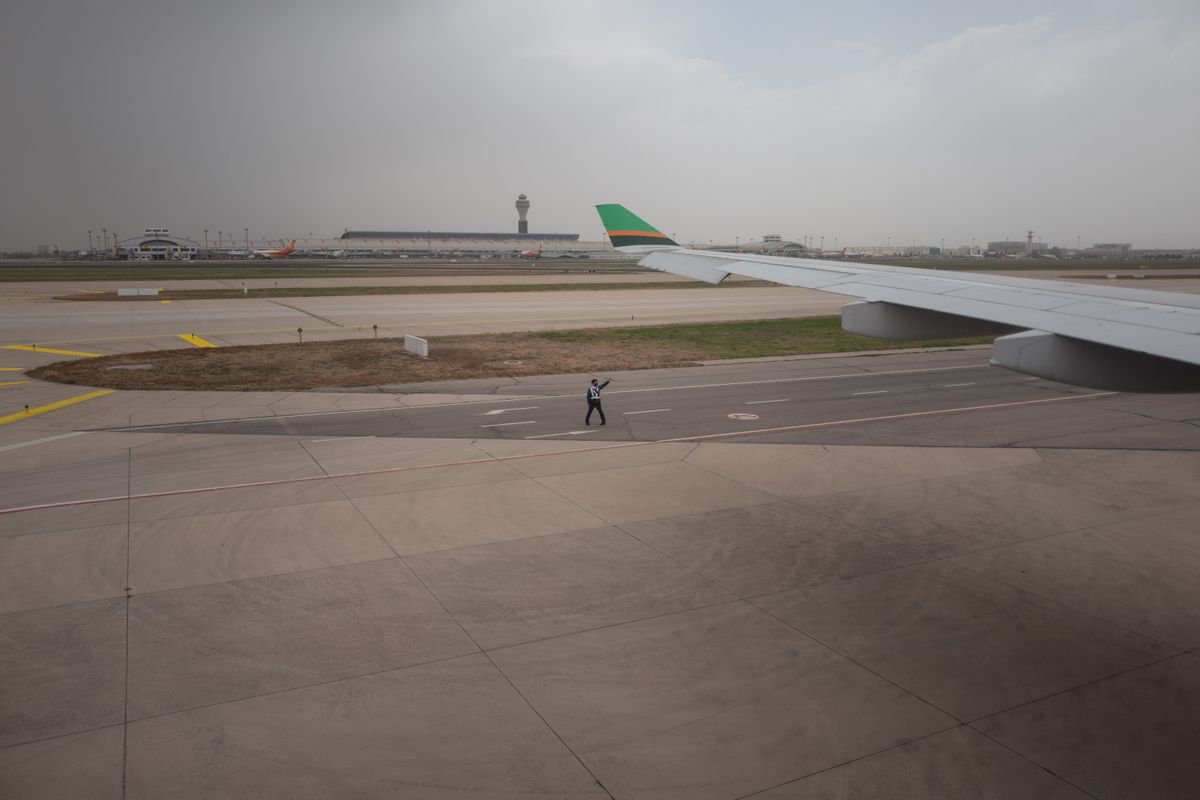
KLM has pushed back its expected restart on Riyadh and Dammam routes to 27 November at the earliest, citing ongoing safety assessments following Houthi drone and missile activity across Saudi airspace. The Dutch carrier confirmed the new end date in a statement released on 27 October, making clear that even the late November date remains subject to further review.
Etihad Airways has set a separate timetable. The Abu Dhabi carrier cancelled all services between Abu Dhabi and Riyadh, Dammam, and Jeddah through 5 November, with Riyadh and Dammam routes currently scheduled to resume on 8 November. Etihad has not issued a firm guarantee for that date and has asked passengers to monitor their bookings for changes.
Which airports are currently affected
The most significant restrictions fall on Riyadh’s King Khalid International Airport (RUH), which reopened partially on 25 October but remains limited to Saudi national carriers and a small number of international services. Other Saudi airports face varying levels of disruption:
- King Khalid International, Riyadh (RUH) - operating, but with significantly reduced international capacity
- King Fahd International, Dammam (DMM) - operating; several carriers are still completing safety reviews before resuming
- Abha International (AHB) - operating with daytime-only restrictions
- Najran and Jizan airports - closed
Jeddah’s King Abdulaziz International Airport (JED) and Medina’s Prince Mohammed Bin Abdulaziz Airport (MED) are operating normally and remain the most reliable entry points into Saudi Arabia.
Other carriers and the broader picture
Lufthansa Group (including Swiss and Austrian Airlines) has suspended Saudi Arabia flights through 18 November. Air France extended its ban through 7 November. British Airways suspended Riyadh services through 3 November, after which Heathrow-Riyadh operations are expected to resume subject to safety review.
The US Embassy in Riyadh issued an updated security alert on 2 November, reiterating that Houthi attacks on civilian airports have caused casualties and significant travel disruption. The Level 3 “Reconsider Travel” advisory remains in force. Most western government advisories reflect a similar position, and several have issued parallel guidance in recent days.
Saudia, Riyadh Air, and flynas continue operating on modified schedules. Domestic services within Saudi Arabia have not been affected.
What to do if you have upcoming flights
Anyone booked on an affected carrier before the end of November should contact their airline directly rather than assuming a suspension end date will hold. The dates above have shifted multiple times since October 10, and most carriers have not ruled out further extensions.
If your itinerary is flexible, booking into Jeddah offers a more stable entry point and connects directly to the Haramain High Speed Railway, which links Jeddah, Mecca, and Medina in under two hours. For a current overview of which routes are running, see our flights to Saudi Arabia guide.
Travel insurance implications are significant: standard policies typically exclude claims under an active Level 3 or equivalent advisory. Our is Saudi Arabia safe page covers what advisories are in force and what they mean for civilian travel. For arrival logistics once flights resume, the Riyadh airport transfer guide covers ground transport options from King Khalid International.
Background on the escalation that prompted these suspensions is in our earlier report on the Dammam airport strike and carrier bans.