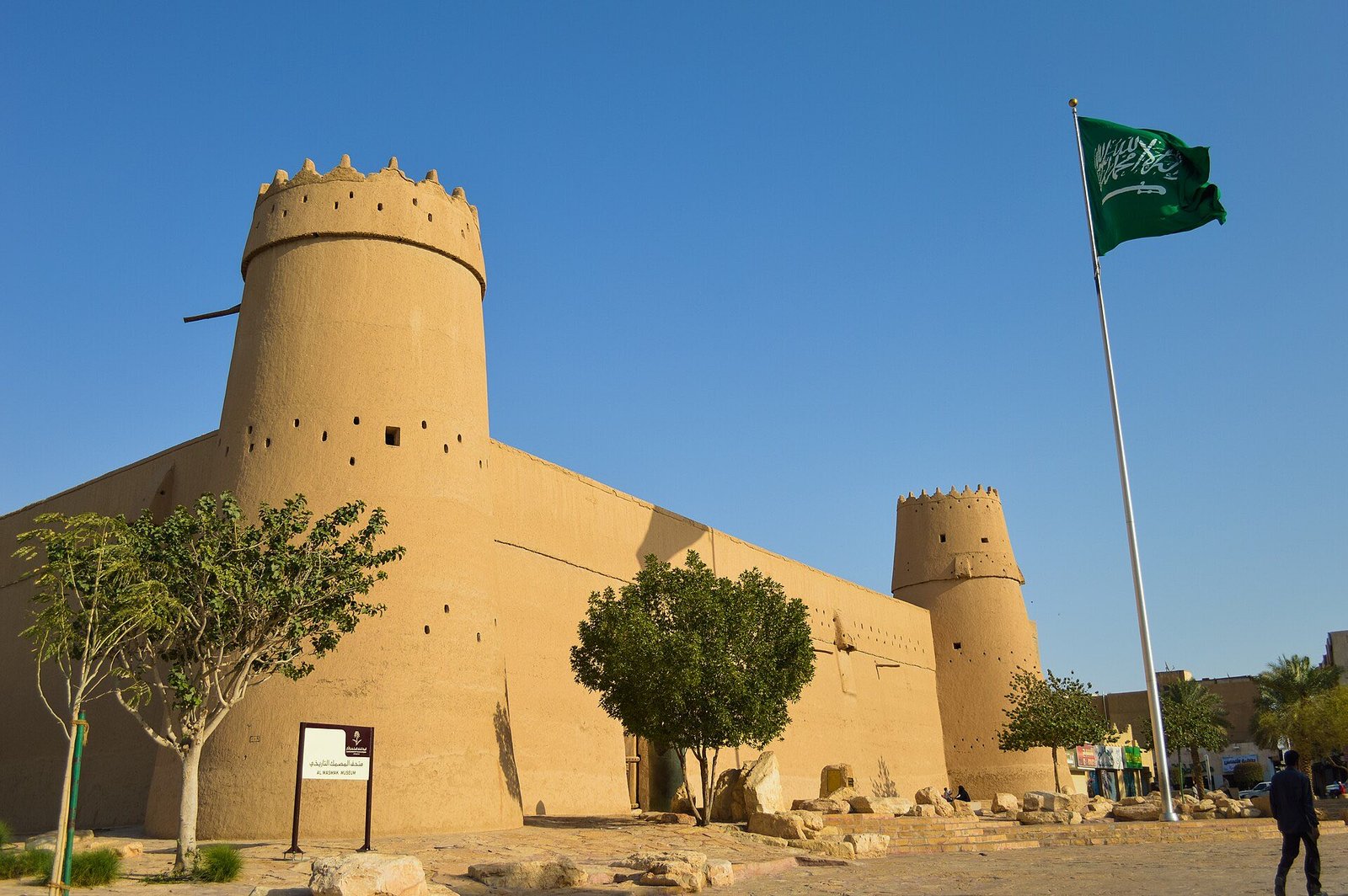
Masmak Fortress is the single most important building in the story of modern Saudi Arabia, and it takes about an hour to see. The squat mud-brick fort in the old centre of Riyadh is where Abdulaziz ibn Saud launched the 1902 raid that recaptured the city, and it is now a free museum with a short film, period weapons and a courtyard you can walk. It sits a few minutes from the souks of Dira, so most visitors pair the two. This guide covers the history, what you see inside, hours, entry, metro access and how to fit it into a day. For the wider picture, see our things to do in Riyadh guide.
The 1902 raid and why it matters
The fort was built in the 1860s, in the reign of the Rashidi ruler of Hail, Muhammad bin Abdullah Al Rashid, as a garrison, storehouse and armoury for the city. In January 1902 Abdulaziz ibn Saud, then in his early twenties and exiled from Riyadh, crossed the desert from Kuwait with a small band of men. They slipped into the city at night, waited in a house close to the fort, and attacked at dawn when the governor, Ajlan, left the fort. The Saudi account says the gate was breached with a battering ram, and a spearhead thrown by one of Abdulaziz’s men lodged in the wooden door.
That spearhead is still in the door, and it is the first thing most visitors look for. The event is remembered as the start of the campaign that unified the territories later declared the Kingdom of Saudi Arabia in 1932, and it is why Masmak features in school curricula, national day displays and official tourism material.
What you see inside
The fort is small but well kept, and the displays are in Arabic and English. After a restoration reported to have finished in 2025, the displays were refreshed, so you may find newer galleries than older reviews describe.
- The main gate and spearhead: the heavy wooden door with the embedded spearhead is at the entrance, and photography is generally allowed.
- The courtyard and well: a central courtyard surrounded by rooms, with a traditional well that supplied the garrison. The mud walls are about a metre thick in places.
- Watchtowers and ramparts: four corner towers, rounded and tapering in the Najdi style, with narrow loopholes for defenders.
- The museum galleries: exhibits on the pre-unification history of Najd, early photographs of Riyadh, weapons, clothing, coins and manuscripts, plus a film on the 1902 capture.
- The audiovisual show: a short presentation in several languages recounts the raid. Staff can usually tell you when the next English showing is.
Opening hours and entry
Hours are the weakest part of the published information, so plan with a margin. The most common listing is about 8am to 9pm, with a shorter Saturday morning and a Friday that opens in the afternoon only, around 4pm to 8pm or 9pm. Other sources split the day into a morning session and an evening session. Ramadan and public holidays always change the schedule.
Entry is reported as free, with no advance booking. We could not confirm this on an official page, so treat it as likely rather than guaranteed, and bring a few riyals in case a small fee applies as of 2026. Parking near the fort is reported at about SAR 5 to 10 in nearby lots, which is one more reason to arrive by metro or ride-hail.
Getting there: metro, taxi and walking
Metro is the easy answer. Qasr Al-Hukm station, served by the Blue and Orange lines, is the stop for the historic centre and the fortress. Our Riyadh Metro guide covers fares, the Darb card and the family carriages. We cannot give a verified walking time from the station, so use a map when you exit and go early, before the heat builds.
By ride-hail, Uber and Careem both drop at the fort entrance. Expect SAR 10 to 15 from the National Museum area and SAR 25 to 40 from Al-Olaya, as of 2026, depending on traffic. Driving yourself is not worth it: the streets around Dira are narrow and parking is tight.
Dress code and etiquette
Dress modestly, with shoulders and knees covered, for both men and women. Women are not required to wear an abaya as a visitor, though many do. Photography is fine in the courtyard and most galleries, but do not photograph staff or other visitors without asking. Friday afternoon is busy with local families, and the fort is calmer on weekday mornings.
Combine it with Dira, Souq Al Zal and the National Museum
The fort is the anchor of a good half-day around old Riyadh.
- Morning: reach Masmak when it opens, spend an hour inside, then walk the lanes of Dira.
- Souq Al Zal: the oldest continuously trading market in the city, for antiques, daggers, old coins and fabrics. Bargain politely and expect opening prices well above the final price.
- Late morning: a ride-hail to the National Museum of Saudi Arabia in the King Abdulaziz Historical Centre, for the full sweep of Arabian history that Masmak only starts.
- Evening: head to the Kingdom Centre Sky Bridge for sunset.
If you would rather have the history explained, browse Riyadh tours on GetYourGuide for guided city and heritage walks, and our 3-day Riyadh itinerary places the fort on day two.
Where to stay
The old centre has few hotels, so most visitors stay in Al-Olaya or the diplomatic quarter and take the metro in. See where to stay in Riyadh or check Riyadh hotels on Booking.com for current rates, as of 2026.
For official visitor information, see the Visit Saudi website.
Photo: Masmak Fortress by Francisco Anzola via Wikimedia Commons, CC BY 2.0.
