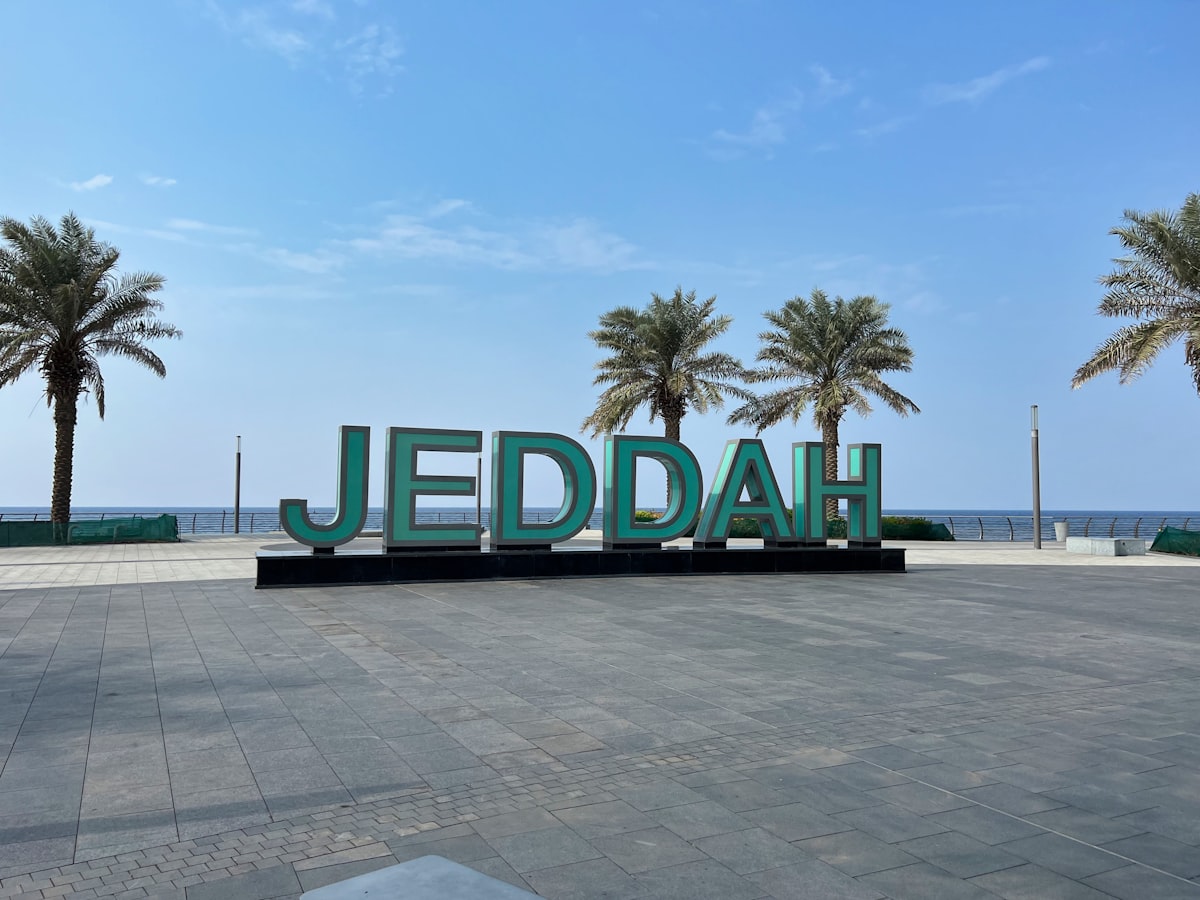
Jeddah’s food is different from Riyadh’s. The Hijaz — the western coastal region that encompasses Jeddah, Makkah, and Madinah — has its own culinary tradition shaped by centuries of hajj pilgrims passing through from across the Muslim world. You find Egyptian, Yemeni, Indian, and Levantine influences woven into the local cooking in a way that doesn’t exist in the Najd interior.
Then there is the Red Sea. Jeddah sits on a working port city with daily fish arrivals, and seafood dominates the local diet in a way that Riyadh — 950km inland — simply cannot replicate.
Red Sea Seafood Restaurants
Al-Corniche Seafood Restaurant
One of the most consistent seafood addresses on the Jeddah Corniche. The menu covers fresh hammour (grouper), shrimp, calamari, and mixed fish platters prepared grilled, fried, or baked. Order the hammour grilled with garlic and lemon — the simplest preparation that lets the fish speak for itself. Approximately SAR 80–150 per person as of 2026, depending on fish selection.
Al-Nawras
In the Al-Nawras district north of downtown, this restaurant has served Jeddah’s fish-eating community for decades. The format is a fish market at the front — you select your fish by weight — and a kitchen behind. No frills, no tourist pricing. SAR 60–120 per person.
Shrimpy (Jeddah Corniche)
A more modern concept that has built a following among younger Saudis. Shrimp-focused menu with various preparations — grilled, garlic butter, spicy — and a casual beachside setting. SAR 60–100 per person. Gets crowded on weekends from 20:00 onwards.
Hijazi Home Cooking
Saleeg House
Saleeg is Jeddah’s signature dish — white rice slow-cooked in broth and milk until it becomes creamy, served under roast chicken with a side of meat broth. Saleeg House is one of the few restaurants in Jeddah dedicated entirely to this dish. Portions are large, prices are low (SAR 30–50 per person as of 2026), and the clientele is almost entirely local. No English menu — point at the table next door or ask for “saleeg maa dajaj” (saleeg with chicken).
Mataam Al-Kabsah Al-Hijazia
Hijazi kabsa is spiced differently from Riyadh’s Najdi version — more cloves and black lime, less of the warming spices. This working restaurant in the old city area serves it the traditional way: a communal platter in the centre of the table, eaten with the right hand. SAR 40–70 per person.
Al-Balad Historic District
Al-Nakheel Restaurant (Al-Balad)
Inside the UNESCO-listed Al-Balad historic district, Al-Nakheel occupies a restored traditional coral-stone building. The menu focuses on Hijazi home cooking — saltah, fahsa (slow-cooked meat with fenugreek), and traditional rice dishes. The setting inside a centuries-old building is worth the visit even before the food. SAR 80–130 per person. Book for dinner.
Street Food in Al-Balad
The alleys of Al-Balad have their own street food ecosystem. Look for:
- Ful medames stalls (Egyptian-influenced fava beans with egg and flatbread — SAR 8–15)
- Mutabbaq (stuffed pancake with minced meat and egg — SAR 10–20 from dedicated mutabbaq shops)
- Freshly squeezed juices — the juice-and-smoothie shops in Al-Balad have been here for generations. Fresh mango, guava, and mixed tropical juices for SAR 8–15.
Corniche and Modern Dining
The Fisherman’s
A mid-upscale seafood concept on the northern Corniche with proper table service, English menus, and views across the Red Sea. Good for a first Jeddah seafood experience if you want comfort alongside the fish. SAR 120–200 per person. Reserve for sunset-to-dinner windows.
Sinbad Restaurant
International menu with a strong seafood section, positioned in a marina setting. Popular with Jeddah’s business community for working lunches. SAR 100–180 per person.
Lusin Armenian Restaurant
A reminder of Jeddah’s cosmopolitan history — this Armenian restaurant has been operating in Jeddah for decades, serving a community that traces back to early 20th century arrivals. Kibbeh, dolma, and grilled meats in a traditional setting. SAR 80–140 per person. Closes Sunday.
Practical Notes
- Seafood prices depend on weight — always ask the price per kilogram before selecting your fish.
- The Corniche area restaurants fill up quickly after sunset; Thursday and Friday evenings require reservations at mid-range venues and above.
- Al-Balad restaurants are best experienced for lunch; several close by 22:00.
- During Ramadan, the Corniche waterfront becomes an outdoor iftar destination — dining is set up along the walkways and the atmosphere is worth the extra crowds.
Book a Guided Food Tour of Jeddah
Al-Balad’s alleyways hide some of the most historically layered street food in Saudi Arabia — mutabbaq stalls whose recipes trace back to South Asian pilgrims who never went home, ful medames cafes serving an Egyptian recipe absorbed over centuries, and Hejazi restaurants inside coral-stone merchant houses. A guided food tour connects the food to the pilgrimage history that shaped it, and takes you to the Red Sea seafood spots where you point at the catch and negotiate by weight. For first-time visitors, it converts Jeddah’s food scene from overwhelming to navigable.
Browse hotels in Jeddah — Al-Balad properties put you within walking distance of the Corniche seafood restaurants and the Hijazi street food of the old city.