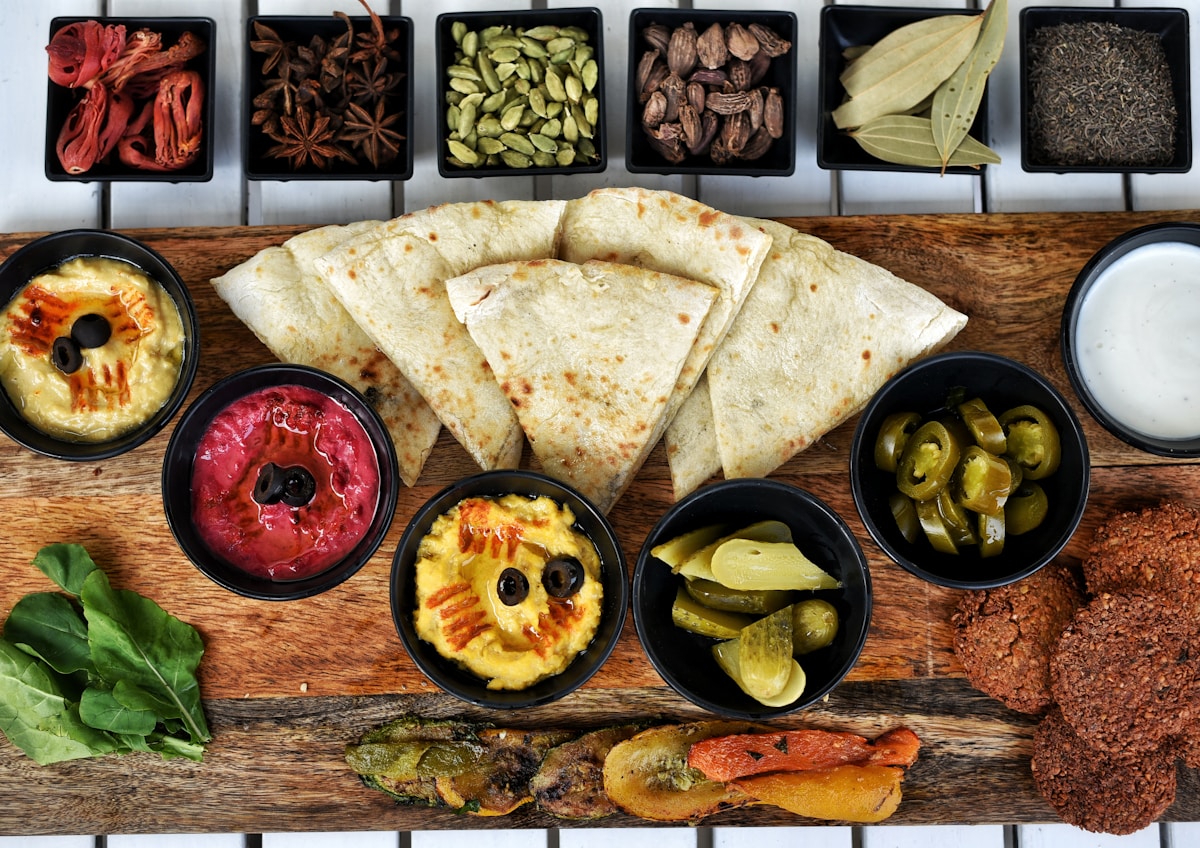
Dammam is the capital of Saudi Arabia’s Eastern Province, a region whose food culture is defined by two realities that have no equivalent elsewhere in the country: direct access to the Arabian Gulf and its fisheries, and a century of oil industry development that brought an international workforce to what had previously been a pearl-diving and date-farming economy. These two forces — the ancient Gulf maritime tradition and the 20th-century oil encounter — together explain why Eastern Province cuisine tastes the way it does.
Gulf Coastal Cuisine and the Bezar Spice Tradition
The Eastern Province shares its culinary character more closely with Bahrain, Kuwait, and Qatar than with either Riyadh or Jeddah. The unifying element is bezar — a Gulf spice blend combining black pepper, cumin, coriander, dried lime (loomi), turmeric, and sometimes cinnamon and cardamom. Bezar is used in machboos, the Eastern Province’s equivalent of the interior’s kabsa, and in fish and meat braises, rice dishes, and slow-cooked stews.
Dried lime — the black, desiccated whole lime that crumbles into an intensely sour-citrus powder — is perhaps the most distinctive flavour in Eastern Province cooking and the one that most clearly distinguishes it from Najdi food. It arrives in machboos broth, is added whole to fish soups, and appears in tea blends across the Gulf coast. The ingredient arrived via Persian Gulf trade routes from Oman, where limes were dried in coastal salt air and distributed as far as Iraq and India.
Machboos itself — the rice cooked with meat or seafood in a bezar-spiced broth — is moister and more aromatic than Najdi kabsa. The rice grain is cooked to retain some individual structure while absorbing the broth flavour. Seafood machboos, made with fresh shrimp or Gulf fish, is the version unique to the Eastern Province and Gulf coast; it has no Najdi equivalent.
A full machboos with lamb at a traditional Dammam restaurant costs approximately SAR 40–80 per person as of 2026. Seafood machboos runs slightly higher — SAR 55–100 depending on the catch.
The Gulf’s Protein: Hammour, Zubaidi, and Shrimp
The Arabian Gulf provides a different marine harvest from the Red Sea that feeds Jeddah. Where the Red Sea’s deep, warm waters produce hammour grouper and safi rabbitfish, the shallower Gulf produces zubaidi (pomfret) — a flat, white-fleshed fish prized across the Gulf for its mild flavour and manageable bones. Zubaidi is the premium fish for grilling whole; a good-sized zubaidi at a Corniche restaurant in Dammam runs approximately SAR 80–150 as of 2026 depending on weight and season.
Hammour grouper is also present in Gulf waters, though the East Asian demand for grouper has made stocks increasingly expensive. Shrimp from the Arabian Gulf is the most accessible and affordable seafood option: grilled, fried in batter, or cooked into machboos, a shrimp plate along the Corniche costs SAR 50–90.
The Corniche waterfront district is where traditional fish restaurants cluster, several sourcing directly from the daily catch at Dammam’s fishing port. The best of these are functional rather than decorative — concrete floors, formica tables, display tanks, and prices that reflect proximity to the source rather than waterfront real estate. Expect to pay significantly less here than at the upscale seafood restaurants in Al-Rashid Mall or Marina Mall.
Al-Ahsa Dates and the Eastern Province’s Ancient Agriculture
Before oil transformed the Eastern Province in the 1930s and 1940s, Al-Ahsa — the vast oasis 100km south of Dammam — was one of the most productive agricultural zones in Arabia. The oasis sustained over three million date palms and an elaborate irrigation system of underground falaj channels that had been operating for over four thousand years.
The dates produced in Al-Ahsa are among the most prized in Saudi Arabia and the Gulf world. Sukkari dates — golden, soft, and intensely sweet with a caramel-like richness — are the variety most associated with the Eastern Province and are served at virtually every traditional meal as both a welcoming gesture and a palate cleanser. Khunaizi dates are darker, more complex in flavour, and used in both eating and cooking. A box of quality Sukkari dates from Al-Ahsa markets in Dammam costs approximately SAR 80–250 as of 2026 depending on grade and quantity.
The Al-Hassa long-grain rice variety grown in the Al-Ahsa oasis is used by traditional Eastern Province cooks for machboos — its absorbency and grain structure are considered better suited to bezar-spiced broth cooking than imported rice. Finding it in markets requires knowing what to ask for; it has no branding and is sold loose or in unlabelled bags.
The Oil Industry’s Culinary Footprint
When Aramco (the Arabian-American Oil Company) established its Dhahran operations in the 1930s, it did not simply build oil infrastructure — it created a self-contained expatriate community with its own food supply chains, commissaries, and eventually restaurants that served American food to American workers in the Saudi desert. This created two parallel food economies in the Eastern Province for decades: the traditional Saudi and Gulf cuisine of the local population, and the imported food culture of the international oil workforce.
What remains of that encounter today is the international restaurant diversity in Dammam and Khobar — American chains arrived early and stayed, but so did Lebanese, Indian, and South Asian restaurants that served the non-American components of Aramco’s workforce. The Lebanese community that arrived to work in oil industry support services established the mezze restaurants that remain among the most reliable in Dammam. A full Lebanese mezze spread with grilled meats at a mid-range restaurant in Al-Faisaliyah costs SAR 80–150 per person as of 2026.
Margoog and Harees: The Slow-Cooked Traditions
Beyond machboos, the Eastern Province has two other slow-cooked dishes that define home cooking and special occasions. Margoog is a thick stew of lamb or chicken with vegetables — potato, carrot, onion, and sometimes pumpkin — cooked with rice in a spiced broth until the whole thing becomes a unified, rib-sticking one-pot meal. It is a cold-weather dish and a family dish; you are unlikely to find it on restaurant menus, but it appears at wedding banquets and family gatherings.
Harees — wheat porridge slow-cooked with lamb until smooth and paste-like — is the celebratory dish of the Gulf coast as much as of the Hejaz. The Eastern Province version uses slightly different spicing from the Hejazi variant, with more cardamom and less cinnamon. It is prepared for Eid, Ramadan suhoor, and the return of pilgrims. Traditional restaurants occasionally serve it during Ramadan; outside that month it requires a private invitation.
Ramadan Dining in Dammam
During Ramadan, the Eastern Province food scene reorganises around iftar and suhoor. The major hotels — the Sheraton Dammam, the Movenpick, the Al-Gossaibi — serve hotel buffet iftars at approximately SAR 150–280 per person as of 2026. These include both Hejazi-influenced dishes and Gulf Eastern Province specialties alongside international cuisine.
The Al-Shatea Corniche fills with street food vendors from iftar until well after midnight during Ramadan, with the full range of Eastern Province snacks — mutabbaq, grilled corn, fresh juice, and shawarma — all operating simultaneously. This is where Dammam’s Ramadan atmosphere is most palpable.
Take a Guided Food Tour of Dammam
The morning fish auction at the Dammam Fish Market and the bezar-spiced machboos tradition of the Eastern Province are genuinely unlike anything in western Saudi Arabia, and the difference is sharpest when you experience it with a guide who can explain the Gulf spice trade roots of what you’re eating. A guided food tour of the Eastern Province typically covers the Corniche fish restaurants, Al-Ahsa date culture, and the machboos cooking tradition that connects Dammam’s cuisine to Bahrain and Kuwait. For first-time visitors to the Gulf coast, it is the most efficient way to understand why Eastern Province food is its own distinct tradition.
Browse Dammam and Eastern Province tours on GetYourGuide for day tours, Gulf seafood experiences, and food-focused activities. For the broader Saudi tour landscape, the Saudi Arabia tour listing includes experiences across the full Gulf coast.
See Also
- Dammam City Guide — full guide to Eastern Province’s capital including transport and accommodation
- Where to Stay in Dammam — hotels by area and price tier
- Al Khobar Food Guide — food culture in Dammam’s twin city 30km south
- Red Sea vs Arabian Gulf — comparing the two coasts for food, seafood, and tourism
- Saudi Arabia Food Guide — national dishes and regional food culture overview
Plan Your Stay
Find hotels in Dammam — search accommodation across all budgets in Dammam.