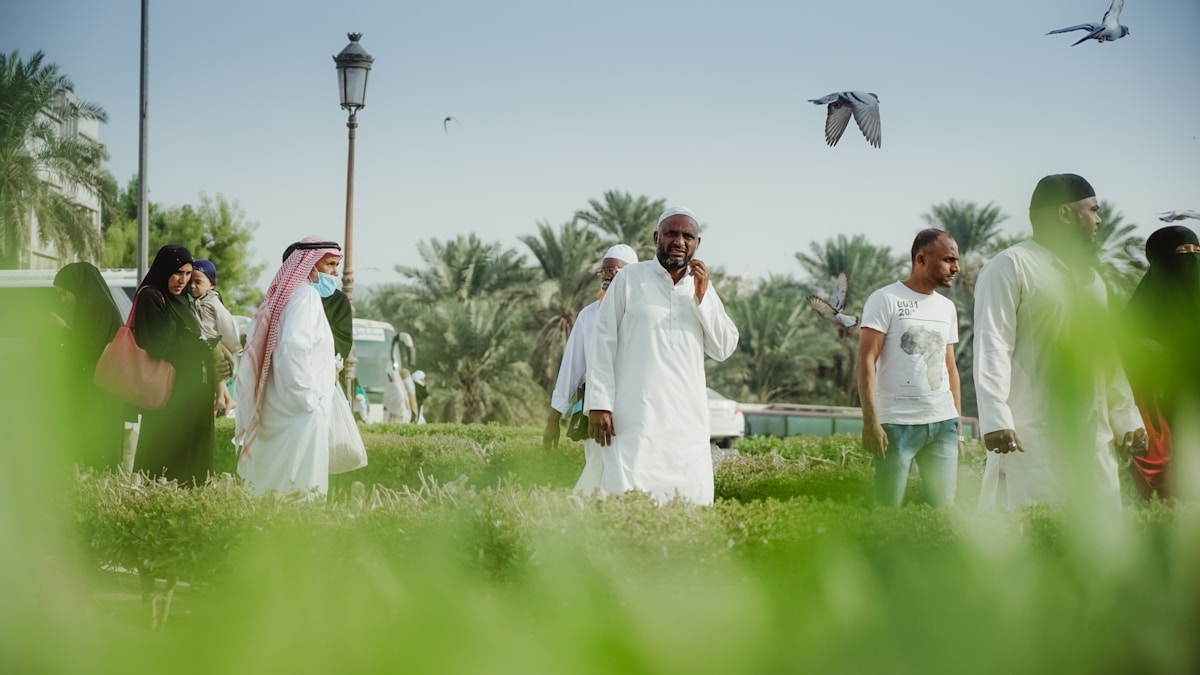
Abha sits in the Asir mountains at 2,200 metres above sea level — making it the highest major city in Saudi Arabia and one of the coolest. The altitude that gives Abha its mist, its greenery, and its relief from the Gulf heat also shaped a food culture that differs from every other region of the country. Asiri cuisine is the least exported, least replicated regional tradition in Saudi Arabia; eating it authentically requires going to Asir.
Altitude and Agriculture: Why Asiri Food Is Different
Saudi Arabia’s regional cuisines are largely defined by what each region’s environment could produce and what trade routes made accessible. The Hijaz had the spice trade and the sea; the Najd had dates, camels, and the desert caravan economy; the Eastern Province had the Gulf and its fisheries. Asir had mountains.
At altitude above 1,500 metres, the Asir region receives more rainfall than any other part of Saudi Arabia — the summer monsoon from the Indian Ocean reaches the highlands, creating a brief green season that looks unlike anything in the surrounding desert. This moisture sustained sorghum cultivation, terraced agriculture on the mountain slopes, beekeeping at scale, and sheep herding on the highland pastures. These agricultural conditions produced an Asiri food identity built on grain bread, honey, and lamb — with a lighter hand on imported spices than either the coastal or plateau traditions.
The historical isolation of the Asir mountains from the main trade routes also played a role. Without the Red Sea port commerce that enriched Hejazi cuisine, Asiri cooking developed from local resources rather than from trade goods. The result is a more austere, ingredient-focused food culture than the Hejaz — one where the quality of the honey, the bread, and the lamb carries the meal rather than the complexity of the spice blend.
Honey: The Most Valuable Product of the Asir Mountains
No product defines Asiri food culture more completely than honey. The mountainous terrain of Asir — with its diverse wildflower meadows, acacia groves, and sidr (Ziziphus) trees at different altitude bands — produces a variety of honeys that are among the most prized in the Arabian Peninsula.
Sidra honey, made by bees working the sidr tree flowers, is the premium variety. Deep amber, thick, with a distinctive slightly bitter complexity beneath the sweetness, quality sidra honey from the Abha region commands SAR 300–800 per kilogram as of 2026 at reputable producers and souq stalls. The price reflects both scarcity and reputation — sidra honey is given as a prestige gift across the Gulf world and is believed in traditional medicine to have properties not found in lowland honey.
Wild mountain flower honey — produced from bees foraging across the mixed altitude flora — is more accessible at SAR 150–300 per kilogram, and ranges widely in flavour depending on the season and exact foraging zone. The honey souq in Abha’s Al-Qabil market area has multiple vendors with unlabelled jars that represent the real local product; the most expensive honey at any stall is almost invariably the sidra.
The traditional Asiri use of honey is not simply as a sweetener but as a complete food. Mixed with fresh butter (samn) and spread on hot flatbread, it constitutes the defining local breakfast. Served alongside ghee-drizzled rice porridge (jareesh), it appears as a dessert course. Poured over warm bread at a traditional lunch, it bridges the savoury and sweet in a way that has no equivalent in Najdi or Hejazi cooking.
Bread Culture in Asir
Asiri flatbread — khobz al-malla — is made from sorghum flour and baked directly on hot stones or in a clay oven. The sorghum grain, which grows in the Asir highlands when wheat does not, gives the bread a darker colour, a slightly nutty flavour, and a denser crumb than the wheat-flour flatbread found elsewhere in Saudi Arabia. Eaten fresh from the fire with honey and butter, it is the foundational element of the Asiri meal.
The muaassal breakfast — khobz al-malla soaked in samn (clarified butter) and local honey — is the dish that most completely expresses Asiri food culture in a single bite. The bread absorbs the butter, the honey pools in the hollows, and the warmth of the bread releases the aromatics in the honey. Most traditional Asiri restaurants in Abha, particularly in the Al-Qabil and Al-Numas areas, serve muaassal at breakfast from approximately SAR 15–30 per serving as of 2026.
Lamb from the Mountain Pastures
The sheep of the Asir highlands are a different animal from the flat-desert flocks of the Najd. Grazing on mountain herbs, wild thyme, and highland grasses at altitude, they produce meat with a flavour that local cooks describe as more complex and less fatty than lowland lamb. The Asiri tradition of slow-cooking whole lamb on heated stones — called madfoon (buried) or prepared as fahsa in a clay pot — is the ceremonial cooking method reserved for weddings, Eid, and large family gatherings.
Fahsa — lamb slow-cooked in a traditional clay pot until it breaks down into a rich stew with soft vegetables — is the most accessible version of this tradition for restaurant visitors. Served in the clay pot at the table with flatbread for tearing and dunking, it costs approximately SAR 45–90 per person at traditional Asiri restaurants in Abha as of 2026.
Mandi — the Yemeni slow-roasted lamb technique that has spread throughout the Hijaz and Asir — is also widely available in Abha, reflecting the proximity of Asir to the Yemeni border and the Yemeni community that has long been present in the region. The Yemeni-style mandi houses in Abha’s Al-Manhal area typically charge SAR 30–60 per person for a full plate.
Asiri Food in Restaurants: What to Expect
The domestic tourism development of Abha — particularly since the opening of the Al-Soudah cable car and the designation of Asir as a tourism priority under Vision 2030 — has produced a growing number of restaurants positioning themselves as “traditional Asiri experience” venues. These vary considerably in authenticity and price.
The most reliable traditional Asiri restaurants in Abha are generally those in the old city and market areas rather than in the new tourist infrastructure along Prince Sultan Road. Look for places where the menu is short, the clientele is local, and the honey on the table is labelled with a family farm name rather than a branded product. The tourist-facing restaurants in Al-Habala and around the cable car area serve recognisable dishes but at tourist pricing — expect to pay 30–40% more than the equivalent meal in the city centre.
For a full traditional Asiri lunch — khobz al-malla, fahsa or slow-cooked lamb, honey dessert, and the local qahwa (cardamom coffee) — budget SAR 50–90 per person at a mid-range local restaurant as of 2026.
The Cool Climate and Ramadan
Abha’s altitude makes it the most comfortable place in Saudi Arabia during summer and also gives Ramadan a different character from the lowland cities. The post-Maghrib iftar in Abha often happens in temperatures of 15–20°C — cool enough that the heavier, warmer Asiri dishes (fahsa, harees, warming lamb stews) are served without the consideration of heat that shapes Ramadan dining in Riyadh or Jeddah.
During Ramadan, Abha’s Corniche and Al-Qabel Cultural Village host outdoor iftar gatherings with traditional food, music, and the characteristic Asiri folk performance. This is the season when the full repertoire of Asiri ceremonial dishes — including hareesa wheat porridge, slow-cooked lamb, and traditional honey desserts — is most commonly served publicly.
Take a Guided Food Tour of Abha
The Asiri honey market in Khamis Mushait, the traditional muaassal breakfast of khobz al-malla with local samn and sidra honey, and the highland lamb dishes that define Asiri cuisine are best experienced with a local guide who knows which producers are genuine and which honey is mixed. Abha’s food culture is the least documented of any major Saudi city — much of it happens in private homes and family restaurants where arriving alone as a visitor produces confusion rather than a meal. A guided food tour of the highlands is the most direct route to Asiri cooking as Asiri families actually eat it.
Browse Abha tours on GetYourGuide for highland experiences and cultural activities, or book the full-day Abha city history and Rijal Almaa village tour — the best single day for understanding the region’s food and heritage together.
See Also
- Abha City Guide — full guide to Asir’s capital including cable car, parks, and accommodation
- Where to Stay in Abha — hotels and resorts by price tier
- Abha vs Taif — comparing Saudi Arabia’s two highland tourist cities
- Best Time to Visit Saudi Arabia — when Abha’s cool climate makes it ideal
- Saudi Arabia Food Guide — national dishes and regional food culture overview
Plan Your Stay
Find hotels in Abha — search accommodation across all budgets in Abha.