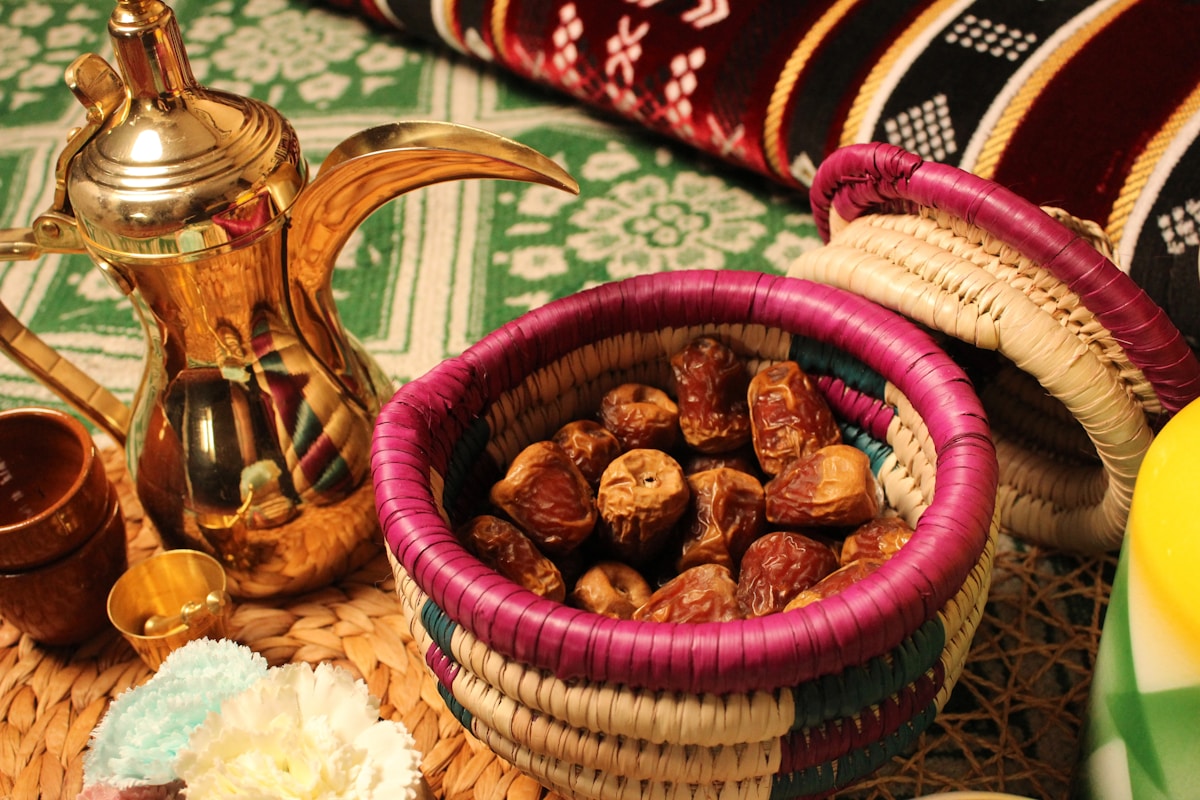
AlUla sits in a narrow valley cut through the ancient Hejazi highlands of northwest Saudi Arabia, surrounded by sandstone cliffs and an oasis of 2.5 million date palms that have been farmed continuously since at least the 6th century BCE. The Nabataean and Lihyanite civilisations that built the tombs of Hegra treated this valley as a fertile exception in an otherwise arid landscape — and the food culture that developed here reflects that identity. Traditional AlUla cooking is oasis cuisine: concentrated, produce-driven, and shaped by what the valley’s date palms, honey bees, and irrigated fields could provide.
Dates: The Foundation of AlUla Food Culture
No ingredient is more central to AlUla’s food identity than the date. The valley’s date palms number approximately 2.5 million, covering every stretch of the oasis floor. Multiple varieties are grown, with the most prized being the Barhi — a small, round date that turns golden-amber at peak ripeness and tastes of caramel and warm honey — and the Ajwa, a dark, soft date revered in Islamic tradition and cultivated primarily in the Medina region but produced here too.
The harvest window for fresh Barhi dates runs from approximately September to October. Outside that period, dates are sold dried or in pressed blocks at AlUla’s Old Town market. If you visit during harvest season, the difference between fresh-picked and dried dates is dramatic — the fresh Barhi has a crunchy-to-soft texture progression and a sweetness that dried versions cannot replicate.
Beyond eating them whole, AlUla cooks use dates in several preparations. Date molasses (dibs) is stirred into coffee and drizzled over flatbread. Kleicha — date-filled pastry — is the traditional sweetmeat served with Arabic qahwa (coffee) at every formal occasion. Date juice pressed from excess harvest fruits is drunk fresh during the harvest months.
Local honey from the Asir and Hejazi highlands supplements dates as a primary sweetener. Honey stalls in the Old Town souk sell raw mountain honey with a distinctively floral, slightly bitter character from wild Sidr (Christ’s thorn jujube) trees. A jar of AlUla Sidr honey — priced from approximately SAR 150 per 250g as of 2026 — is one of the most genuine edible souvenirs in Saudi Arabia.
Traditional Hejazi Dishes in AlUla
AlUla’s cuisine belongs to the wider Hejazi tradition of western Arabia, distinct from the more restrained Najdi cooking of Riyadh. A few dishes appear at every traditional meal:
Kabsa — Saudi Arabia’s national dish and the centrepiece of any AlUla lunch. Long-grain rice cooked in broth seasoned with black lime, cinnamon, cardamom, and saffron, served over lamb or chicken that has been slow-cooked until the meat falls from the bone. Portions are communal and large. This is not a restaurant performance dish — it is what AlUla families cook at home for celebrations and what traditional restaurants serve as their signature.
Madfoon — traditionally a preparation in which a whole lamb is marinated in spices and cooked in a sealed underground pit for several hours over hot coals. The method produces extraordinarily tender meat with a smoky, spiced quality. Some AlUla restaurants now approximate the method above ground in sealed ovens, but the result is still notably good.
Jarish — cracked wheat or barley slow-cooked with clarified butter (samn), onion, and often a lamb stock base until it reaches a thick porridge consistency. This is highland oasis food at its most honest — cheap to make, highly caloric, warming in the cold winter nights AlUla actually experiences between December and February (temperatures can drop below 10°C). Jarish served with samn and a drizzle of date honey is one of the more distinctive regional breakfasts in Saudi Arabia.
Margoog — a meat and vegetable stew with thin, torn flatbread cooked directly into the broth. Often made with chicken, dried lime, coriander, and seasonal vegetables, margoog represents the practical oasis kitchen: one-pot cooking that stretches ingredients efficiently.
Where to Eat in AlUla
AlUla’s restaurant landscape changed significantly after the launch of the Winter at Tantora festival season (running annually from around December to March) and the development of the broader AlUla tourism infrastructure under the Royal Commission for AlUla (RCU).
Maraya Social sits inside the mirrored Maraya concert hall — the world’s largest mirror-clad building — and serves modern Arabic and international cuisine in a setting unlike anywhere else in Saudi Arabia. Main courses from approximately SAR 80–180 as of 2026. The lunch menu leans lighter than dinner; the setting at sunset, when the mirrors reflect the sandstone cliffs in gold, is worth the visit regardless of food.
Harrat Uwayrid and the restaurants within the Shaden Resort complex offer traditionally-framed menus in open-air desert settings. Expect kabsa, madfoon, and grilled meats in the SAR 55–120 per main range, with the communal rice dishes often the better option for groups. Booking is advisable during the winter festival season when occupancy peaks.
Old Town market stalls and teahouses around the AlUla Old Town area serve the most affordable and local-facing food: flatbread fresh from clay ovens (from around SAR 3), spiced tea with dates, and small plates of hummus and baba ganoush. These are informal, family-run operations — no menus in English — but prices are low and the food is straightforwardly good.
Café Hegra near the Hegra visitor centre area provides a contemporary café experience aimed at tourism visitors: specialty coffee, light lunches, and regional pastries in the SAR 25–60 per item range. It is the closest thing AlUla has to a European-style café and functions as a rest stop for those spending the day at the archaeological sites.
For packaged foods and dates to take home, the AlUla Dates and Produce Market near the heritage village area sells direct from local farmers. Prices are lower here than at the resort gift shops, and the staff often allow tasting before purchase.
Take a Guided Food Tour of AlUla
AlUla’s food culture is built around the valley’s 2,500-year-old oasis — the dates, honey, and ancient grain traditions that fed the Nabataean and Lihyanite civilisations whose tombs you walk through above ground. A guided food experience in AlUla visits the valley’s working farms and Old Town market stalls, connects the oasis produce to the dishes served at resort restaurants, and explains why the food here tastes different from any other Saudi region. During the Winter at Tantora season, guided dinner experiences at Maraya and the resort camps are the most immersive way to eat in AlUla.
Browse AlUla tours on GetYourGuide for the full range of available formats, or book the AlUla full-day wonders tour that combines Hegra, Dadan, Ikmah, and Elephant Rock — the itinerary that places the valley’s food culture in its archaeological context. See our best AlUla tours guide for a detailed operator comparison.
See Also
- AlUla City Guide — full guide including Hegra, Elephant Rock, Old Town, and accommodation
- Where to Stay in AlUla — hotels and desert resort camps by price tier
- Best Tours in AlUla — complete guide to AlUla experiences and operators
- Saudi Arabia Food Guide — national dishes and regional food culture overview
Practical Dining Tips for AlUla
Opening hours run to Saudi time. Most restaurants close between approximately 15:00 and 17:00 for afternoon prayer and rest, reopening for the dinner service. Don’t plan your main meal for 15:30. During the winter festival months, restaurant hours extend later into the evening.
Cash and card both work, but smaller market stalls and tea shops are often cash-only. SAR 50–100 in small notes is useful for the Old Town area.
Portions at traditional restaurants are communal. A single order of kabsa or madfoon for one person is often sized for two to three people. Order one dish and add small plates rather than ordering individually.
Alcohol is not served anywhere in Saudi Arabia. Dates, fresh juices, Arabic qahwa, and mint tea are the drinks of AlUla. During the winter festival, some venues serve mocktail menus using local fruit and herb combinations.
The dinner crowd peaks late. Most Saudis eat dinner between 20:00 and 22:00. Arriving at 19:30 gives the best pick of tables and avoids the peak wait.
Where to stay: Find hotels in AlUla — search accommodation across all budgets.