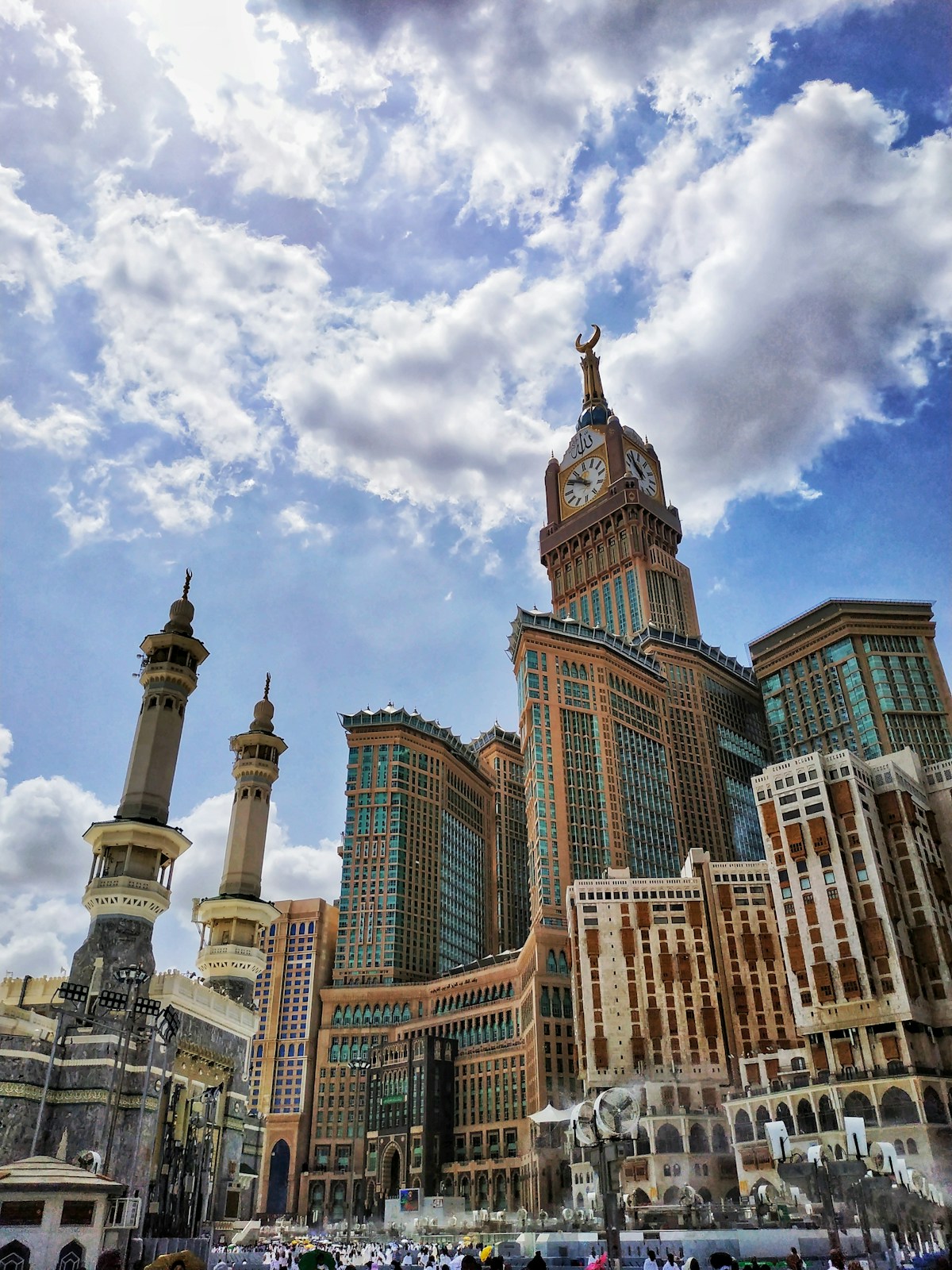
Mecca’s food culture is inseparable from its identity as the focal point of Islamic pilgrimage. For over fourteen centuries, millions of Muslims from every part of the world have converged on this city, and what those centuries of human movement produced is a food culture unlike anything else in Saudi Arabia: a Hejazi kitchen shaped by Africa, South Asia, the Levant, Yemen, and the wider Islamic world, concentrated in the streets around the holiest site in Islam.
Access to Mecca is restricted to Muslims under Saudi law. This guide is written for Muslim visitors arriving on Umrah or Hajj — and for those curious about a food culture whose reach extends far beyond the city itself.
The Food Economy of the Haram
The area immediately surrounding Masjid al-Haram — the Grand Mosque — has sustained a food economy for over a millennium. In the pre-modern period, this meant caravanserais providing bread, dates, and lamb stews to pilgrims who had walked weeks from distant ports. Today it means a layered landscape of hotel buffets, street vendors, traditional Hejazi restaurants, Yemeni mandi houses, South Asian biryani stalls, and international fast food chains, all within walking distance of the mosque.
The closest food streets to the Haram are in the Al-Misfalah, Ajyad, and Al-Qararah neighbourhoods. These are where the oldest food traditions survive — kabsa houses that have been cooking the same rice and lamb formula for decades, mutabbaq stalls operated by families whose grandparents sold the same dish to pilgrims arriving by ship.
Kabsa — long-grain rice slow-cooked with lamb or chicken in a spiced broth of black lime, cinnamon, cardamom, and black pepper — is the foundational dish. In the Haram-area restaurants, a full kabsa with lamb served on a communal tray costs approximately SAR 45–90 per person as of 2026, depending on portion size and cut. The lamb tray format — where pilgrims sit on floor mats around a large serving dish — remains the default in traditional restaurants.
Mutabbaq: The Street Food of the Pilgrimage
No dish is more embedded in Mecca’s street food culture than mutabbaq. The thin pastry is stretched on a hot griddle, filled with minced lamb or beef mixed with egg, onion, and mild spice, then folded and fried until the exterior is crispy and the filling just cooked through. The best versions are slightly translucent where the egg has cooked into the pastry, with caramelised onion visible through the folds.
Mutabbaq stalls around the Haram area typically sell individual pieces for SAR 5–12 as of 2026. The dish is also made in sweet versions — filled with banana, egg, and condensed milk — which serve as a quick energy source for pilgrims between prayers.
The distribution of mutabbaq across the Islamic world (it appears in Malaysia as martabak, in India as street food, in Yemen and Egypt in similar forms) traces the same pilgrimage routes through which it arrived in Mecca. The families operating traditional stalls in the mosque area are the descendants of the cooks who arrived from across those same routes over the centuries.
Yemeni Food: Mecca’s Most Influential Neighbour
The Yemeni community has been present in the Hijaz for centuries, and Yemeni food is the dominant alternative to Hejazi kabsa in the Mecca food landscape. Mandi — slow-roasted lamb or chicken cooked in a covered pit until the meat falls from the bone, served over spiced rice — is found throughout the neighbourhood restaurants. The Yemeni technique produces a more intensely smoky flavour than Hejazi kabsa, with a drier, more separated rice grain.
Saltah — a thick Yemeni stew of vegetables and meat cooked with fenugreek foam (holba) — is the other Yemeni staple found around Mecca. It is a warming, deeply savoury dish, often eaten with flatbread torn and dunked into the stew. Budget Yemeni restaurants near the Haram serve mandi or saltah plates from approximately SAR 20–35 per person as of 2026.
Fattah and Hareesa: Celebratory Hejazi Dishes
Fattah is the dish Mecca cooks for celebration and return. Torn pieces of flat khobz bread are soaked in lamb or chicken broth until softened, then layered with rice, slow-cooked meat, and a tomato sauce spiked with apple cider vinegar — the vinegar cutting through the richness of the broth. A final layer of yoghurt and a scattering of fried onion and pine nuts complete the dish.
Its association with Mecca runs deep: the tradition of preparing fattah to welcome a returning Hajji (pilgrim) home is still practised across the Hejaz and among diaspora communities across the Islamic world. In Mecca itself, mid-range Hejazi restaurants serve fattah for SAR 35–60 per portion.
Hareesa — wheat porridge slow-cooked with lamb until it reaches a thick, smooth paste — is the other dish that defines Hejazi celebration cooking. Labour-intensive to prepare (it requires hours of continuous stirring), it is served at Eid and at large communal gatherings. It is spiced simply — just salt and sometimes a little cinnamon — letting the long-cooked lamb flavour carry the dish.
Suhoor and Iftar: Ramadan Dining in Mecca
Mecca during Ramadan is a different city. The streets around the Haram, busy at the best of times, become extraordinary during the holy month — with an estimated two million additional visitors arriving to perform Umrah. The food economy expands to match: restaurants extend hours through the night, hotel buffets become the primary eating occasion, and street food vendors operate from iftar to Fajr.
Hotel iftar buffets in the five-star towers closest to the Haram — the Makkah Clock Royal Tower, the Swissôtel Makkah, the Conrad — typically range from SAR 250–450 per person as of 2026, and include both Hejazi dishes and international cuisine. The experience of breaking fast looking at the illuminated mosque is what commands the price premium.
Budget iftar is available outside the immediate Haram area: neighbourhood restaurants in Al-Aziziyah and Al-Rusayfah serve iftar plates of kabsa, soup, dates, and juice for SAR 25–50 per person. These areas, about 2km from the mosque, are where the more traditional, lower-cost Ramadan dining happens.
Suhoor — the pre-dawn meal eaten before the fast begins at Fajr — tends toward comfort food: foul medames (spiced broad beans), eggs, labneh (strained yoghurt), bread, and dates. Suhoor restaurants in the mosque area typically serve until around 4–4:30am during Ramadan.
The Charitable Feeding Tradition
One aspect of Mecca’s food culture with no equivalent elsewhere in Saudi Arabia is the tradition of charitable mass feeding. The Sunnah of feeding pilgrims dates to the Prophet’s era, and it continues today: during Hajj season and Ramadan, charitable organisations distribute cooked meals, dates, water, and juice at the mosque doors. The King Abdulaziz Foundation and various private charitable endowments cook for hundreds of thousands of pilgrims daily during peak periods.
This tradition means that no pilgrim arriving at the Haram without money need go hungry — a practical reality that has shaped the social experience of Mecca for over a millennium.
Al-Baik: A Hejazi Institution
Al-Baik — the fried chicken chain founded in Jeddah in 1974 — is not a Mecca food tradition, but it is deeply embedded in the pilgrimage experience for millions of visitors from across the Arab world. The Mecca branches of Al-Baik, particularly those near the Haram, serve queues that stretch around the block during Hajj and Umrah seasons. Crispy fried chicken pieces with the chain’s signature garlic sauce, priced around SAR 20–40 for a meal, provide a quick and familiar option between prayers. For many pilgrims from outside Saudi Arabia, Al-Baik is the first thing they look for on arrival.
What to Know Before You Eat
All food in Mecca is halal — this is not a consideration that requires attention. Alcohol does not exist anywhere in Saudi Arabia. The rhythm of eating in Mecca follows the prayer schedule: most pilgrims eat before Fajr (suhoor), have a light meal after Dhuhr (midday prayer), and eat their main meal after Maghrib or Isha. Restaurants around the Haram close briefly during each of the five daily prayers.
Prices in the immediate Haram vicinity carry a premium — sometimes two to three times what the same meal costs a kilometre away. Walking 10 minutes into the residential neighbourhoods around the mosque will typically halve the cost of a meal without any reduction in quality.
Explore Mecca’s Food Culture on a Guided Tour
The culinary geography around Masjid al-Haram shifts across just a few streets — from the charitable iftars closest to the mosque, to the traditional Yemeni mandi houses of the outer neighbourhoods, to the Egyptian ful medames stalls that have served pilgrims for generations. A guided food experience in Mecca traces these layers in sequence, connecting what you eat to the communities whose cooking traditions arrived with them on the pilgrimage. For visitors new to Hejazi cuisine, local guidance is the fastest way to understand what makes Mecca’s food culture distinct from the rest of Saudi Arabia.
Browse Mecca tours on GetYourGuide for Umrah-period cultural experiences and guided city tours. For a broader view of Hejazi food culture, the Jeddah food tours guide covers the coastal sister city that non-Muslim visitors can access freely.
See Also
- Mecca City Guide — full guide including accommodation, visiting the Haram, and logistics
- Where to Stay in Mecca — hotels near the Haram by price tier
- Medina Food Guide — food culture in the Prophet’s Mosque city
- Ramadan in Saudi Arabia — full Ramadan travel guide including dining customs
- Mecca vs Medina — comparing the two holy cities for visitors
- Saudi Arabia Food Guide — national dishes and regional food culture overview
Plan Your Stay
Find hotels in Mecca — search accommodation across all budgets in Mecca.