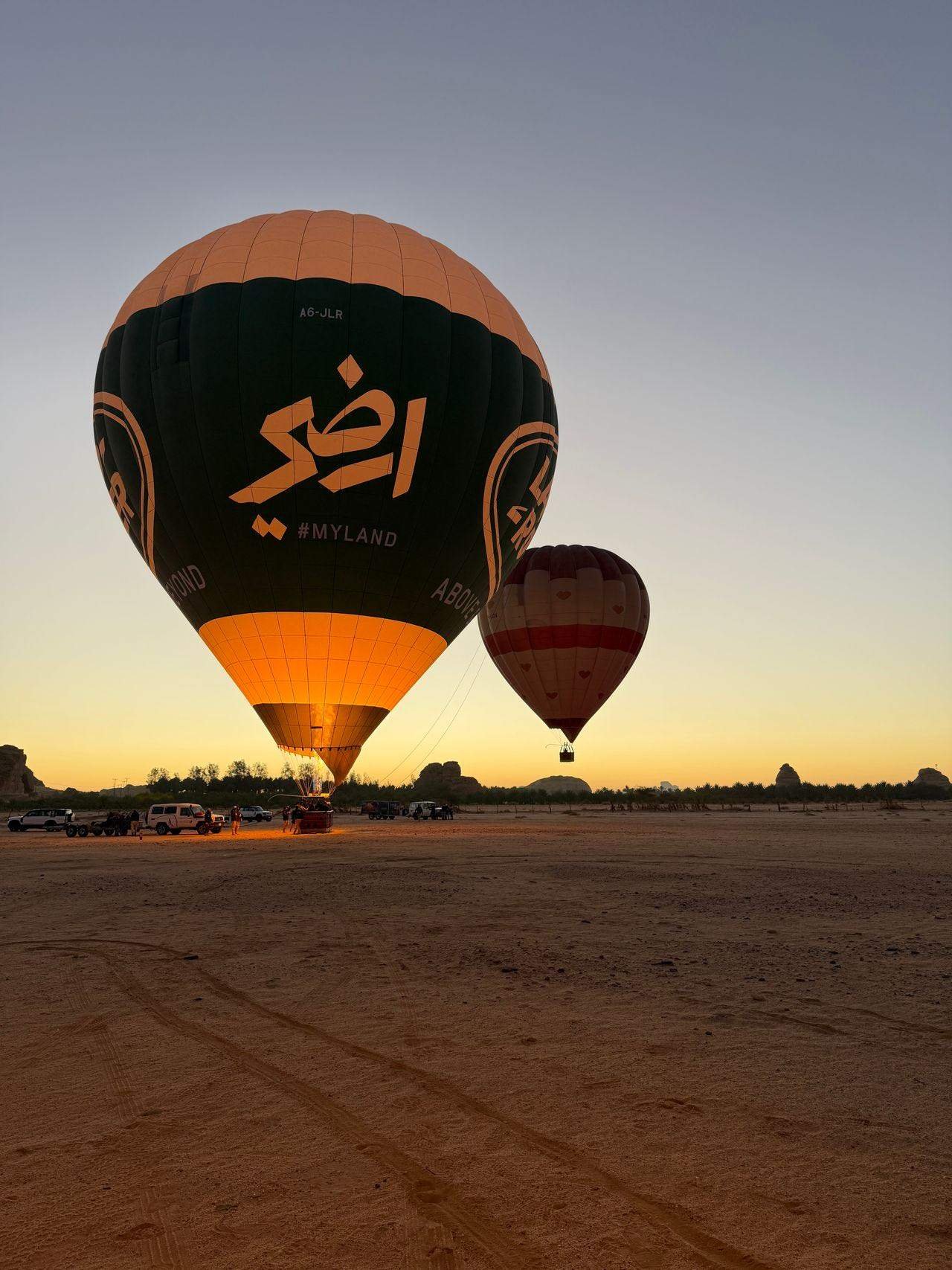
AlUla is a desert destination with pronounced seasonal variation. Unlike beach resorts where a rainy season is the main deterrent, AlUla’s constraint is heat - summer temperatures regularly exceed 40°C, making the outdoor experience at Hegra, Elephant Rock and the canyon walks impractical. The cool season between November and March is not just better - it’s genuinely the only window most visitors would want to travel.
The Cool Season: November to March
November is the start of the good season. Temperatures sit at 20–26°C during the day, dropping to 12–15°C at night. The Winter at Tantora festival is not yet in full swing (that begins in December), but all the heritage sites are open, crowds are lighter than December–January, and accommodation is slightly more available. Good choice for travellers who want the climate without peak pricing.
December is peak season and the most event-dense month. Winter at Tantora opens (exact date varies, typically mid-December), bringing concerts at Maraya Concert Hall, Hegra by Night tours, hot air balloon flights, and culinary events. Temperatures are 15–22°C - cool enough for a comfortable full day outdoors. Sunsets over the Harrat Uwayrid basalt landscape are exceptional in December light.
January is the coldest month - 12–20°C days, sometimes 6–10°C at night. Bring a down jacket or fleece for evening outdoor events. January is fully within the Winter at Tantora season and is when the festival’s most significant music acts typically perform. The Hegra archaeological site is at its best - clear skies, no heat haze on the rock faces.
February is still good. Temperatures begin to climb slightly (18–24°C days) but remain very comfortable. The festival runs until early March. February has somewhat fewer visitors than December–January, making it a strong option for a less crowded visit.
March sees the festival draw to a close (typically by mid-month). Temperatures are warming. The second half of March is transitional - still pleasant for mornings and evenings, but afternoons are getting hot. The early part of March remains a valid travel window.
The Summer Months: April to October
April and May are transitional. Temperatures in April are 25–32°C, rising to 35–40°C in May. The outdoor sites are still accessible in the early morning, but afternoon heat makes extended exploration uncomfortable.
June, July, August are the avoidance months - 42–46°C during the day, with ground temperatures higher. Most upscale camps reduce or close operations. Hegra remains technically open but the experience is severely compromised. This is when most AlUla resorts perform maintenance.
September and October are shoulder months. September is still hot (38–43°C) but October drops noticeably - by late October it’s 28–34°C, manageable with early starts. October is a reasonable option for those with no flexibility, but November is materially better.
Month-by-Month Summary
| Month | Avg High °C | Avg Low °C | Festival Activity | Crowds | Value |
|---|---|---|---|---|---|
| January | 20 | 8 | Winter at Tantora peak | High | Mid |
| February | 23 | 10 | Winter at Tantora | Moderate | Good |
| March | 28 | 13 | Festival ending | Moderate | Good |
| April | 33 | 18 | None | Low | Best |
| May | 39 | 23 | None | Very low | N/A |
| June | 43 | 27 | None | Minimal | N/A |
| July | 44 | 28 | None | Minimal | N/A |
| August | 43 | 28 | None | Minimal | N/A |
| September | 40 | 25 | None | Low | N/A |
| October | 33 | 19 | None | Low | Better |
| November | 26 | 13 | None yet | Moderate | Very good |
| December | 20 | 9 | Winter at Tantora | High | Mid |
What’s on During Winter at Tantora
The festival, organised by the Royal Commission for AlUla (RCU), typically includes:
- Maraya Concerts: International and Arabic artists performing inside or outside the Maraya Concert Hall (the world’s largest mirrored building). Tickets from SAR 100–500+ depending on artist
- Hegra by Night: Guided evening tours of the Nabataean tombs with illuminated installations - one of the most striking experiences in Saudi Arabia. Tickets from SAR 200
- Hot air balloon flights: Dawn flights over the sandstone landscape and the AlUla valley, approximately SAR 800–1,200 per person
- Culinary events: Chef residencies and food experiences in the valley
- Desert experiences: Guided star-gazing, dune drives and heritage walks
Book via experiencealula.com or through the Experience AlUla app. Programming is released incrementally throughout the season - check monthly for new dates.
AlUla Accommodation in Winter
AlUla has limited accommodation stock, and quality options fill up fast in December and January.
Luxury: Banyan Tree AlUla (SAR 1,500–2,500/night) - tented villas in the AlJadidah arts village, minutes from Maraya. Habitas AlUla (SAR 1,200–2,000/night) - canvas tents on the valley floor. Both are exceptional but book 8–12 weeks ahead for December.
Mid-range: Shaden Resort AlUla (SAR 600–900/night). Tilal Alula (SAR 500–750/night).
Budget: Limited - AlUla is not a budget destination. A few apartment-style properties are available in AlUla town from SAR 250–400/night. Hotel stock outside the resort properties is limited.
For more on the financial side of a trip, see our AlUla trip cost guide.
Getting to AlUla in Peak Season
Flights: SAUDIA operates direct flights from Riyadh (RUH) and Jeddah (KAIA) to AlUla (ULH). Additional services operate during Winter at Tantora. Prices approximately SAR 300–700 one-way as of 2026, depending on timing. Book early - seats on the limited ULH routes sell out in December. Search international flights to Saudi Arabia to find the best fares into Riyadh or Jeddah before connecting to AlUla.
Driving from Medina: AlUla is approximately 330 km north of Medina via Highway 375 - around 3.5 hours. This is a viable option for Umrah pilgrims extending their trip. The road through the basalt landscape is one of Saudi Arabia’s more scenic drives.
Car rental at AlUla airport: Available but limited - pre-book before arrival in December or January.
For more detail on what to do when you arrive, see our AlUla activities guide, Hegra tickets guide and AlUla 3-day itinerary.
Plan Your Trip
✈️ Book your flights to Saudi Arabia 🛡️ Get travel insurance 📱 Stay connected with an eSIM 🚗 Rent a car