Saudi Arabia has undergone significant social reform since 2017, and many of the rules that defined visits a decade ago have been removed or eased. But some laws remain strictly enforced - and getting them wrong is not a tourist inconvenience, it is a legal matter. This guide covers dress expectations, alcohol laws, Ramadan rules, photography restrictions, and social conduct clearly and without softening the edges.
Dress Code: Men
Men face fewer formal restrictions than women, but standards still apply:
- General rule: Shorts are acceptable in malls, tourist areas, and international hotels. T-shirts are fine throughout.
- Mosques: Long trousers and a shirt covering the shoulders are required. Shorts are not appropriate inside mosques.
- Beaches and resort areas: Swimwear is fine at private beaches and pool areas. Not appropriate in public spaces away from the beach.
- Traditional areas: In Buraydah (Qassim province), Ha’il, and other more conservative cities, wearing longer trousers and avoiding sleeveless tops is advisable. This is cultural consideration, not legal obligation.
Search hotels in Saudi Arabia on Booking.com
Saudi men in the country’s heartland typically wear the traditional white thobe (ankle-length robe) and ghutrah (headdress). Visitors are not expected to wear traditional dress, but dressing neatly and conservatively in these areas is a straightforward courtesy.
Dress Code: Women
The abaya requirement was removed in 2019. Foreign women are no longer legally required to wear an abaya or headscarf in public.
In practice, the standard expected of female visitors is:
- Loose clothing covering arms and legs throughout the country
- No tight-fitting or sheer fabrics in traditional and public settings
- Headscarf required when entering any mosque
- Headscarf advisable in conservative cities (Buraydah, Ha’il, rural Najd) - not mandatory, but noticeably more comfortable
Jeddah vs. Riyadh differences:
Jeddah, as a Red Sea port city with a long history of international trade, has consistently more relaxed social norms. Women visitors report significantly less attention to dress standards in Jeddah’s modern areas and Al-Balad district. Riyadh follows suit in its newer entertainment and business districts (King Abdullah Financial District, Riyadh Season venues, Diriyah). Away from those zones - in older residential Riyadh neighbourhoods - conservative dress is more important.
Resort areas: Red Sea resort developments (NEOM’s Sindalah Island, the Red Sea Project resorts at Umluj and Sharma) are international-facing developments where swimwear at pools and beaches is appropriate. Saudi Arabia’s own Vision 2030 tourism projects were specifically designed with international standards in mind.
For women-specific guidance including ride-hailing options, women-only sections, and solo travel logistics, see our women travelling to Saudi Arabia guide.
Alcohol Laws
This is the area where Saudi Arabia has not changed and will not: alcohol is completely prohibited.
- No alcohol is sold anywhere in Saudi Arabia - not in international hotels, duty-free zones, resort areas, or private clubs
- Possession of alcohol is a criminal offence
- Consumption is a criminal offence
- Attempting to import alcohol is a criminal offence - bottles in checked luggage have been confiscated at Riyadh and Jeddah airports
- Penalties range from fines to deportation for tourists; Saudi nationals and residents face more severe consequences
There are no exceptions for non-Muslim visitors. There is no “hotel bar” caveat. Any source suggesting otherwise is outdated or incorrect.
Alternatives: Non-alcoholic beverages are sophisticated and widely available in Saudi Arabia. Saudi-produced non-alcoholic malt drinks (MOUSSY, Barbican) are common. Specialty coffee culture is genuinely strong in Riyadh and Jeddah - the specialty café scene rivals many European cities.
Ramadan Rules for Visitors
Ramadan is the Islamic month of fasting, during which Muslim adults abstain from food, drink, and smoking between dawn and sunset. The dates shift approximately 11 days earlier each year; for 2027, Ramadan is expected to start around late February.
What this means for visitors:
- Eating and drinking in public during daylight hours is prohibited for everyone - including non-Muslim tourists - in public spaces. This includes chewing gum, smoking, and drinking water on the street.
- In your hotel room or in designated areas (some restaurants have screened areas for non-fasting guests), eating and drinking are fine.
- Many restaurants are closed during the day and open after sunset (Iftar). Street food and traditional food culture becomes the centre of social life after dark.
- The atmosphere changes significantly. Business hours are reduced. Shopping malls and entertainment venues operate on shifted hours (often 9pm–3am). Expect quieter days and busy, festive nights.
- Dress standards tighten during Ramadan. Both men and women should ensure covered arms and legs even in areas where they might otherwise relax dress standards.
- Music in public spaces is typically limited or absent during Ramadan.
Visiting during Ramadan is an entirely valid travel experience - the evening atmosphere around Iftar is genuinely special - but the practicalities require planning. Confirm restaurant opening hours for any booking made during this period.
Photography Restrictions
Saudi Arabia has specific and enforced rules around photography:
What you cannot photograph:
- Government buildings (ministries, court buildings, official offices)
- Military installations, checkpoints, and border posts
- Royal palaces and their surrounding areas
- People without their explicit permission - particularly women in public spaces
- Saudi Aramco facilities
- Airports in some configurations (interiors at most airports are restricted)
What you can photograph:
- Historic and archaeological sites (Hegra, Diriyah, Al-Balad, Al-Ula Valley) - photography is explicitly encouraged at these sites
- Landscapes, deserts, mountains, coastline
- Yourself and your companions
- Mosques from outside, and inside if you have permission from staff
Drones require a permit from the General Authority of Civil Aviation (GACA). This process requires advance application - it is not available on arrival. Many commercial tour operators in AlUla have drone permits and include aerial footage as part of their service.
The practical rule: If in doubt whether something is photographable, ask. Saudi hospitality extends to a straightforward explanation, and most people would rather explain than have a photograph taken without consent.
Public Displays of Affection
Saudi Arabia is not alone among conservative countries in discouraging public displays of affection, but it is stricter than many:
- Holding hands between married partners is tolerated in modern settings (malls, entertainment districts, resort areas), particularly in Jeddah
- Kissing or embracing in public spaces is not appropriate anywhere and could result in a formal warning from religious police (the Commission for the Promotion of Virtue and Prevention of Vice) in more conservative areas - though their enforcement powers were significantly reduced in 2016
- Unmarried couples can travel and stay in Saudi Arabia; hotels book rooms to unmarried international couples without requiring proof of marriage in tourist-oriented properties
- Same-sex relationships are not legally recognised and public same-sex displays of affection carry legal risk
Religious Site Etiquette
General rules for all mosques:
- Remove shoes before entering
- Women wear a headscarf; dress covering arms and legs
- Men wear full-length trousers; no shorts
- Speak quietly inside and near the entrance
- Do not walk in front of someone who is actively praying
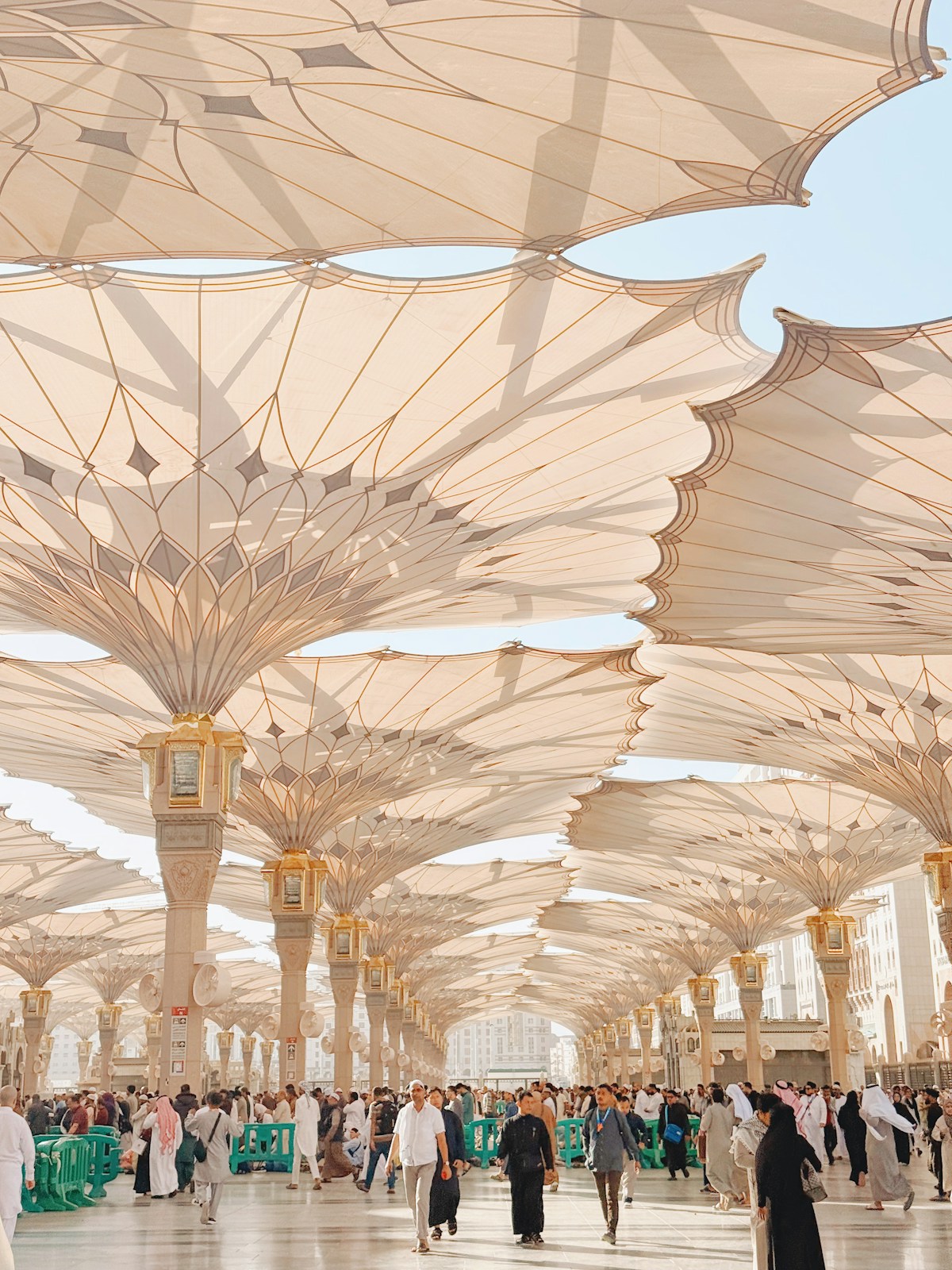
- Non-Muslims cannot enter the Grand Mosque in Mecca (Masjid al-Haram) or the immediate inner sanctum of the Prophet’s Mosque (Masjid an-Nabawi) in Medina. The outer plaza of Masjid an-Nabawi can be accessed by non-Muslims.
- Most other mosques throughout Saudi Arabia welcome respectful visitors outside the five daily prayer times
Prayer times: The five daily prayer times - particularly the midday Dhuhr prayer and the late afternoon Asr - mean that shops, restaurants, and some tourist sites briefly close (typically 15–30 minutes). More conservative cities observe this more strictly than Jeddah. Plan around prayer times for early mornings and midday activities in particular.
Riyadh vs Jeddah: The Cultural Divide
Visitors frequently note the difference between Saudi Arabia’s two largest cities. Jeddah - coastal, historically a trading port, ethnically diverse - has consistently looser social norms. Riyadh - the capital, inland, historically the Al Saud heartland - is more conservative overall, though this changes noticeably district by district.
A useful approximation: in Jeddah, the rules above are the formal boundaries. In Riyadh, treat them as the outer limit and lean toward conservative in traditional neighbourhoods. In resort areas on the Red Sea coast, international standards broadly apply.
Alongside your packing list, pick up a Saudi eSIM before you fly so you have data from arrival, and take out travel insurance that covers both medical costs and trip cancellation.
See Also
- Packing guide for Saudi Arabia - specific clothing recommendations by season
- Women travelling to Saudi Arabia - female-specific advice, women-only spaces, and ride-hailing options
- Is Saudi Arabia safe? - safety context for tourists
- First time in Saudi Arabia - complete planning checklist
- Saudi Arabia visa guide - eVisa requirements before you travel
Plan Your Trip
✈️ Book your flights to Saudi Arabia 🛡️ Get travel insurance 📱 Stay connected with an eSIM 🚗 Rent a car