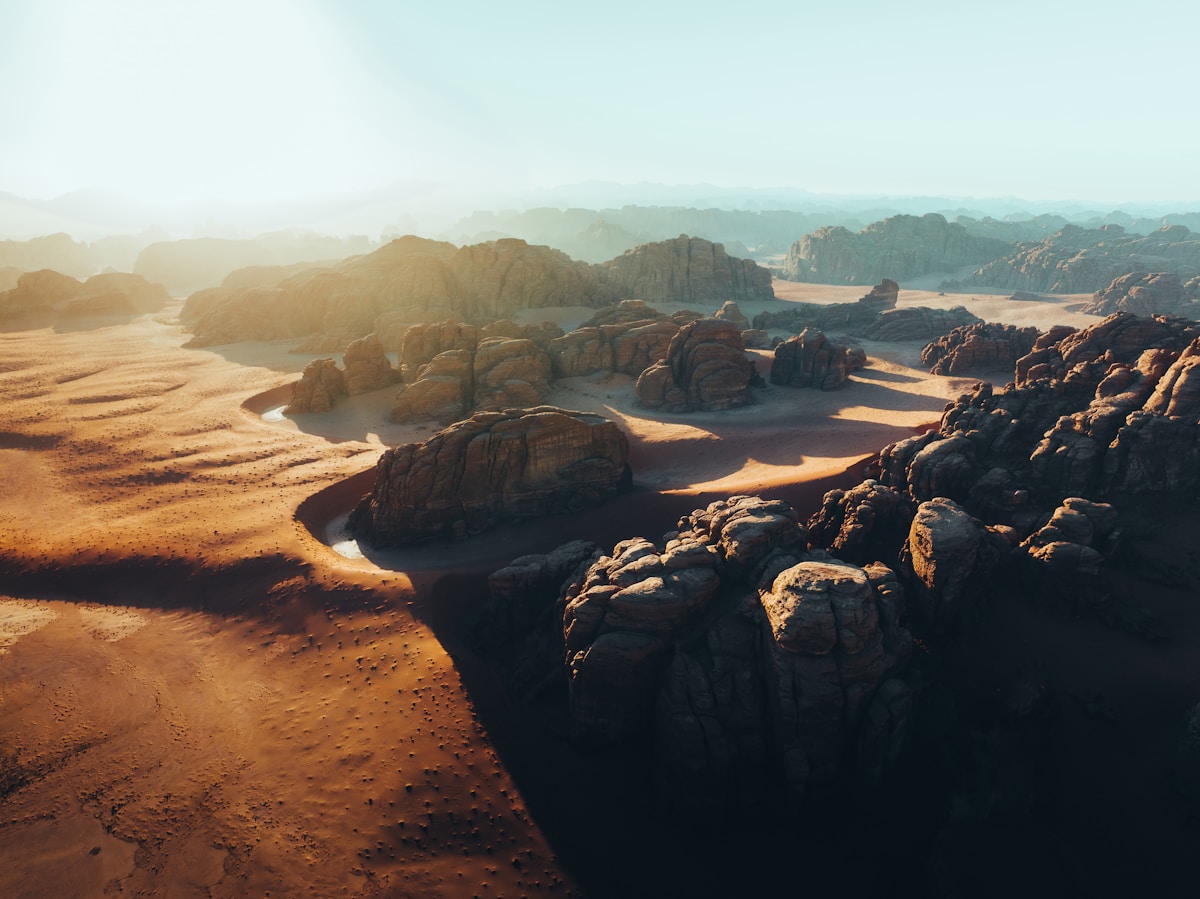
Saudi Arabia and the UAE are neighbours on the Arabian Peninsula, but they represent very different propositions for international travellers. The UAE - primarily Dubai and Abu Dhabi - has spent three decades building one of the world’s most polished tourism infrastructures, with Western-friendly hotels, restaurants, nightlife, and attractions. Saudi Arabia only opened broadly to international tourism in 2019 and is still in the early chapters of its visitor story - which is precisely what makes it compelling. Ancient Nabataean cities, dramatic desert canyons, and a culture encountering tourism largely for the first time.
Quick Verdict
| Category | Saudi Arabia | UAE (Dubai/Abu Dhabi) |
|---|---|---|
| Tourism infrastructure | Developing | World-class |
| Ancient history | Winner | - |
| Modernity / skylines | - | Winner |
| Alcohol availability | None | Widely available |
| Value for money | Better | Expensive |
| Nightlife | Very limited | Extensive |
| Authenticity | Winner | - |
| Ease of entry | Moderate (e-visa) | Easy (visa-free many) |
Choose UAE if you want maximum comfort, infrastructure, nightlife, and a guaranteed experience. Choose Saudi Arabia if you want to be among the first wave of international visitors to an extraordinary country and are comfortable without alcohol and with more conservative social norms.
Tourism Maturity
This is the defining difference. Dubai has been a tourism destination since the 1990s and has spent billions developing the infrastructure to handle tens of millions of visitors. Abu Dhabi has followed a similar but more measured path. Both cities have world-class hotels, transport links, attractions, and English-speaking service at every level.
Saudi Arabia only issued tourist visas at scale from September 2019, interrupted almost immediately by the pandemic. The country has been building its tourism infrastructure at remarkable speed - Riyadh, Jeddah, and AlUla all have international-grade hotels, improved signage, and growing numbers of English-speaking guides. But systems are still being built. Some attractions lack clear booking processes; transport between cities requires planning; and some areas outside the main tourist centres have limited English.
The flip side: Saudi Arabia right now has what Dubai had in the 1990s - the energy of a place opening up, genuinely warm local hospitality, and the satisfaction of visiting somewhere before the crowds arrive.
Cost Comparison
UAE (Dubai/Abu Dhabi): Dubai is an expensive destination. A realistic mid-budget trip including a 4-star hotel, meals, and attractions runs approximately USD 150–200/day per person. Budget hotels in areas like Deira or Bur Dubai can reduce accommodation costs to USD 60–80/night, but transport, food in restaurants, and alcohol (subject to a 30% municipality tax on alcoholic beverages) add up quickly. The Burj Khalifa observation deck costs AED 149–169 (approximately USD 40–46); the Sheikh Zayed Grand Mosque in Abu Dhabi is free.
Saudi Arabia: A mid-budget trip runs approximately USD 100–150/day, though this varies significantly by destination. Riyadh has a growing selection of mid-range hotels at SAR 250–500/night (USD 65–135). Food at a local Saudi restaurant - kabsa rice and grilled meats - can cost as little as SAR 25–50 (USD 7–13) per person. The lack of alcohol removes one significant cost category entirely. Entry to Diriyah (the original Al-Saud capital) costs approximately SAR 95 (USD 25); Hegra in AlUla runs SAR 195 (around USD 52 as of 2026).
Saudi e-visa: Most Western passport holders pay approximately SAR 300 (around USD 80) for the tourist e-visa. UAE is visa-free for most Western passports.
Winner: Saudi Arabia on day-to-day costs; UAE on entry ease.
Must-See Experiences
UAE
Burj Khalifa, Dubai: The world’s tallest building (828m) offers two observation decks. At the Top on Level 124 costs AED 149–169 (approximately USD 40–46); the higher Level 148 experience runs AED 379+. Book online to avoid premium walk-up prices. The base-level Dubai Fountain show (free to watch) runs every evening.
Sheikh Zayed Grand Mosque, Abu Dhabi: Free to enter, this is one of the world’s largest mosques and architecturally extraordinary - marble, gold, and the world’s largest hand-knotted carpet. Modest dress required (free abayas provided at the entrance). Visit around sunrise or sunset for the best light and smaller crowds.
Palm Jumeirah and the Dubai Mall: The Palm is best understood from above (helicopter tours from AED 650) or from the Atlantis resort at its tip. Dubai Mall (free entry) surrounds one of the world’s largest malls with an indoor aquarium (AED 120), ice rink, and the Dubai Fountain views.
Abu Dhabi’s Louvre: A genuinely excellent art museum housed in a Jean Nouvel building (AED 63, approximately USD 17). The permanent collection spans civilisations from ancient times to the contemporary.
Saudi Arabia
AlUla and Hegra: Saudi Arabia’s secret weapon is AlUla - an ancient Nabataean city whose carved sandstone tombs and rock formations are comparable to Petra in Jordan. Hegra (Madain Salih) is the largest Nabataean city outside Petra, and unlike Petra, it is still largely undiscovered by mass tourism. Entry to Hegra costs approximately SAR 195 (around USD 52 as of 2026); book through the Experience AlUla app or website. Accommodation in AlUla ranges from luxury desert resorts (SAR 1,500–3,000/night) to mid-range hotels in AlUla town.
Diriyah, Riyadh: The original seat of the Saudi state, now undergoing a major UNESCO-listed restoration. The At-Turaif district (SAR 95 entry) is a remarkable mud-brick city where the Al-Saud dynasty was founded in the 18th century. Evening lighting makes it spectacular after dark.
Al-Balad, Jeddah: The UNESCO-listed historic district of Jeddah contains six centuries of coral-stone architecture, carved wooden rawasheen screens overhanging narrow lanes, and the old Red Sea merchants’ houses. Free to explore; the Sharbatly House museum offers deeper context.
Edge of the World (Jebel Fihrayn), Riyadh: A canyon escarpment 90 minutes’ drive from Riyadh where the terrain drops 300m to a flat plain stretching to the horizon. No entry fee; bring your own water and sun protection. Best visited at sunrise or late afternoon.
The Red Sea: Saudi Arabia’s Red Sea coast is world-class for diving and snorkelling - and remains almost entirely unknown to international divers who default to Egypt. Yanbu, Farasan Islands, and the new NEOM development zone all offer outstanding coral. The Saudi Red Sea has had far less diving pressure than the Egyptian coast.
Dress Code
UAE (Dubai): Relatively relaxed in tourist areas. Swimwear on beaches and at hotel pools is normal. Revealing clothing in shopping malls or souks draws negative attention; shorts and t-shirts are broadly fine. During Ramadan, more conservative dress is expected in public.
Saudi Arabia: Women are no longer legally required to wear an abaya, but modest dress (covered shoulders, arms, and knees) is recommended and widely respected, particularly outside Riyadh and Jeddah. Saudi women wear abayas as a cultural norm even if not legally compelled. Men should avoid wearing shorts in religious or conservative areas. The atmosphere in Riyadh and Jeddah is noticeably more relaxed than five years ago.
Alcohol
UAE (Dubai/Abu Dhabi): Alcohol is widely available in hotels, licensed restaurants, and bars. A beer in a Dubai hotel bar costs approximately AED 35–55 (USD 10–15). Supermarkets do not sell alcohol; it is available at government-licensed bottle shops.
Saudi Arabia: Alcohol is completely prohibited - no exceptions, no hotel bars, no alcohol on domestic flights. This is a firm legal and religious rule. Travellers reliant on alcohol as part of their travel experience will find this a significant constraint.
Winner: UAE for those who drink; Saudi for travellers comfortable without.
Food
Saudi Arabia excels at traditional cuisine in authentic settings. Kabsa - slow-cooked rice with lamb, chicken, or camel, spiced with cardamom and dried lime - is the national dish, eaten communally from large platters. Mandi (meat slow-cooked in an underground oven) is extraordinary. Jareesh (crushed wheat cooked with butter and saffron) is a heritage dish found at traditional restaurants. Eating at a traditional Saudi mathaf (restaurant) where guests sit on floor cushions is one of the most culturally rich experiences the country offers.
UAE offers every world cuisine in abundance. Dubai has one of the world’s highest concentrations of restaurants per capita - Japanese, Indian, Lebanese, Italian, Peruvian, and everything in between. Al Murraqabat in Deira has excellent and affordable South Asian street food. The Gold Souk area has cheap Arabic cafeteria food from AED 15–25.
Winner: Saudi Arabia for authentic local cuisine; UAE for variety.
Getting There and Around
Both countries are major international aviation hubs. Dubai International is one of the world’s busiest airports, with connections to virtually every city. Saudi Arabia’s three main airports (Riyadh, Jeddah, Dammam) are all expanding rapidly - Riyadh’s new King Salman International Airport will be one of the world’s largest when complete.
Within UAE, the Dubai Metro (AED 3–7.50 per journey) is clean, air-conditioned, and covers most tourist areas. Abu Dhabi is 90 minutes from Dubai by road; taxis are plentiful but Uber is the most reliable option.
Within Saudi Arabia, internal flights between Riyadh, Jeddah, and AlUla are essential given the country’s scale (it is the size of Western Europe). Saudia and flynas cover the main routes cheaply - AlUla to Riyadh from approximately SAR 150–300 booked in advance. Car hire is increasingly practical but requires an international licence.
Who Should Choose Each?
Choose UAE if you:
- Want maximum infrastructure, comfort, and nightlife
- Are on a business trip or short break (Dubai is extremely efficient)
- Drink alcohol and want it readily available
- Are visiting the Middle East for the first time and want a smooth introduction
Choose Saudi Arabia if you:
- Are interested in archaeology, history, and genuine cultural immersion
- Want to visit a destination before mass tourism arrives
- Are comfortable with conservative social norms
- Are specifically interested in AlUla, Diriyah, or the Saudi Red Sea
Before you travel, compare flights to Saudi Arabia, arrange travel insurance that covers the region, and pick up a Saudi eSIM so you have data from the moment you land.
Final Verdict
Dubai and Abu Dhabi are exceptional at what they do - they have engineered a tourism experience that is seamless, modern, and reliably excellent. But Saudi Arabia offers something increasingly rare in modern travel: the genuine frontier experience of a country opening up in real time.
AlUla alone - Nabataean tombs carved into rose-gold sandstone, dramatic rock formations, and luxury desert camps against a near-star-studded sky - is one of the most impressive travel destinations to emerge anywhere in the last decade. For travellers who have seen Dubai and Abu Dhabi, Saudi Arabia is the more compelling next step in the region.
For first-time Middle East visitors, the UAE’s ease wins by default. For experienced travellers looking for something genuinely new, Saudi Arabia is the more interesting answer.
More Saudi Comparisons
- Riyadh vs Dubai — capital vs capital: how the two Gulf city giants compare on culture, cost, and nightlife
- Riyadh vs Jeddah — Saudi Arabia’s two largest cities compared: inland capital versus Red Sea port
- AlUla vs NEOM — Saudi Arabia’s ancient heritage site versus its most ambitious megaproject
- Red Sea vs Arabian Gulf — Saudi Arabia’s two coastlines: diving and reefs versus family beaches
Plan Your Trip
✈️ Book your flights to Saudi Arabia 🛡️ Get travel insurance 📱 Stay connected with an eSIM 🚗 Rent a car