Power in Saudi Arabia is reliable and the kit is straightforward, but the details trip up many visitors. The country runs a mix of socket types, and a few older buildings still use a different voltage from the rest. This guide covers what we have found works, so you buy the right adapter once. For the wider packing list, see our what to pack for Saudi Arabia guide.
Plug types, voltage and frequency at a glance
| Item | Saudi Arabia |
|---|---|
| Standard voltage | 230V |
| Frequency | 60Hz |
| Main plug and socket type | Type G (three rectangular pins, UK style) |
| Also found | Type C and F (two round pins), some Type A and B |
| Older wiring | Some 127V circuits, mainly Western Province buildings |
Saudi Arabia has been moving to a single national standard of 230V and Type G sockets, and the newer cities and developments follow it closely. Anything built recently, including new hotels in Riyadh, Jeddah, NEOM and AlUla, will almost always be 230V with Type G or universal sockets. Older apartments and some guesthouses can still have a mix. Information on exact conversion progress varies by source, so treat the table as a strong guide, not a guarantee, and read the label next to a socket when in doubt.
Sockets in Saudi Arabia: what you will actually find
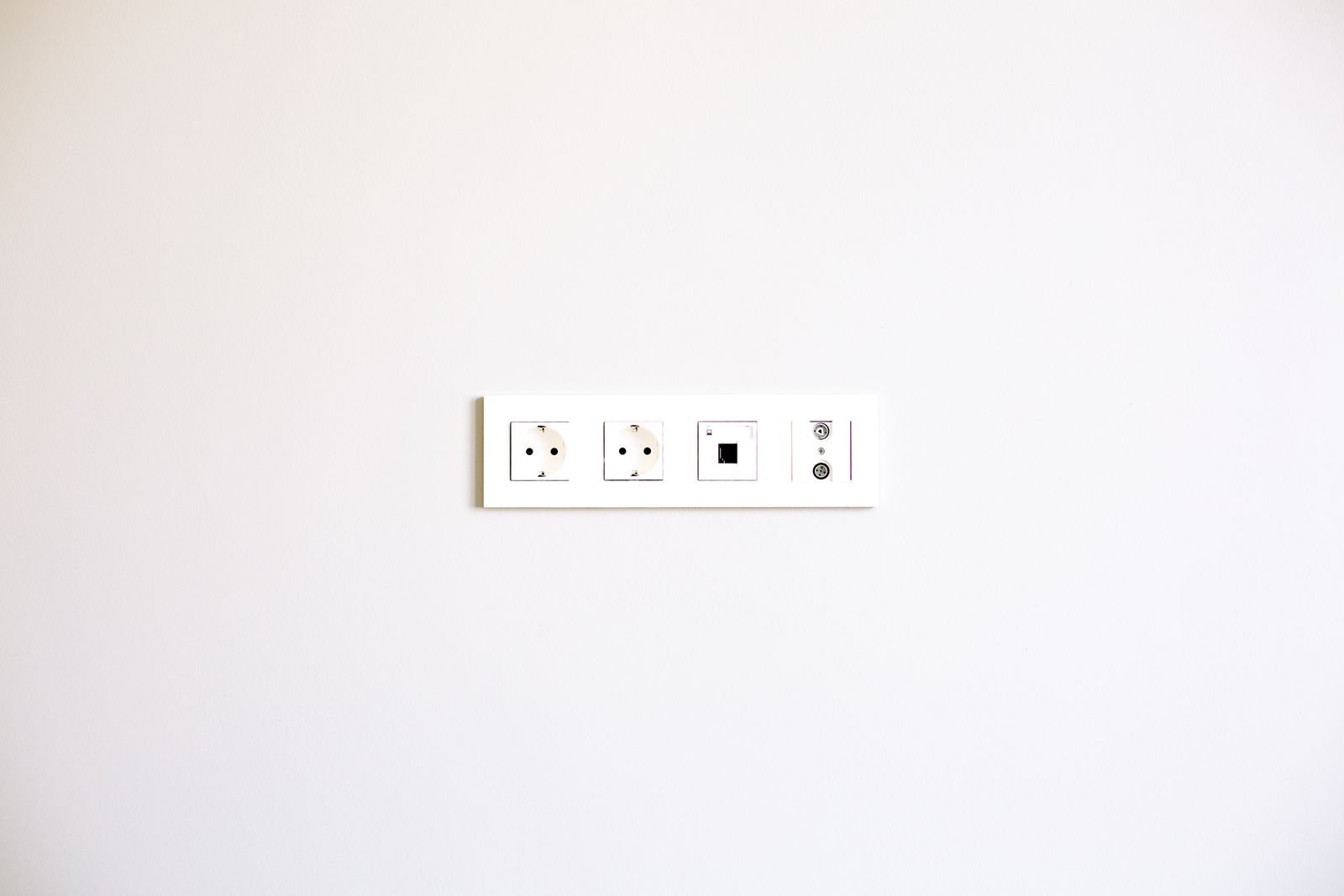
Visitors searching for the power outlet type usually want one answer: expect Type G in anything modern, and a universal socket in most hotels. In practice that means three situations. In new hotels, malls and airport lounges, wall sockets are Type G, often with a switch beside each one that must be on before the plug delivers power. In mid-range and older hotels, a universal multi-socket plate is common, taking Type A, C, F and G plugs in one face. In older rented apartments and guesthouses you may find Type C or F round-pin sockets, sometimes on 127V circuits. Check the voltage label before plugging in a hair dryer or kettle.
Hotels in Riyadh and Jeddah usually place sockets at the desk and bedside. Bathroom shaver sockets are often 110-120V, so do not use them for a 230V device. If an adapter is the only thing you forget, ask reception first, then try Extra or Jarir, which stock Type G adapters at roughly SAR 30-60 as of 2026.
Which adapter to pack
The simplest answer is a Type G adapter, or a good universal one with a built-in fuse. Here is how it breaks down by home country:
- UK, Ireland, Singapore, Malaysia, Hong Kong: your Type G plugs fit directly. Bring nothing extra except maybe a short extension lead.
- Continental Europe (Type C, E, F): a two-pin Type C plug is thin enough to fit Type C or F sockets, but a Type G socket has a safety shutter. Carry a Type C to Type G adapter or a universal one. Hotels often lend adapters at reception, though not reliably.
- United States and Canada (Type A, B): you need a plug adapter, and also check each device for voltage (see the next section).
- Australia and New Zealand (Type I): a universal adapter works. Some Australian chargers are dual voltage, but check the label.
- India, South Asia: Type D plugs do not fit directly. A universal adapter is the safest bet.
A universal multi-plug adapter with USB-C ports covers every case, and one with a 13A fuse is a better choice than a bare plug converter. Buy before you travel. Airport shops in Riyadh and Jeddah sell them, but at a premium. Budget around SAR 30-60 at a local electronics store such as Extra or Jarir Bookstore, as of 2026, for a basic Type G adapter, and more for a universal one with USB.
Voltage: when you need a converter
A plug adapter changes the shape of the plug. It does not change the electricity. This is the part people get wrong.
Most modern electronics are dual voltage, usually printed as “100-240V, 50/60Hz” on the charger. That covers phones, tablets, laptops, cameras, e-readers, electric toothbrushes and power banks. These need only a plug adapter.
Heat-based devices are the risk. Hair dryers, curling tongs, straighteners, electric shavers and travel kettles are often single voltage. A device rated for 110-120V plugged into a 230V socket can burn out in seconds or become dangerous. Options:
- Check the label. If it says 100-240V, you are fine.
- If not, leave it at home and use the hotel hair dryer, which most mid-range and upscale hotels provide.
- Buy a cheap local dryer on arrival rather than carrying a heavy voltage transformer.
The 60Hz frequency is the same as North America and does not affect modern electronics. Only old motorised or clock-driven devices from 50Hz countries may run slightly fast.
Charging on the road
Charging is easy in cities. Hotels, shopping malls such as Kingdom Centre in Riyadh and Red Sea Mall in Jeddah, and most cafes have sockets. Newer airport terminals at Riyadh King Khalid and Jeddah King Abdulaziz have charging points at the gates, and the Haramain high-speed railway offers seat power. In the desert and mountain areas, including AlUla, Edge of the World and the Asir hills, charging options are thin, so bring a power bank and a car charger if you plan to hire a car.
Airline rules for power banks are strict. Most airlines require them in carry-on luggage only, with a capacity limit (commonly 100Wh), and several now restrict in-flight use. Check your carrier’s current policy before you fly.
Remote work and connectivity
If you work on the road, power is the easy part. Saudi grids are stable, and we have seen no routine outages in major cities, as covered in our digital nomad guide. Pair the right adapter with a local data plan, and our Saudi Arabia eSIM guide explains the options so your phone stays charged and online.
Packing checklist
- One universal adapter with Type G pins (or two, so you can charge two devices)
- A short multi-socket extension lead or USB wall charger with multiple ports
- A power bank in carry-on, under airline limits
- A car charger if you are renting
- Dual-voltage chargers only, and leave single-voltage hair tools at home
Once the plugs are sorted, spend the saved time on the trip itself: browse Riyadh tours to plan your first days.