Understanding local customs makes a meaningful difference in Saudi Arabia. The country has changed rapidly since Vision 2030, and many rules that once applied to tourists have been relaxed — but the culture’s deep roots in Islamic tradition and Arab hospitality remain central to daily life. This guide covers what you need to know before you arrive.
Etiquette at a glance, using the figures covered in this guide:
| Topic | Details |
|---|---|
| Greeting | Say as-salamu alaykum; a handshake is fine between men |
| Men and women | Do not offer your hand to a Saudi woman unless she offers hers first |
| Dress | Cover shoulders and knees in public; shoes off and long trousers for men in mosques |
| Restaurant tips | 10% is standard; many venues already add a 5-15% service charge |
| Porters and housekeeping | SAR 5-10 per bag and SAR 10-20 per night |
| Tour guides | SAR 50-100 for a half day, SAR 100-200 for a full day |
Greetings and Social Customs
The standard Arabic greeting is as-salamu alaykum (peace be upon you), and responding with wa alaykum as-salam (and upon you peace) is always appreciated. Saudis greet each other warmly: men often shake hands and may touch noses or kiss cheeks, though this is between friends and family. As a foreign visitor, a handshake is appropriate between men.
Between men and women who are not related, physical contact is generally avoided. Do not extend your hand to a Saudi woman unless she offers hers first. Nodding and a warm greeting is entirely acceptable.
Titles matter. Addressing someone as “Sheikh,” “Doctor,” or their professional title before their first name shows respect. “Brother” (akh) and “sister” (ukht) are commonly used as informal terms of address.
Business card exchanges follow a specific protocol: present and receive cards with the right hand (or both hands), take a moment to read the card before setting it down, and never write on or fold it in front of the person.
Dress Codes
Saudi Arabia’s dress code has relaxed significantly, but modest dress is still expected in most settings. Our full dress code guide covers every scenario in detail. In summary: Related reading: Tipping in Saudi Arabia.
- At malls, restaurants, and public spaces: Cover your shoulders and knees. Loose, lightweight clothing works well.
- At mosques: Women must cover their hair and wear an abaya or equivalent full-length covering. Men should be in long trousers. Remove shoes before entering.
- At Al-Masjid al-Haram (Mecca) and Al-Masjid an-Nabawi (Medina): Mecca is closed to non-Muslims, and the haram zone around Masjid an-Nabawi in Medina is closed to them too. The surrounding areas require conservative dress.
- At beach resorts and waterparks: Sites such as Nofa Wildlife Park, Al Hamra Beach near Jeddah, and luxury resorts in NEOM and the Red Sea Project have more relaxed dress standards.
- At restaurants and hotels: Smart casual is acceptable at most venues. Fine dining establishments in Riyadh and Jeddah have no specific religious dress requirement, though appropriate dress is always expected.
Tipping Culture
Tipping in Saudi Arabia is appreciated but not embedded in the culture the way it is in North America. Service charges of 5-15% are now automatically added at many restaurants, particularly in hotel chains and upscale venues in Riyadh and Jeddah. Always check the bill.
Where no service charge applies:
- Restaurants: 10% of the bill is standard and well-received
- Hotel porters: SAR 5-10 per bag
- Hotel housekeeping: SAR 10-20 per night is appreciated
- Taxi and ride-hailing (Uber, Careem): Not traditionally expected, though rounding up is common
- Tour guides: SAR 50-100 for a half-day tour; SAR 100-200 for a full day
- Petrol station attendants: SAR 2-5 is customary
Do not tip at government offices, official government services, or security checkpoints.
Photography Rules
Photography is a genuine minefield in Saudi Arabia, and getting it wrong can cause serious offence or legal trouble.
Always ask before photographing people. This applies to everyone, but is especially important when it comes to women: many Saudi women do not want to be photographed at all, and photographing someone without consent is considered highly disrespectful.
Never photograph:
- Military installations, barracks, or armed forces personnel
- Government buildings, palaces, or royal residences
- Police stations and checkpoints
- Airports (airside or terminal, including planes on the tarmac)
- Oil refineries, pipelines, and Aramco facilities
- The holy mosque boundaries in Mecca and Medina
Photography at tourist sites such as Al-Ula, Hegra, and Diriyah is permitted and actively encouraged. The Al-Ula Archaeology Experience and the Maraya concert hall in the Ashar Valley are particularly photogenic and well set up for visitors.
Bargaining and Souq Etiquette
Bargaining is a normal part of shopping at traditional souqs such as Al-Zal Market in Riyadh, the Jeddah Historic District souqs, and craft markets in Abha. Fixed prices apply at all malls, supermarkets, and branded stores. Related reading: Basic Arabic Phrases for Travellers to Saudi Arabia.
The approach at souqs: show genuine interest, ask the price, and counter at around 60-70% of the asking price. Haggling is social here — it is expected to be conducted with smiles and good humour. Accepting tea or coffee while browsing is a sign of respect; refusing without explanation can come across as cold.
Never make an offer you are not prepared to honour. If a shopkeeper agrees to your price, you are expected to buy.
Dining Etiquette
Saudi hospitality is generous and food is central to social life. A few customs to know:
- Eat with your right hand. The left hand is considered unclean in Arab culture.
- Accepting food and drink when offered is a sign of respect. Declining without a clear reason (illness, dietary restriction) can feel like a snub.
- At traditional restaurants and homes, meals may be served on a floor mat. Follow the lead of your host.
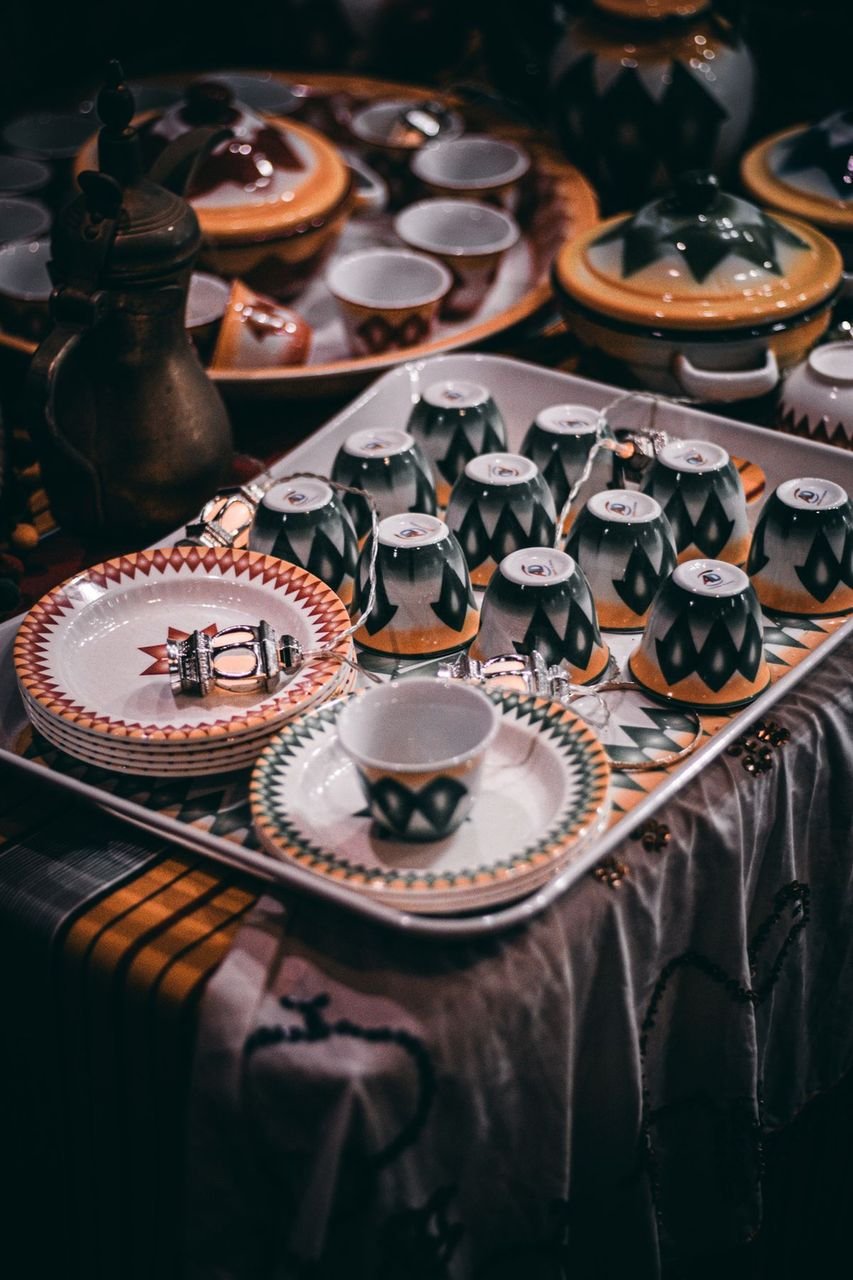
- Coffee (qahwa) is served at the start of most formal visits. Accepting the first cup is polite. To signal you have had enough, gently tilt the cup from side to side. The host will refill until you make this gesture.
- Dates are a standard accompaniment to coffee. Take one or two when offered.
- During Ramadan, eating, drinking, or smoking in public during daylight hours is prohibited, even for non-Muslims. Restaurants in tourist areas and hotels will typically screen off their dining areas.
Our Ramadan in Saudi Arabia guide covers everything specific to visiting during the holy month.
To experience Saudi hospitality and cuisine with a local host, the Riyadh highlights city tour with a local food experience is an easy way to try traditional dishes and coffee etiquette in practice.
Behaviour in Homes
Being invited to a Saudi home is a genuine honour and one of the richest cultural experiences the country offers.
Remove your shoes at the entrance unless the host signals otherwise. Men and women are often entertained in separate rooms in traditional households; in more cosmopolitan households in Riyadh and Jeddah this is increasingly less common. We go into more detail in Arabic Language Guide for Saudi Arabia.
Gift-giving when visiting a home is not always expected but always welcome. Sweets, quality dates, or flowers are appropriate. Avoid alcohol (which is prohibited), pork products, or anything depicting the human form. Present gifts with the right hand or both hands.
Do not admire possessions excessively — in Arab culture, strong admiration of an object can put the host in the difficult position of feeling obliged to give it to you.
Public displays of affection are not acceptable even for married couples, both in public and in others’ homes.
Religious and Cultural Sensitivities
Saudi Arabia operates on Islamic law. Friday is the holy day, and many businesses run reduced hours or close for Friday prayers. Prayer times (five times daily) cause brief pauses in activity at smaller shops and some restaurants; larger malls and international hotels continue without interruption.
Avoid scheduling meetings or activities during prayer times where possible. The call to prayer (adhan) is broadcast publicly and marks each prayer window.
Discussing sensitive topics — politics, the royal family, and comparisons with other Islamic movements — is best avoided in casual conversation. Showing genuine interest in Saudi culture, history, and language, on the other hand, is deeply appreciated.
The Arabic phrase inshallah (“God willing”) is used constantly in daily speech and does not necessarily indicate a firm commitment. Understanding this cultural shorthand prevents misunderstandings in business and social settings alike.
Learning even a few words of Arabic — shukran (thank you), min fadlak (please), ma’a as-salama (goodbye) — goes a long way with local residents.