February is the final full month of Saudi Arabia’s peak tourist season before temperatures begin their March climb. It remains an excellent time to visit, particularly for heritage sites and desert experiences - and the King Abdulaziz Camel Festival closes in late February, making this the last chance to see it. Book AlUla accommodation well in advance: February is consistently the busiest month of the year.
Search hotels in Saudi Arabia on Booking.com
Riyadh 21°C, Jeddah 27°C: February’s Last Comfortable Week Before Temperatures Rise
| City | Avg High (°C) | Avg Low (°C) | Conditions |
|---|---|---|---|
| Riyadh | 21 | 10 | Dry and sunny; comfortable all day; cool nights |
| Jeddah | 27 | 20 | Warm coastal conditions; pleasant evenings |
| AlUla | 24 | 7 | Warm days; cold nights; perfect for Hegra visits |
| Abha | 18 | 7 | Cool mountain air; pleasant days; cold nights |
| Dammam | 22 | 12 | Comfortable Gulf coast; mild sea breezes |
Camel Festival Final Weeks, Foundation Day and Winter at Tantora Closing Acts
King Abdulaziz Camel Festival continues through late February in the Al Dahna desert near Buraydah. This is the final window to attend - the festival closes at the end of February. The closing weeks typically include the largest beauty competitions and the highest-stakes camel auctions of the season. Entry is free. Plan transport from Riyadh (approximately 3.5 hours by road) and book Buraydah accommodation at least three weeks ahead.
Saudi Foundation Day falls on 22 February and is a national public holiday. Foundation Day commemorates the founding of the first Saudi state in 1727 by Imam Muhammad ibn Saud in Diriyah. Celebrations take place across all major cities - expect street events, public performances, and a national atmosphere in Riyadh’s Diriyah district. Many businesses close on the public holiday, so plan accordingly.
Winter at Tantora (AlUla): The festival continues at Maraya Concert Hall through February. February concerts are frequently among the most sought-after of the season - international artists perform in one of the world’s most unusual concert settings, with the mirrored facade of Maraya reflecting the surrounding sandstone cliffs. Tickets from approximately SAR 200 as of 2026 to SAR 800 via alula.events. Book as soon as the programme is released.
Diriyah Season events continue through February - international concerts and heritage events at the At-Turaif district. Tickets from approximately SAR 50 to SAR 500 per event.
AlUla and Jeddah Corniche: February Is the Busiest Month of the Peak Season
AlUla is the essential February destination - the combination of ideal temperatures and Winter at Tantora events makes it the finest month of the year for the Nabataean heritage experience. Stay at Banyan Tree AlUla, positioned in the Ashar Valley with direct views of the sandstone formations. For dining, Maraya Social at the Maraya Concert Hall complex serves modern Middle Eastern cuisine in surroundings few restaurants can match.
Riyadh is compelling in February around Foundation Day - the Diriyah district and At-Turaif’s mud-brick towers are at their most atmospheric with the national celebrations as backdrop. Stay at the Rosewood Riyadh in the King Abdullah Financial District - one of the city’s best addresses for service and location. Eat at Takya, the heritage dining concept in Diriyah, which serves Saudi regional cuisine in a setting that contextualises the food within the Kingdom’s history.
Jeddah provides the warmest February conditions of any major Saudi city - 27°C and pleasant coastal evenings. Stay at the Waldorf Astoria Jeddah (Qasr Al Sharq) for historic architecture and Red Sea views. Dine at Firefly Jeddah on the Corniche for well-executed contemporary cooking in an appealing setting.
Abha remains comfortable in February at 18°C, and crowds are lower than in the summer domestic high season - a worthwhile combination for the Al Soudah cable car and surrounding mountain villages. Stay at Asiana Hotel Abha for a well-positioned mid-range base.
Shura Island Resorts and Sindalah: Last Month of Peak Red Sea Diving Conditions
February is the final comfortable month on Saudi Arabia’s northwest Red Sea coast before spring heat arrives. Water temperatures at 24–26°C and calm seas make this a reliable month for snorkelling and diving, and the Red Sea resorts on Shura Island are operating at full capacity.
Red Sea Global resorts (Shura Island): The St. Regis Red Sea Resort and Nujuma, a Ritz-Carlton Reserve remain the anchor properties in Red Sea Global’s resort zone near Al-Wajh. February is the last month before spring temperatures make extended outdoor activity less comfortable; book well ahead as these properties consistently fill during the October–March window. Transfer from the mainland is by seaplane or speedboat. Search Red Sea resorts for current availability.
Snorkelling and diving: The coral systems along Saudi Arabia’s Red Sea coast are among the least-dived in the entire Red Sea basin. Some dive operators have established bases in the Tabuk region and near Al-Wajh; full dive packages including equipment are available from approximately USD 100 per day as of 2026. Visibility in February is typically 20–30 metres. The absence of mass tourism pressure has kept these reefs in significantly better condition than comparable sites in Egyptian or Jordanian waters.
Sindalah (NEOM): NEOM’s marina island in the Gulf of Aqaba is accessible from Neom Bay — check NEOM’s official channels for current visitor access before travel. The surrounding Gulf of Aqaba waters are calm in February and among the warmest on the western coast of the Arabian Peninsula at this time of year. Search accommodation near NEOM for options in the Tabuk–NEOM corridor.
Empty Quarter Margins, Wadi Disah and AlUla Trails: Last Comfortable Camping Month
February is the last month of the year when desert camping in Saudi Arabia is genuinely comfortable. From March onwards, daytime temperatures begin their climb toward the 35–40°C range that makes extended outdoor activity impractical.
Rub’ al Khali (Empty Quarter) margins: The northern edge of the Empty Quarter, accessible from Shaybah or from the UAE border area in the southeast, offers the classic high-dune experience. February days are 20–22°C and nights around 5–8°C — cold enough to require a sleeping bag but not enough to prevent comfortable camping. Organised multi-day Empty Quarter expeditions from Riyadh are available through several adventure operators; prices from approximately SAR 1,500 per person for a two-night guided camp.
Wadi Disah (Tabuk region): February is among the best months for overnight camping in the canyon — temperatures are more forgiving than December (overnight lows around 5°C rather than close to freezing) and the canyon walls in the February light are at their most colourful. Accessible via Highway 70 from Tabuk in a standard 4WD.
Al Ula rock art and landscape walking: Beyond the Nabataean tombs at Hegra, AlUla’s broader landscape contains dozens of self-guided walking routes through the sandstone formations. February light is warm and angular in the mornings — the best conditions of the year for landscape photography. The 14 km Dadan Trail connects AlUla Old Town with the Dadan archaeological site; start by 7am for the best light and to complete the walk before midday warmth.
King Fahd Fountain and Al-Balad in February’s Best Coastal Light
February in Jeddah is the warmest and most pleasant month on the Corniche. At 27°C, the seafront is fully usable from early morning through late evening; the evening Corniche walk from the Sheraton to the King Abdulaziz area and back is a genuine pleasure. The King Fahd Fountain illumination (nightly after dark) is best viewed from the Corniche promenade around the Hilton Jeddah; the fountain reaches 312 metres and is visible from most of the northern Corniche.
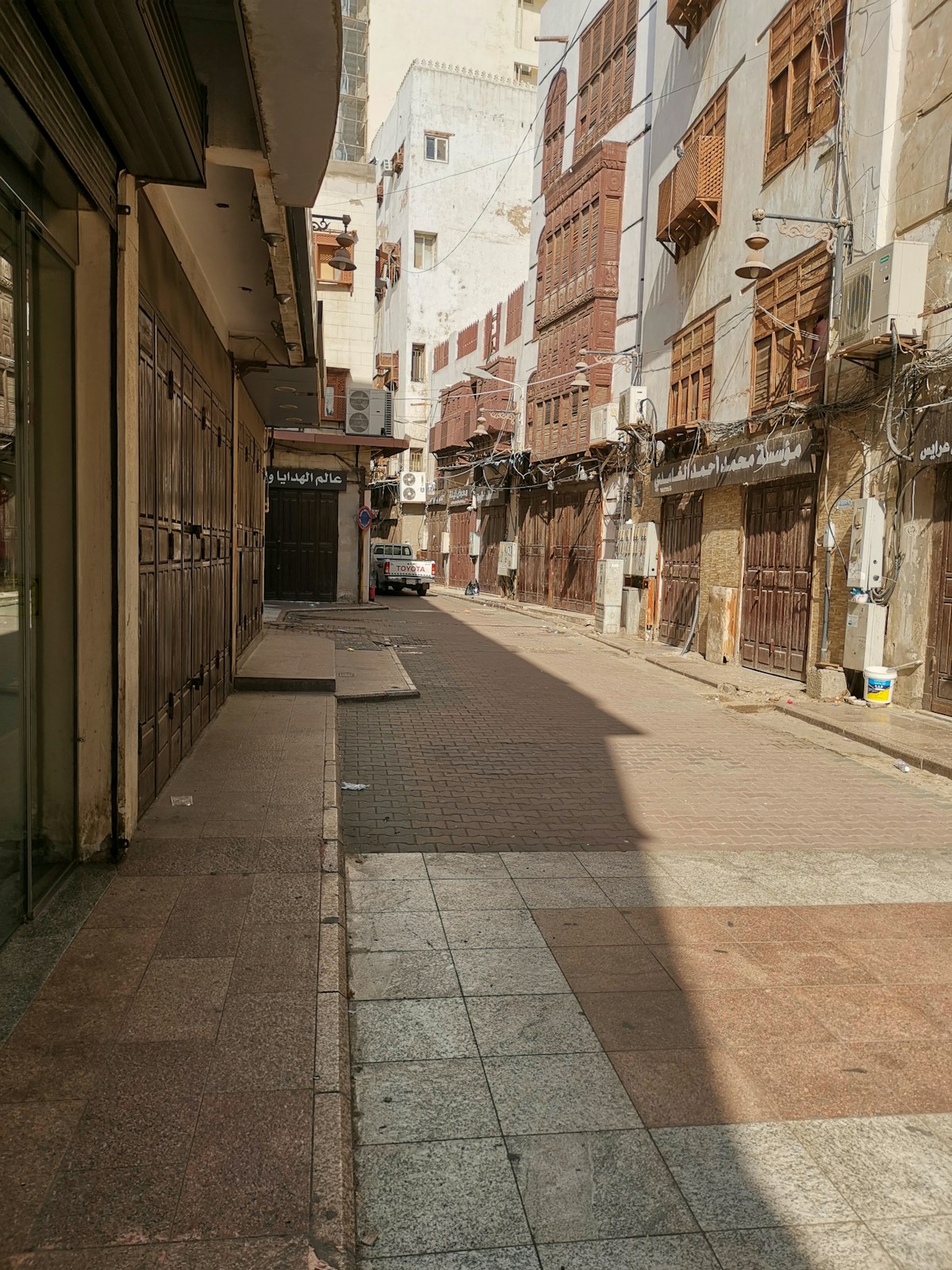
Al-Balad in February: the UNESCO-listed coral-merchant house district is at its most comfortable for extended walking — no heat, long morning light. The conservation work on the district has accelerated since 2022; several of the restored merchant houses now operate as small museums or boutique guesthouses. The Nuzul Al Balad hotel is the best-value stay in the district itself if you want to wake up inside the historic quarter.
Jeddah waterfront dining: Bukhara Jeddah on the Corniche serves consistently good North Indian cooking with sea views — a reliable dinner option. Mataam Al Baik (multiple Corniche-area branches) is the iconic Saudi fast-food experience — the fried chicken chain that Saudis specifically seek out when returning from abroad; the Jeddah Corniche branches have sea views and are open late.
Booking AlUla 8 Weeks Ahead and Other February Essentials
- Book AlUla 8 weeks ahead minimum - February is the peak month; all three quality properties (Habitas, Banyan Tree, Shaden) are typically full
- Foundation Day (22 Feb) closures: government offices and many private businesses close; tourist sites generally remain open but confirm in advance
- Winter at Tantora tickets: released in batches - check alula.events regularly and book immediately when your dates appear
- Flight costs: February is peak demand from Europe and Asia to Riyadh and Jeddah - compare booking 6–8 weeks ahead vs. last minute; prices vary significantly
- Northern regions (Tabuk, Hail): occasional cold nights and light rain possible - pack waterproof layer if visiting Wadi Disah or Jubbah
What to Pack for February: Thermal Layers for AlUla Pre-Dawn Visits and SPF 30+ for Winter Sun
- Light layers for daytime across all cities
- Warm jacket for evenings in Riyadh and Jeddah
- Thermal layer for AlUla (cold nights; early morning Hegra visits begin before sunrise)
- Comfortable walking shoes for Diriyah’s paved pathways and AlUla’s sandy terrain
- Sunscreen SPF 30+ (winter sun is deceiving - UV remains significant)
- Modest clothing for heritage sites: shoulders and knees covered in public areas
Whenever you decide to visit, compare flights to Saudi Arabia early for the best fares, browse Tours in AlUla to plan activities around the season, and protect the trip with travel insurance.
See Also
- Best Time to Visit Saudi Arabia
- AlUla City Guide - accommodation and logistics for the Winter at Tantora season
- Winter at Tantora Festival - the Maraya Concert Hall events programme
- Hegra (Madain Saleh) - the Nabataean tombs that make AlUla essential in winter
- Buraydah City Guide - base for the King Abdulaziz Camel Festival in February
- Visiting Saudi Arabia in January
- Visiting Saudi Arabia in March
Plan Your Trip
✈️ Book your flights to Saudi Arabia 🛡️ Get travel insurance 📱 Stay connected with an eSIM 🚗 Rent a car