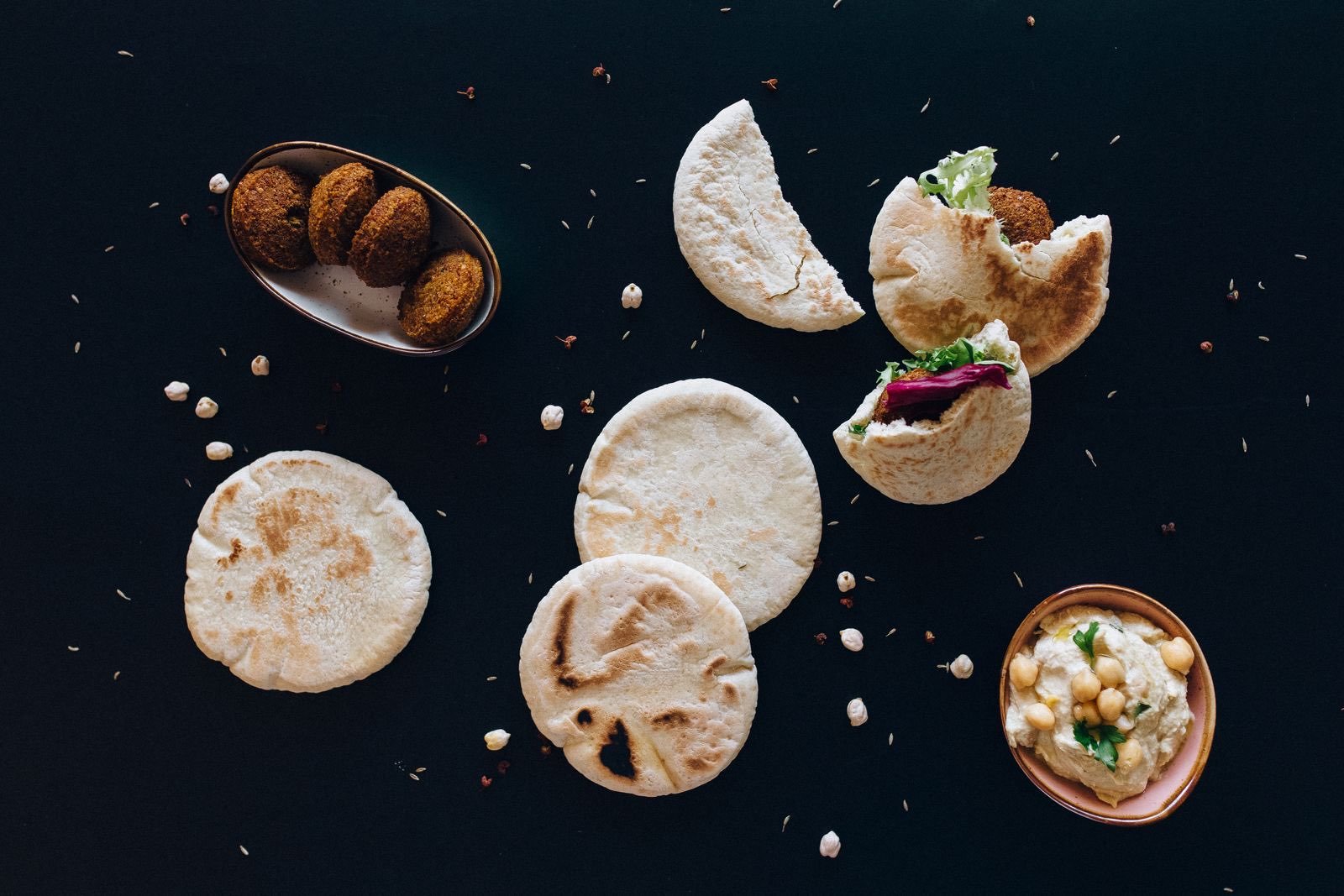
Saudi Arabia is a meat-forward country. Kabsa, mandi and jareesh are the dishes that define the cuisine, and a waiter who hears “vegetarian” may offer you chicken. Even so, vegetarians and vegans eat well here once they know where to look. The Levantine, Egyptian and Yemeni kitchens that feed the big cities, plus the Kingdom’s own bread and bean traditions, give you real meals rather than side dishes. This guide covers what to order, where to find it in Riyadh and Jeddah, how Ramadan changes things and what to say in Arabic. For the traditional dishes themselves, see our Saudi Arabian food guide.
Vegetarian dishes worth ordering
| Dish | What it is | Usually vegan? | Typical price (as of 2026) |
|---|---|---|---|
| Ful medames | Slow-cooked fava beans, olive oil, lemon, cumin | Yes, if served plain | SAR 10-20 with bread |
| Falafel (ta’miyya) | Fried chickpea or fava patties, often in a wrap | Yes, check the sauce | SAR 5-12 per sandwich |
| Hummus and mutabbal | Chickpea and smoked aubergine dips | Yes | SAR 12-25 per plate |
| Fattoush and tabbouleh | Herb and vegetable salads | Yes, no yoghurt | SAR 15-30 |
| Lentil soup (shorbat adas) | Spiced red lentil soup | Often, ask about stock | SAR 10-20 |
| Mutabbaq | Stuffed folded pancake | No (egg, cheese) | SAR 15-25 |
| Cheese or vegetable samboosa | Fried pastry | Cheese version is not vegan | SAR 5-10 each |
| Manakish za’atar | Flatbread with thyme, sesame and oil | Yes | SAR 5-15 |
Ful is the anchor. It is the standard breakfast across the Hejaz and the dish most likely to turn up on any menu. In Jeddah, ful hijazi adds tomato, chilli and extra oil. Falafel appears on every high street, usually in Arabic bread with pickles and tahini.
Mutabbaq is Jeddah’s famous street pastry. Ask for the egg, cheese or banana-and-cheese filling rather than the minced meat default. Cheese and vegetable samboosa work the same way, and the traditional dessert side is naturally meat-free, though luqaimat are fried in oil and soaked in date syrup or honey, so strict vegans should skip them.
Where to eat vegetarian in Riyadh and Jeddah
Chains are the dependable choice because menus are printed, bilingual and consistent. We list types and well-known names rather than prices per venue, which go stale quickly, so check current menus before you go.
- Levantine cafes such as Zaatar w Zeit, with branches in both cities, are built on manakish, salads, dips and falafel. This is the easiest vegetarian meal in either city.
- Falafel specialists such as Operation Falafel run counters in Riyadh and Jeddah where meat-free is the default and vegan orders need only a sauce check.
- Egyptian street-food kitchens like Zooba serve kushari, ta’miyya and ful, most of which can be ordered vegan.
- South Indian vegetarian restaurants such as Saravanaa Bhavan in Riyadh are fully vegetarian, with dosa, idli and thali plates. Riyadh and Jeddah both have a large South Asian community, so small Indian and Pakistani canteens with dal, chana and vegetable curries sit in almost every neighbourhood, especially around Al-Balad in Jeddah.
- Hotel breakfast buffets nearly always include ful, hummus, labneh, cheese, eggs and bread, which makes the first meal of the day simple.
In Riyadh, the Riyadh food guide and Riyadh food tours show where Najdi cooking is strongest; in Jeddah, the Jeddah food guide covers Hejazi bread and street food. A guided walk helps if you want a vegetarian-tailored route: browse Riyadh food tours or the wider Jeddah tour list and message the operator about dietary needs before you book.
Hidden animal products to ask about
- Ghee (samn) is the cooking fat in many rice dishes, pastries and breakfast beans at traditional counters.
- Broth: rice, lentil soup and vegetable stews are often cooked in chicken or lamb stock, even when no meat is visible.
- Yoghurt and labneh appear on salads and as a side with almost everything.
- Honey and date syrup top desserts; strict vegans may want to skip them.
- Gelatin and rennet are rarely an issue, since halal certification excludes pork, but they can occur in imported sweets.
Ramadan
During Ramadan the day shifts. Many cafes and restaurants open in the afternoon, run iftar menus at sunset and stay open late. Hotel restaurants and delivery apps cover daytime meals, and visitors should eat and drink discreetly in public during fasting hours. Iftar tables are good for vegetarians: dates, lentil soup, cheese samboosa, salads, fatayer and sweets. The month moves about 11 days earlier each year, so check dates before you travel. Our Ramadan in Saudi Arabia guide has the full picture.
Arabic phrases for vegetarians
| English | Arabic (transliteration) |
|---|---|
| I am vegetarian | Ana nabati |
| Without meat | Bidoon lahm |
| Without chicken | Bidoon dajaj |
| Without ghee | Bidoon samn |
| Without yoghurt | Bidoon laban |
| Is there meat in this? | Fi lahm hena? |
| Is it cooked in meat stock? | Mutbookh bi maraq lahm? |
Say nabati and bidoon lahm together, and name chicken separately. More greetings and ordering phrases are in our Arabic language guide.
Practical tips
- Download a delivery app in Riyadh or Jeddah and filter for falafel or Levantine, which makes late-night and daytime-Ramadan meals easy.
- Outside the big cities, ask for ful, eggs, bread, labneh and a tomato-cucumber salad. Petrol-station cafes and small cafeterias usually have them.
- Group lunches in a restaurant that serves kabsa platters rarely have a meat-free main, so order sides and mezze in advance.
- The Kingdom’s official visitor site, Visit Saudi, lists current events and dining districts.