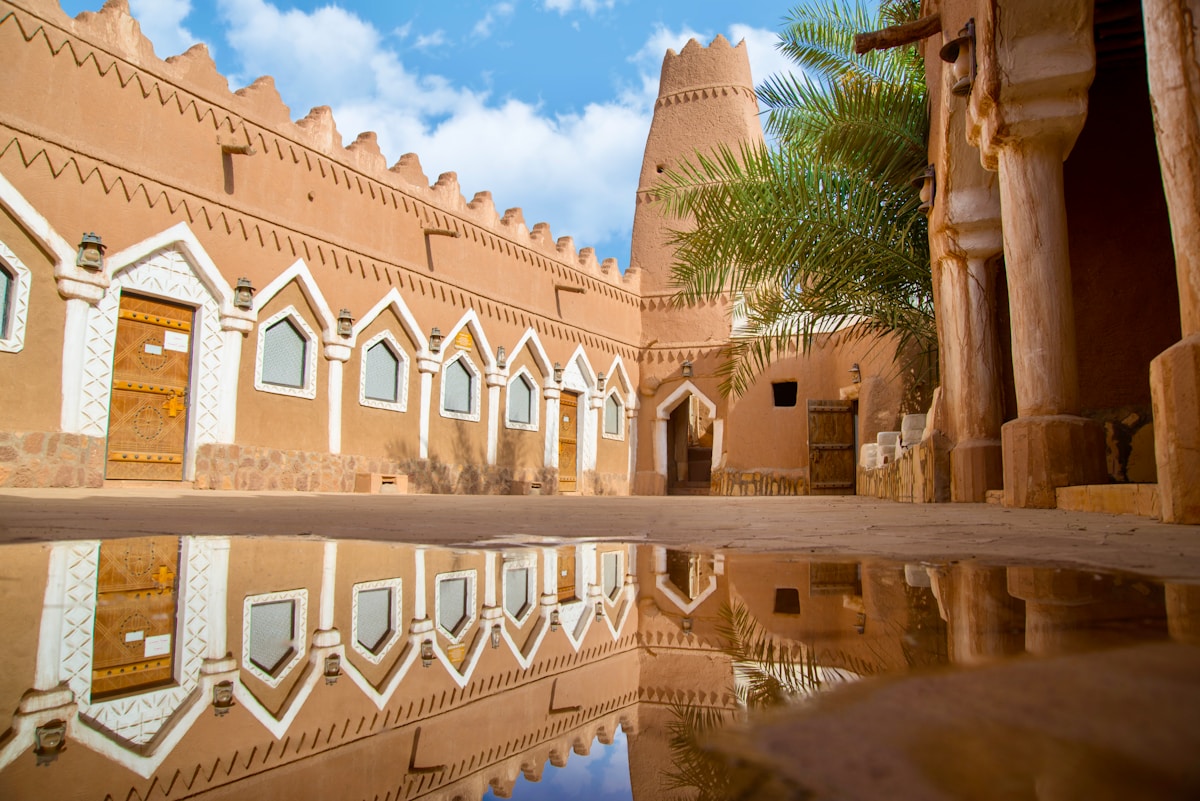
Saudi Arabia opened to international tourism in September 2019 after decades of restricted access. The transformation since then has been fast: new hotels, entertainment venues, and tourist infrastructure have appeared across the major cities. But the country remains genuinely different from most international destinations, and first-time visitors often have specific questions that generic travel sites answer poorly.
Search hotels in Saudi Arabia on Booking.com
Below we answer the 15 questions we hear most often from people planning their first trip.
Do I Need a Visa for Saudi Arabia?
Most international visitors need a tourist eVisa. Citizens of 49 nationalities can apply online at evisa.visa.gov.sa before travel. The eVisa costs approximately USD 135 as of 2026, grants 90 days of stay, and allows multiple entry. Approval typically arrives within 24 hours.
GCC (Gulf Cooperation Council) nationals do not need a visa. Some nationalities can obtain a visa on arrival. Umrah and Hajj visas are separate documents and do not permit unrestricted general travel across the country without additional endorsement.
For full nationality-specific eligibility, see the Saudi Arabia visa guide.
Is Saudi Arabia Safe for Tourists?
Saudi Arabia is among the safer countries in the Middle East for tourists. Street crime is very low and violent crime against foreigners is rare in the main tourist areas.
The main risks worth knowing about:
- Road traffic: Saudi road fatality rates are high. Drive defensively, wear seatbelts, and be cautious at junctions.
- Summer heat: Riyadh regularly hits 45 degrees C from June to August. Heatstroke is a genuine medical risk. Limit outdoor exposure during peak heat hours.
- Yemen border areas: Najran, Jizan, and parts of Asir near the Yemeni border have been affected by the Yemen conflict. Check current UK FCDO or US State Department travel advisories before visiting these regions.
Riyadh, Jeddah, AlUla, Abha, and the Red Sea coast are all safe for tourists. See our solo travel guide for specific advice on travelling alone.
What Should Women Pack and Wear?
The legal requirement for foreign women to wear an abaya (full-length robe) was removed in 2019. Modest, loose-fitting clothing covering arms and legs is appropriate across Saudi Arabia.
Practical packing principles for women:
- Loose trousers or maxi skirts rather than fitted clothing
- Long-sleeved tops or lightweight cardigans
- A headscarf for mosques and religious sites (not required elsewhere for tourists)
- Comfortable closed-toe shoes for heritage sites
In conservative cities and small towns, erring on the side of more coverage avoids unwanted attention. At beach resorts and some NEOM-linked zones, standards are more relaxed.
For men: avoid shorts in traditional areas, souks, and heritage sites. Beaches and resort areas are exceptions. Long trousers and a collared shirt work in almost all settings.
See the full packing guide and women’s travel guide for specifics.
Can I Drink Alcohol in Saudi Arabia?
No. Alcohol is completely prohibited in Saudi Arabia with no exceptions. There are no licensed bars, no alcohol in hotels, and no tourist-zone carve-outs. Bringing alcohol into the country is a criminal offence and is strictly enforced at customs.
Non-alcoholic cocktails, mocktails, and a wide range of soft drinks are available everywhere. Coffee culture is strong - Saudi specialty coffee (qahwa, flavoured with cardamom and saffron) is worth trying. See the full explanation for why alcohol is prohibited and what alternatives exist.
What Is the Best Time of Year to Visit?
October to March is the best window for most visitors. Temperatures drop to 15-25 degrees C in Riyadh and Jeddah, and desert sites like AlUla are comfortable to explore.
A month-by-month summary:
| Month | Riyadh Avg High | Best For |
|---|---|---|
| Oct-Nov | 30-35°C | AlUla, outdoor sites |
| Dec-Jan | 20-25°C | Riyadh, Jeddah, Diriyah |
| Feb-Mar | 25-30°C | All destinations, Hegra |
| Apr-May | 33-38°C | Budget travel, fewer crowds |
| Jun-Sep | 40-46°C | Avoid if possible |
AlUla is specifically best from October to February, when the Maraya concert venue and Winter at Tantora festival run events at the site. Abha in the Asir highlands stays cooler year-round and is one of the few places you can visit comfortably in summer.
Browse our month-by-month guides for detailed conditions throughout the year.
How Much Does a Trip to Saudi Arabia Cost?
Saudi Arabia is not a budget destination, but it is cheaper than the UAE for comparable experiences.
Approximate daily costs as of 2026:
| Budget tier | Per person per day | Accommodation | Food |
|---|---|---|---|
| Budget | SAR 350-500 (USD 93-133) | Guesthouses, budget hotels | Local cafes, shawarma, fast food |
| Mid-range | SAR 700-1,200 (USD 186-320) | 3-4 star hotels | Sit-down restaurants |
| Luxury | SAR 1,500+ (USD 400+) | Boutique and 5-star properties | Fine dining, hotel restaurants |
International flights are the biggest variable. Expect approximately USD 600-1,200 return from Europe and USD 900-1,500 from North America. The Saudi Arabia budget guide covers city-by-city cost breakdowns in detail.
What Currency Is Used and Can I Pay by Card?
The currency is the Saudi Riyal (SAR), pegged to the US dollar at approximately SAR 3.75 per USD 1.
Credit and debit cards are accepted at hotels, malls, restaurants, and tourist sites in all major cities. Apple Pay and STC Pay are widely used. Smaller vendors, souks, and rural markets may be cash-only. ATMs are widely available in cities.
Bringing SAR 500-1,000 in cash at arrival is a sensible buffer for the first day before finding an ATM.
Do I Need to Speak Arabic?
No. English is widely understood in Riyadh, Jeddah, and AlUla at hotels, airports, tourist attractions, and most restaurants. Younger Saudis are generally confident English speakers.
Google Translate with Arabic downloaded for offline use handles signs and menus reliably. In smaller towns, remote areas, and rural markets, English proficiency drops significantly - a translation app becomes essential.
Learning a few phrases is appreciated even when not needed: shukran (thank you), marhaba (hello), and min fadlak/min fadlik (please, m/f) go a long way. Our basic Arabic phrases guide covers the key vocabulary for getting around.
What Are the Must-See Destinations for a First Visit?
A first trip to Saudi Arabia typically covers three or four key bases:
Riyadh is where most itineraries start. The key sites are Diriyah (UNESCO-listed birthplace of the Saudi state, with the At-Turaif mud-brick district), the National Museum, the Edge of the World rock escarpment 90 minutes outside the city, and the Al Bujairi Heritage Park dining area.
Jeddah’s Al-Balad old town is a UNESCO-listed district of coral-built merchant houses with elaborate wooden balconies (roshan). The Corniche waterfront, Red Sea fish markets, and Jeddah’s cafe culture round out the visit.
AlUla is the standout natural destination. Hegra (Nabataean tombs carved into sandstone outcrops), Elephant Rock, and the desert canyon landscape make it one of the most spectacular sites in the Arabian Peninsula. AlUla deserves at least two nights.
Abha and the Asir highlands offer a different Saudi Arabia - cooler temperatures, terraced villages, and the historic Rijal Almaa heritage village. Worth adding if you have 10+ days.
For structured routes, see our one-week itinerary, 10-day itinerary, or two-week itinerary.
How Do I Get Around Saudi Arabia?
Domestic flights are the fastest option between cities. Saudia and flynas connect Riyadh, Jeddah, Medina, Tabuk, Abha, and AlUla. Fares start from approximately SAR 150-200 one way as of 2026 if booked ahead.
Ride-hailing: Uber and Careem operate across major cities. Reliable, affordable, and more practical for tourists than taxis.
Haramain High-Speed Railway connects Jeddah, Mecca (restricted to Muslims), and Medina at up to 300km/h. Fares start from approximately SAR 100 one way.
Car rental: International licences are accepted. Roads are in good condition, though driving standards vary. A rental car opens up the countryside and heritage sites outside city centres. See the car rental guide for practical details.
The getting around Saudi Arabia guide covers all transport modes, costs, and booking recommendations.
What Are the Photography Rules?
Photography is generally permitted at tourist sites, heritage areas, and in cities. Restrictions apply at:
- Government buildings and ministries
- Military installations and checkpoints
- Airports (outside designated areas)
Signs mark most restricted zones. Photographing Saudi individuals without explicit permission is considered disrespectful - ask before pointing a camera at people, especially women. Inside mosques, follow specific site guidance; some restrict photography entirely.
Drone use requires a permit from the General Authority of Civil Aviation (GACA). Flying without a permit is illegal and fines are significant.
What Is Ramadan and How Does It Affect My Trip?
Ramadan is the Islamic month of fasting. In 2026, Ramadan runs from approximately mid-February to mid-March (dates shift each year by 10-11 days as the Islamic lunar calendar does not align with the Gregorian).
During Ramadan, eating, drinking, and smoking in public during daylight hours is prohibited - this applies to non-Muslim tourists as well. Restaurants open at sunset (iftar). Working hours and tourist attraction opening times are often reduced. Noise restrictions apply in some areas during prayer times.
Evenings during Ramadan are lively and communal - iftar meals at heritage sites and Ramadan markets are genuinely memorable experiences. Visiting during Ramadan is possible; it just requires planning around the daylight restrictions.
See the Ramadan in Saudi Arabia guide for full practical details.
Can I Visit Religious Sites as a Non-Muslim?
Mecca and Medina are closed to non-Muslims. Checkpoints are maintained on approach roads to both cities and access is actively enforced. There are no exceptions for tourists.
Other Islamic heritage sites across Saudi Arabia are fully accessible to non-Muslim visitors. Diriyah’s At-Turaif District is open to all. Many mosques in Riyadh and Jeddah welcome non-Muslim visitors outside prayer times - individual sites specify their visiting rules.
AlUla’s Hegra Nabataean site, Tabuk Castle, and historic forts throughout the country are open to all nationalities. Always check site-specific guidance before visiting.
Do I Need Vaccinations or Health Precautions?
No mandatory vaccinations are required for tourists entering Saudi Arabia as of 2026, unless arriving from a country with risk of yellow fever (proof of yellow fever vaccination required in that case). Hajj and Umrah pilgrims require meningococcal vaccination.
Recommended health steps before travelling:
- Ensure routine vaccinations are up to date (MMR, tetanus, hepatitis A and B)
- Consult a travel health clinic for personalised advice
- Pack sunscreen, rehydration salts, and a basic first aid kit
- Tap water is technically safe in cities but most visitors drink bottled water
Pharmacies (Nahdi and Al-Dawaa chains) are well-stocked across all major cities. Travel health insurance is strongly recommended - hospital costs for tourists in Saudi Arabia can be significant.
What Apps Should I Download Before Visiting?
Install these before you arrive:
- Careem or Uber - ride-hailing across all major cities
- Google Maps - works well in Saudi Arabia with Arabic and English signage
- Google Translate - download Arabic for offline use
- Absher - official Saudi government app for visa status and services (useful for longer stays)
- WhatsApp - standard contact method for tour operators and accommodation
- Your eSIM provider app - install before arrival; Airalo covers Saudi Arabia reliably
For data connectivity, see the Saudi Arabia eSIM guide for network coverage comparison and data package recommendations.
Ready to start planning? Use our one-week Saudi Arabia itinerary as a starting framework and book tours through our Saudi Arabia page for guided experiences across the main sites.